Ratgeber zu Tee und Teegeschirr
How to Store Longjing Tea: Fridge, Freezer or Cupboard?

Why does Longjing need careful storage?

Store dry Longjing tea in a well-sealed, food-safe package, protected from heat, moisture, light and strong smells. Cold storage can help preserve green tea, but the seal and the way you open the pack matter. A refrigerator is not a cure for loose wrapping.
Longjing is a Chinese green tea usually bought for its fresh character. Good storage aims to hold that character, rather than deliberately develop an aged flavor. Follow the producer’s instructions for the particular tea and packaging.
Five things to control

- Heat: avoid the sunny windowsill, a warm car and cupboards beside the oven.
- Moisture: keep the leaves dry and the inner pack intact.
- Light: use opaque packaging or keep a clear container inside a dark cupboard.
- Oxygen: close the pack promptly and avoid unnecessary opening.
- Odors: separate tea from spices, coffee, cleaning products and strongly scented food.
These are practical handling points, not a promise of a fixed shelf life. Harvest year, starting condition, packaging and the environment all affect how long the tea remains enjoyable.
Choose a storage method for the way you drink

| Situation | Useful approach | Main caution |
|---|---|---|
| A small working supply used regularly | A sealed pack in a cool, dark, dry place | Keep it away from kitchen heat and humidity |
| Reserve tea in suitable sealed packaging | Refrigeration if recommended by the producer | Protect against odors and warm the sealed pack before opening |
| Longer-term unopened reserve | Freezing may be an option with appropriate packaging and guidance | Avoid repeated warming, opening and refreezing |
Refrigeration: protect the pack first
If the producer recommends refrigeration, keep the tea in its intact moisture-resistant inner pack and add a clean, odor-free outer container when needed. An ordinary paper wrapper or gift box alone is not a dependable moisture and odor barrier.
Small sealed portions are convenient. Leave the reserve closed and take out only the portion you intend to use. This reduces the number of times the whole supply moves between cold storage and a warm room.
Let a cold sealed pack reach room temperature before opening it. Otherwise, moisture from warm air can condense on cold surfaces and reach the leaves. There is no universal waiting time: pack size and room conditions differ. Keep it sealed while it warms.

The source illustration shows extra outer packaging. It cannot tell you whether a tied bag or tin is airtight. Check the real inner seal, and keep the tea well away from strong refrigerator odors.
Can Longjing be frozen?
Freezing is not automatically wrong. Research on stored Huangshan Maofeng green tea found that frozen samples retained sensory qualities better than warmer storage under the study’s conditions. That study is evidence about a particular green tea and controlled setup, not a household shelf-life guarantee for every Longjing pack.
For home use, consider freezing only a dry, securely sealed reserve in packaging suitable for the purpose, with the producer’s guidance. Portion it before storage if appropriate. Let the portion warm fully while still sealed before opening, and avoid repeatedly taking the same large bag out for a few leaves and returning it to the freezer.
If you have only a small amount to drink soon, a sensible working supply and careful sealing may be simpler than managing frozen packs. Buying less can be a better storage strategy than trying to preserve a large surplus.
Are tea tins enough?
A tin blocks light and protects the tea from handling damage. Whether it seals well depends on its lid and construction. A decorative tin with a loose lid is not the same as a sealed inner pouch.
Use a clean, completely dry, food-safe container without a lingering smell. Keep the original sealed inner pack where practical. Do not assume an unglazed clay jar provides a moisture barrier for delicate green tea.

Foil pouches and everyday portions
A suitable food-grade foil-laminate pouch can protect against light and moisture when its seal is sound. Close the zip or seal carefully, keep the top clean and avoid crushing the leaves while reducing excess air. A fold or clip is only as reliable as the package it closes.
Write the tea name, harvest year and opening date on a separate label. Keep hands and scoops dry. Taking out the next few days’ supply can spare the reserve repeated exposure, provided the smaller container is also suitable.

What about large quantities?
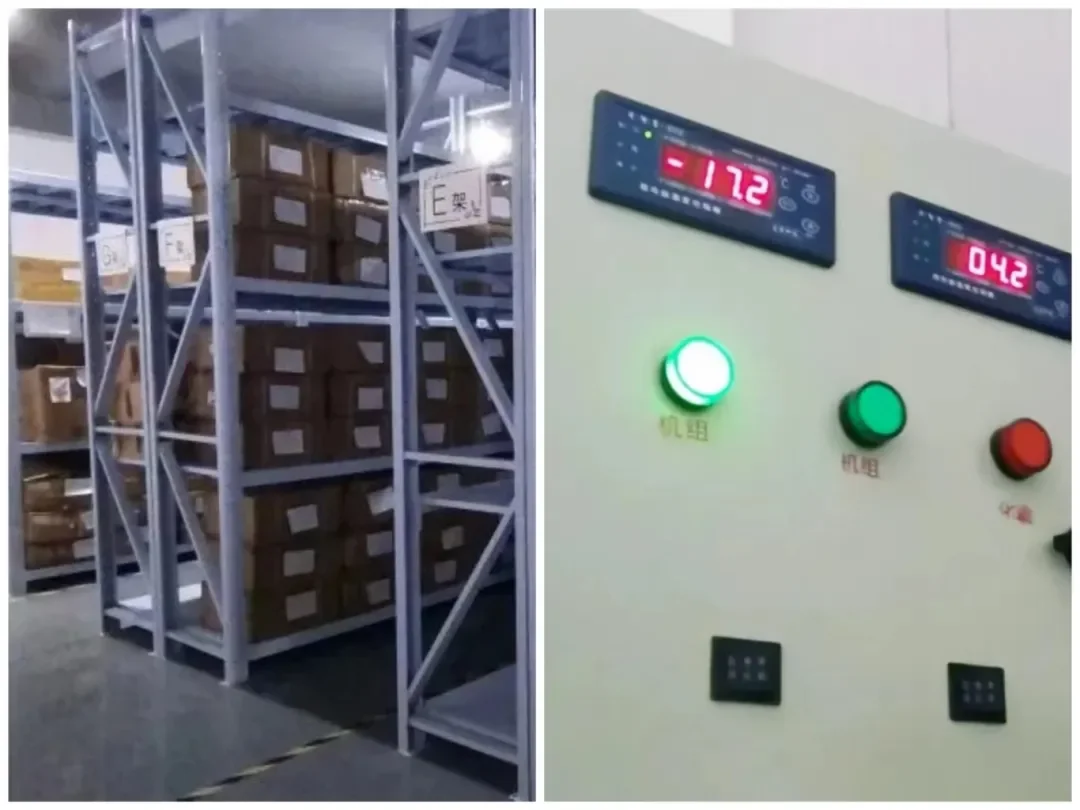
Commercial cold storage involves packaging, humidity, temperature stability and stock handling as a system. A photograph of a cold-room control panel does not provide a setting to copy at home. For substantial stock, ask the producer or a specialist storage provider about the actual tea and sealed packs.
How do you know the tea has lost freshness?
A weaker aroma, a stale smell or a less lively cup can be clues, but compare under the same brewing conditions. Color alone does not tell you the storage history. Follow the labelled date and instructions; visible mold or a musty condition is a reason to stop using the tea, not to rinse it back into shape.
Do not buy a large bag solely because its unit price is low. A quantity you can store and finish comfortably is often the more useful purchase. For the cup itself, see Longjing’s taste and aroma, or return to the Longjing tea guide.