Ratgeber zu Tee und Teegeschirr
Golden Flowers in Liubao and Fu Brick Tea: Differences
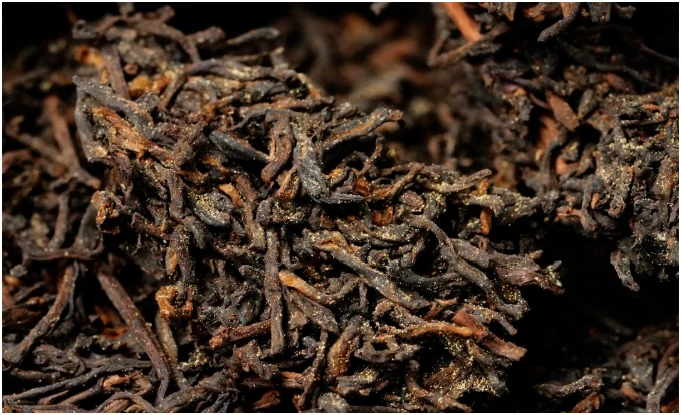
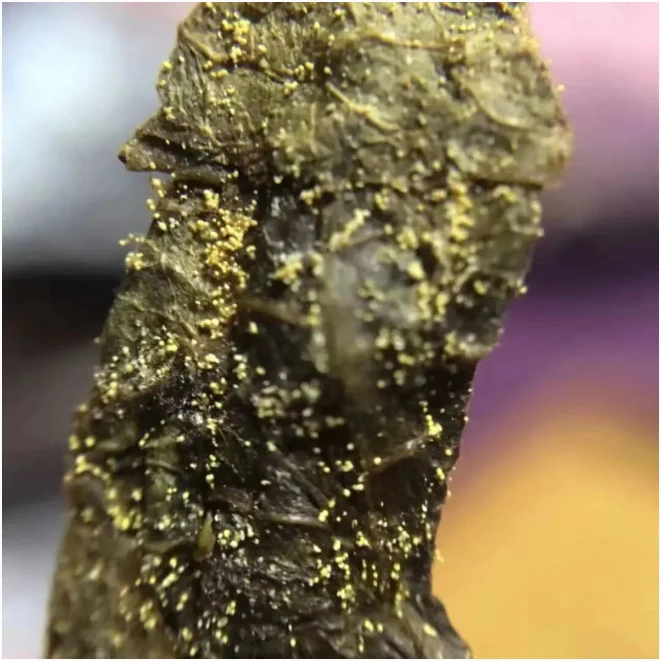
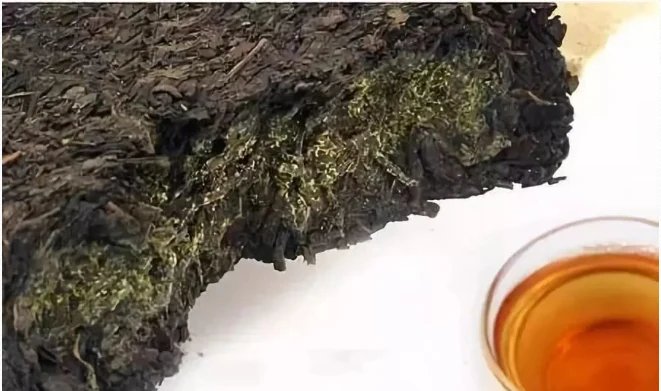
Golden flowers are closely associated with Fu brick tea, yet yellow-speckled growth can also be discussed in relation to some Liubao teas. The two products do not share an identical manufacturing route. The useful comparison concerns how fermentation is managed and how the final tea tastes, rather than the assumption that every yellow particle is the same microorganism.
Fu brick tea has a deliberate flowering stage
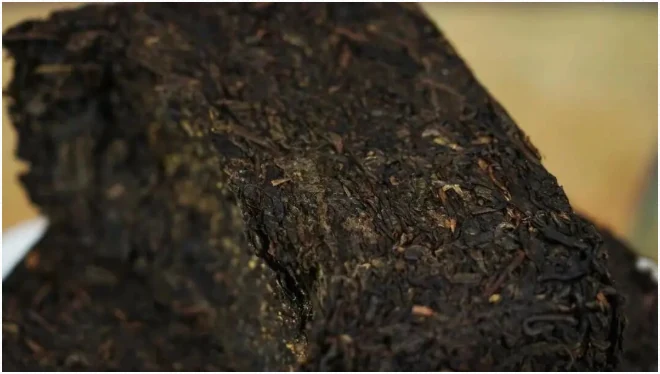
Fu brick manufacture includes a managed flowering stage. Aspergillus cristatus, also referred to in older literature as Eurotium cristatum, is strongly associated with its characteristic golden structures. Moisture, temperature, oxygen access and the condition of the raw material influence the process. Stems can help create space within a brick, which is one reason a sound Fu brick need not be made entirely from tender buds.
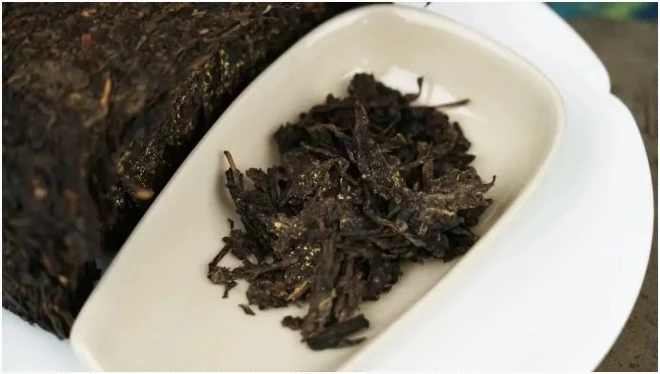

Liubao growth depends on the product and process
Some Liubao lots develop golden-looking structures during processing or later maturation; producers may also use specific controlled techniques. It is too broad to say that all Liubao flowers arise spontaneously or that no maker manages them. Molecular research on Liubao has distinguished closely related fungi, showing why color alone is not an identification method. A particular lot’s production controls and testing matter more than a photograph.
A flowering aroma is a flavor, not a medical dose
A well-made tea may offer a clean, rounded, fermentation-related aroma alongside sweetness and body. More visible flowers do not by themselves guarantee better flavor, and the presence of a fermentation organism does not establish that a brewed cup is a clinically proven probiotic. There is no reason to underheat brewing water in an attempt to preserve supposed live benefits.
Choose a documented, sound tea
Ask the producer how the tea was made and stored, and assess a representative sample. Unexplained growth, damp packaging or an unusual odor should be investigated rather than praised as rare flowers. Neither the bright color of the particles nor a smooth first sip can exclude contamination. Liubao and Fu brick both deserve to be judged as complete teas, not as displays of microbial color.

Sources and further reading
- Molecular identification of golden-flower fungi in Liupao tea
- Microbial succession during Fu brick tea manufacture