Guías de té y utensilios
What Does Longjing Tea Taste Like? A West Lake Guide
Longjing tea often tastes fresh and gently toasted, with notes that may suggest fresh beans, chestnut or other mild nuts. A pleasing cup can feel rounded and refreshing, with sweetness that becomes easier to notice after swallowing. West Lake Longjing is a specific Chinese origin within this tea category, rather than one flavor that every batch must reproduce.
If this is your first Dragonwell, do not worry about naming every aroma. Begin with three questions: does it smell clean, is the strength comfortable, and does the finish make you want another sip?
1. Look at the infusion, without grading it by color alone
Longjing liquor can range from pale green-yellow to a warmer yellow. Leaf weight, water, steeping time, vessel and light all affect what you see. A pale cup may be concentrated in aroma; a darker cup may simply have steeped longer.
Clarity is worth observing, but a few fine particles or a little leaf down are not an automatic sign of fake tea. Broken leaves, pouring and water composition can change the appearance. Compare freshly brewed cups under the same conditions, rather than leaving tea overnight as an authenticity test.
2. Smell for a clean, coherent aroma
Try smelling the dry leaves, the warm wet leaves and the cup at a comfortable temperature. The character can shift as the tea cools. Fresh-bean, gentle chestnut, floral and light toasted impressions are useful reference points, not compulsory boxes to tick.
The association’s account of West Lake Longjing’s historic growing areas describes differing regional styles. That variety is a reason to taste particular batches, rather than expect one fixed aroma across every garden.
A clean roasted note is different from an unpleasant burnt or stale smell. If a tea seems flat, compare its storage history and brewing before deciding that the origin or cultivar is responsible.
3. Notice flavor, strength and balance separately
Freshness, mild sweetness and a gentle savory quality may sit alongside the toasted aroma. In tea tasting, ‘sweet’ does not necessarily mean the sugar-like sweetness of a sweetened drink; it can describe the impression left as the cup settles.
More concentrated is not automatically cheaper or worse. Nor is a very light tea automatically refined. A low dose can make excellent leaves taste watery, while a high dose or long steep can make a good batch taste bitter.
Use the same baseline when comparing samples: 3 g of tea, 200 mL of water at about 80°C (176°F), and a first taste after one minute. Separate the liquor from the leaves when the balance suits you. Our Longjing brewing guide explains how to adjust.
4. Pay attention to mouthfeel and finish
After a sip, notice whether the tea feels smooth, thin, rounded or drying. Bitterness is a taste; astringency is the tightening, drying sensation. A little of either can occur in green tea, and their intensity depends partly on brewing.
A pleasant return of sweetness or a lingering clean aroma can be enjoyable. You do not need to force a particular sensation to confirm that you are drinking the right tea. If the cup is harsh, change one brewing setting and try again before drawing a conclusion.
5. Open the leaves and look at the leaf bed
Infused leaves can show the picking material more clearly than dry leaves. Look at the mix of buds and leaves, their unfolding, apparent maturity and consistency within the sample. Yellow-green and greener tones can both occur.
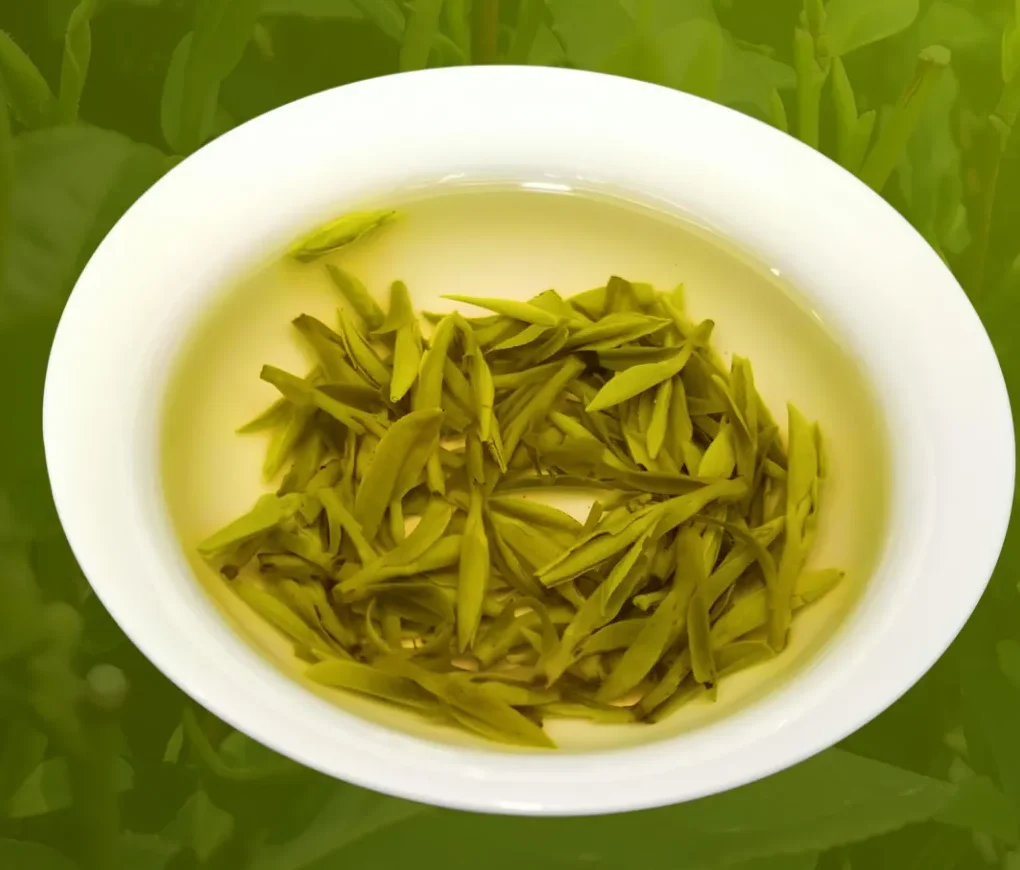
There is no universal rule that all good leaf beds must be one shade, perfectly identical or free of every broken piece. Cultivar, sorting, firing and handling all affect the view. Leaf appearance helps you describe the tea; it cannot independently locate the garden.
What taste cannot tell you
A lovely chestnut aroma does not prove West Lake origin. An astringent cup does not prove a fake, and tea from other Longjing production areas should not be dismissed as flavorless. Assess enjoyment and provenance as two connected but separate questions.
For an origin claim, check the actual producer, stated batch information and the official traceability service. A general food-production license or a decorative mark is not, by itself, a West Lake origin certificate.
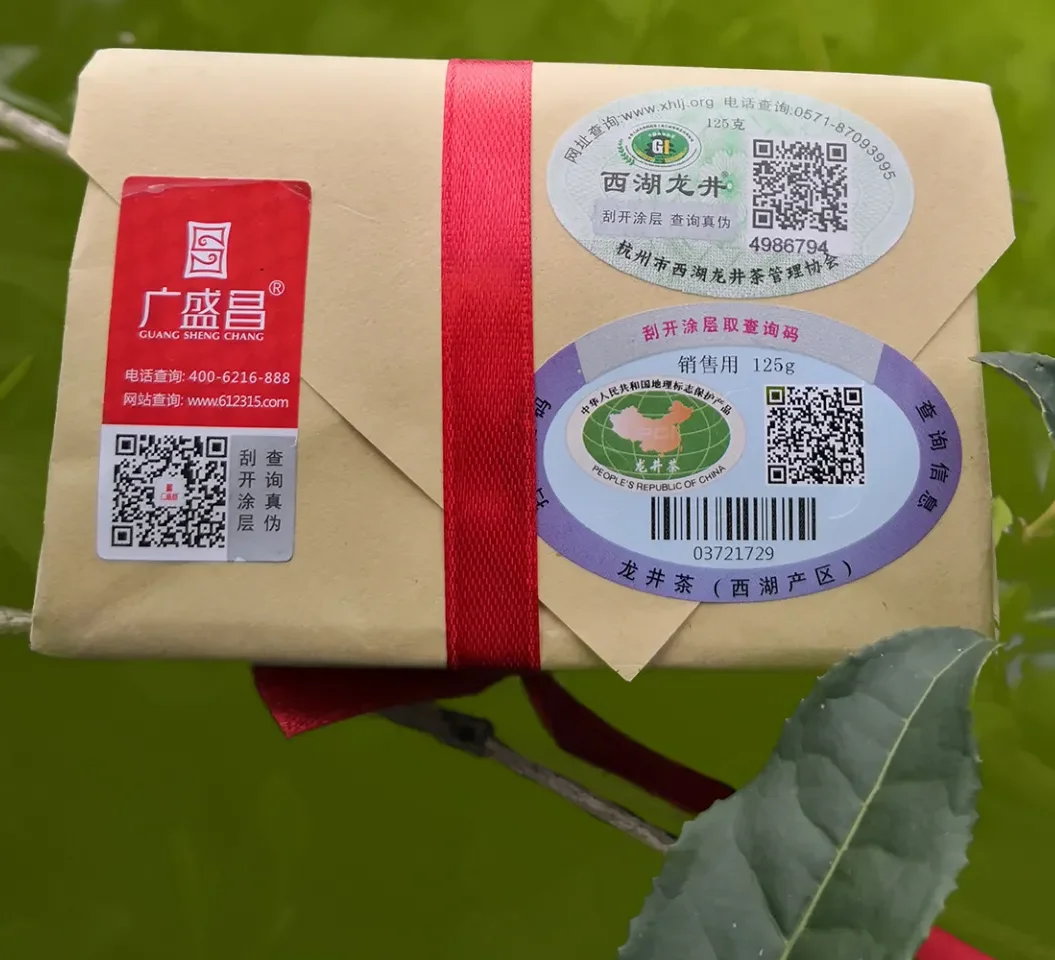
The supplied package image is an example from its own time and brand. Keep its printed label details separate from the current package you are checking. Use the code on your tea through the association’s official verification entry, following the current instructions.
Keep a short tasting note
Write down the batch, dose, water, temperature and time, then add a few plain words: aroma, strength, mouthfeel and finish. Repeat a cup you liked before making the recipe more complicated. This is more useful than borrowing a long list of tasting terms you cannot yet recognize.
For a difficult cup, see why Longjing tastes bitter or weak. For provenance, use the authenticity checklist. Browse the full Longjing tea guide for related reading.