Guides du thé et des objets à thé
Gongpai Longjing Review: Jingpin vs AA Grade
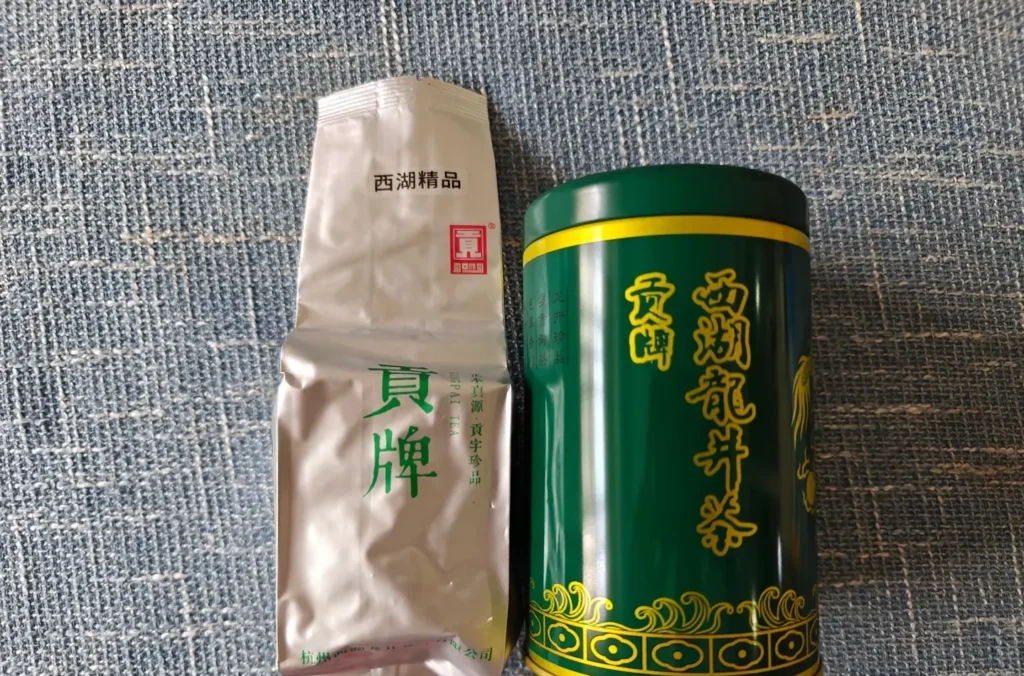
This Gongpai Longjing review compares the supplied notes for a Jingpin product and an AA product. The Jingpin sample is described as fuller and more expressive, while the AA notes present a less expensive option with a strong bean-like aroma. That is the source reviewer’s comparison, not a new blind tasting by Sandao.
Before using the result: the supplied file does not establish an authenticated harvest year for the tasted samples. It includes promotional graphics marked 2025, but those do not prove the year of the tea in the photographs. Offers and shopping links have been removed. The prices below are historical figures quoted by the reviewer, not current listings.
What “Jingpin” and “AA” mean in this record
The source describes Gongpai’s Longjing Village line using Jingpin, AAA, AA and A labels, and relates them to successive pickings. Treat that as the product range described by the reviewer. These company labels are not a universal grading scale shared by all Longjing producers, and a current year’s range may need checking separately.
The reviewer also says the Jingpin sample combines Quntizhong and Longjing 43 material. This is a source claim, not a cultivar identification independently established from the leaves. The background to those names is explained in our cultivar comparison.

Dry leaf and brewing setup
The Jingpin dry tea is described as flat and smooth, yellow-green, with some variation in size and a restrained bean-like fragrance. The reviewer found the aroma pleasant rather than forceful.
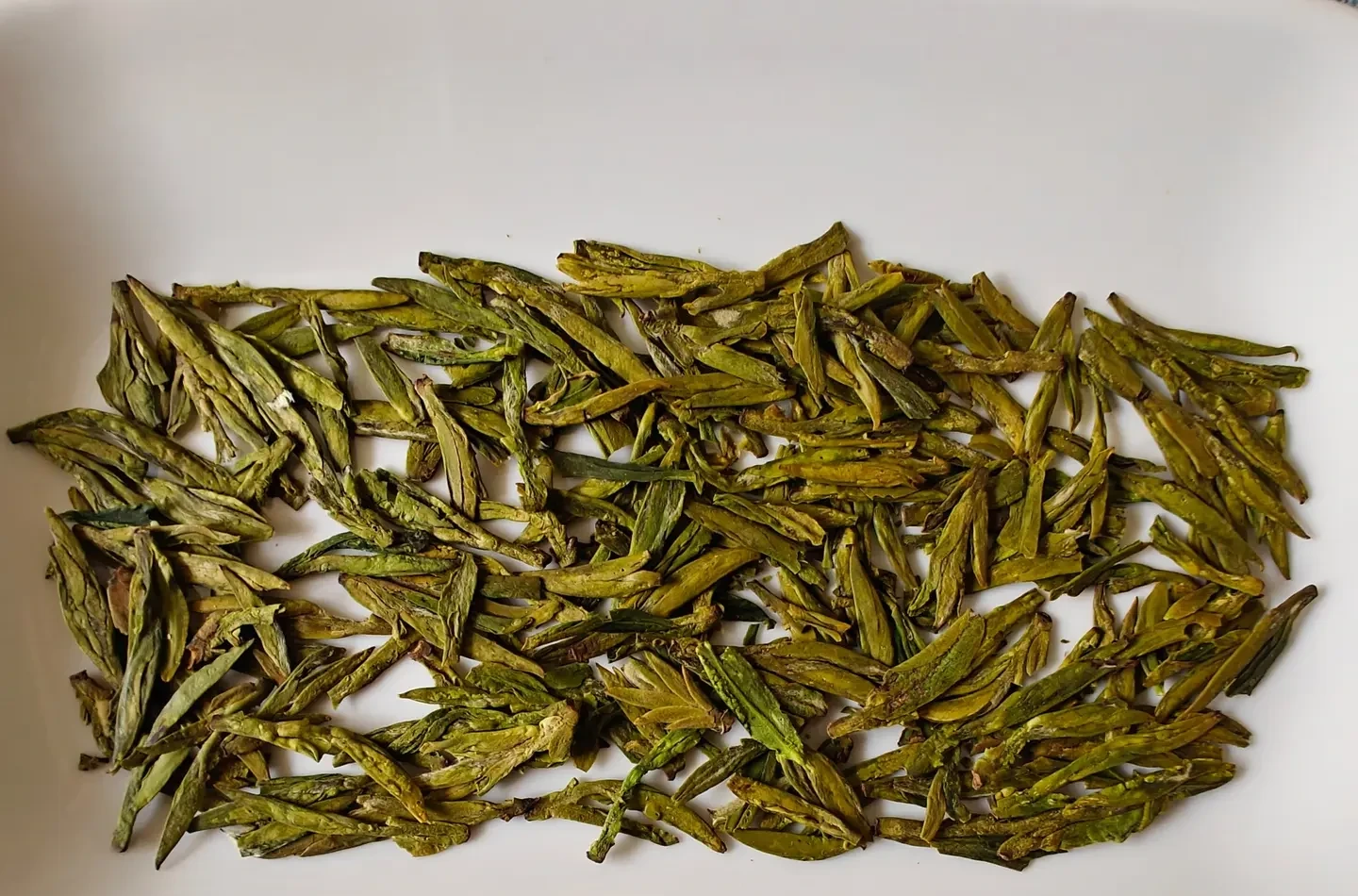
The recorded setup was 3 g of tea in a 125 ml gaiwan, using purified water at 100°C / 212°F. The three infusions were released after 5, 10 and 15 seconds. The nominal vessel capacity is given; actual water fill volume is not specified. These short gaiwan infusions should not be confused with leaving leaves in a glass of near-boiling water for several minutes.
How the three infusions were described
| Infusion | Source observations |
|---|---|
| First, 5 seconds | Bright tender-green liquor; bean-like aroma with a floral note; full body, freshness and a good sweet finish. |
| Second, 10 seconds | Bean-like fragrance and body remain; fresh, rounded and lightly sweet, with some astringency in the finish. |
| Third, 15 seconds | A lighter bean-like note; some body remains, with a refreshing, mildly sweet taste and a little returning sweetness. |

The slight second-infusion astringency is worth keeping in the account. A review becomes more useful when it records a limitation alongside the attractive qualities. None of these descriptions guarantees the same experience from a different batch, water or brewing method.
What the infused leaves show
The source describes tender, soft, fresh-green infused leaves, with buds, bud-and-leaf shoots and some broken material. It judges uniformity as moderate. That supports a description of the photographed sample, rather than a claim of perfect leaf sorting.
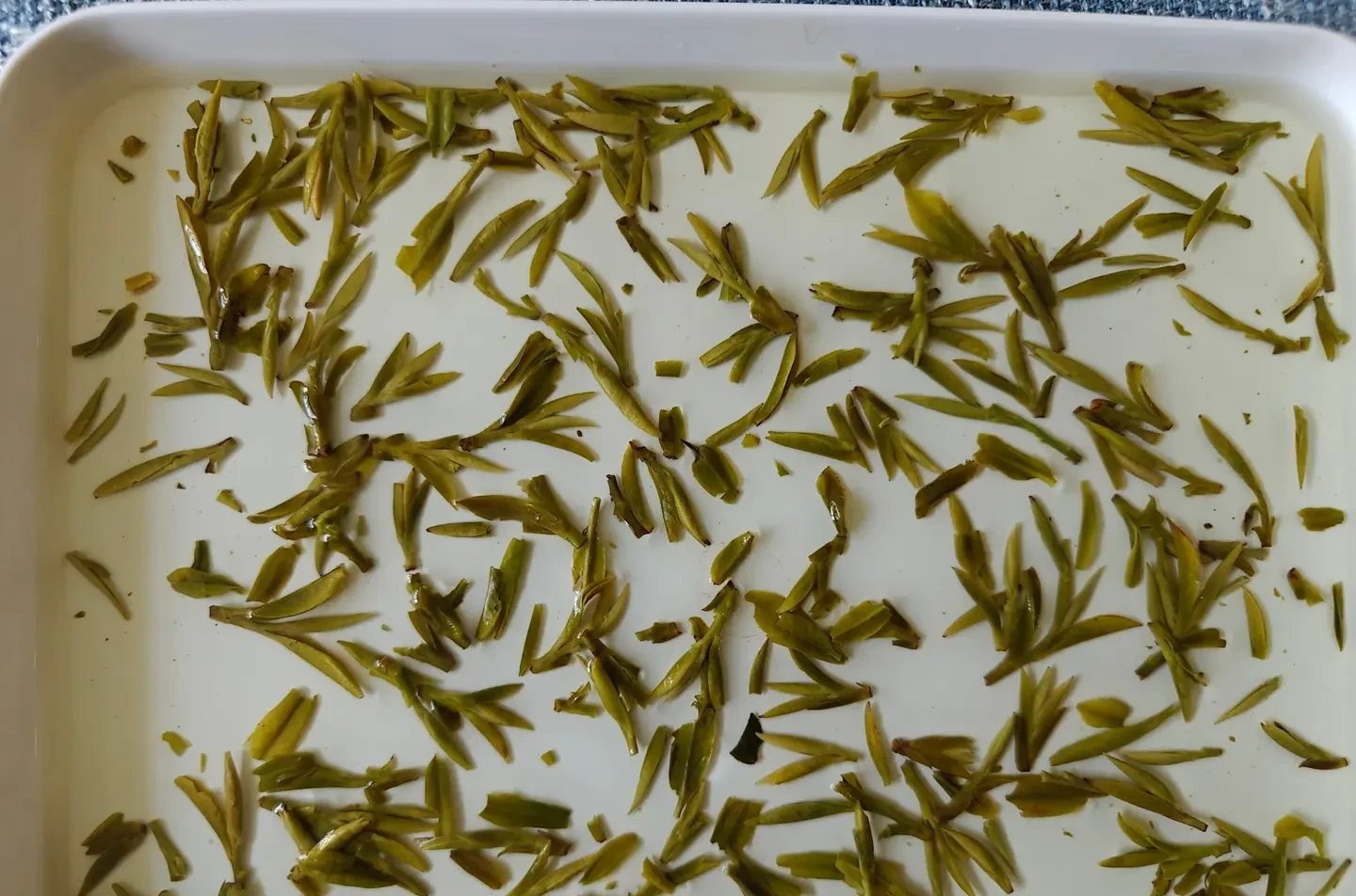

The original tries to assign individual shapes to Quntizhong or Longjing 43. We have not repeated that as a dependable identification method. A retail cultivar claim should rest on producer information and provenance, not a few opened leaves.
Jingpin versus AA: flavor and the recorded price gap
For AA, the reviewer describes flat yellow-green leaves, a more obvious bean-like fragrance, a bright yellow-green liquor and a softer texture, with freshness and a sweet finish. The AA discussion is shorter and does not provide a matching three-infusion protocol, so this is not a controlled side-by-side test.

The quoted purchase prices were RMB 290 per 50 g for Jingpin and RMB 148 per 50 g for AA. In that historical comparison, Jingpin cost about 1.96 times as much. That arithmetic does not establish today’s prices or show that every drinker will value the difference equally.
Which would make sense to try?
On the source notes alone, Jingpin is the option to investigate for fuller texture and a more detailed finish; AA is the more economical candidate for regular drinking. Try comparable, current samples before treating either as a personal favorite. Check harvest and storage details, product-level origin information and the cost per 50 g.
For a broader view, see six Longjing brands and our guide to what a Longjing price covers.
Source: user-supplied review attributed to Hecha Gai BUG. Tasting impressions and historical purchase prices belong to that source. Promotional screenshots, coupons and retailer purchase links are excluded; this adaptation does not claim a new independent test.