चाय और चाय के बर्तनों के मार्गदर्शक
Lu Zhenghao Longjing Tea: A Meijiawu Family Story
Lu Zhenghao Longjing tea carries a person’s name. Behind it is a family story rooted in Meijiawu, a tea-growing village in Hangzhou, China: a father who worked for his village, and a daughter who later put his name above a tea shop.
For someone meeting the brand for the first time, the names can be confusing. Lu Zhenghao was the father. Lu Jiangmei, his daughter, founded the tea business that bears his name. That distinction is the starting point for understanding the story.
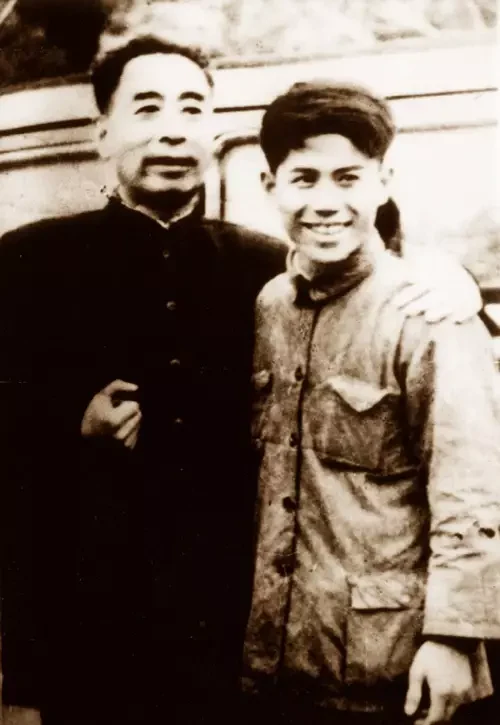
One name, two generations of memories
The supplied Chinese profile, credited to the Hangzhou Women’s Federation, begins with two ways of remembering Lu Zhenghao. An older generation remembers a Meijiawu village leader associated with visits by Premier Zhou Enlai. Other readers know the name from tea shops and packages.
Those memories meet at the same place: Meijiawu. The shop offers a visible link between a local life and a commercial brand, but the family’s connection to tea began before the shop sign.
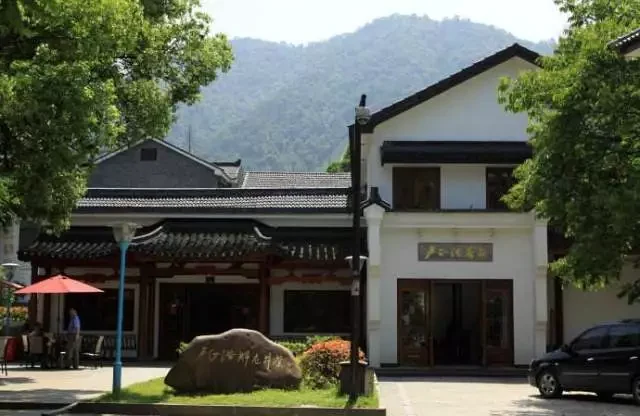
Lu Zhenghao and Meijiawu’s tea-growing years
According to the supplied profile, Lu Zhenghao was born in Meijiawu in 1933 and became the village’s first Party branch secretary in 1952, aged 19. Tea farming was central to the work that followed: improving gardens, organizing production and finding ways to help the village earn a better living.
Zhou Enlai’s repeated visits became an important part of Meijiawu’s collective memory. In a 2018 interview with Lu Zhenghao’s granddaughter, Hu Biru, the family recalled five visits and described his work on tea gardens and village facilities.
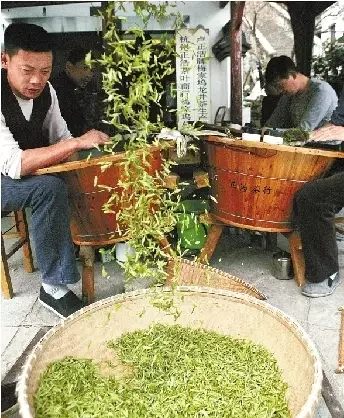
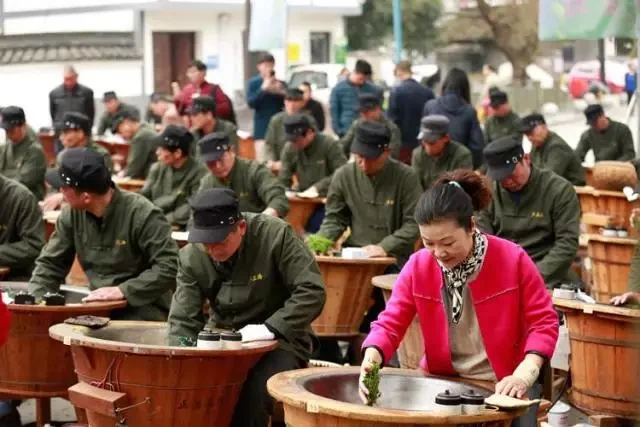
It is easy to tell this history as a series of famous encounters. The photographs of tea-making point to something more everyday: people learning, working beside one another and turning fresh leaves into a saleable crop.
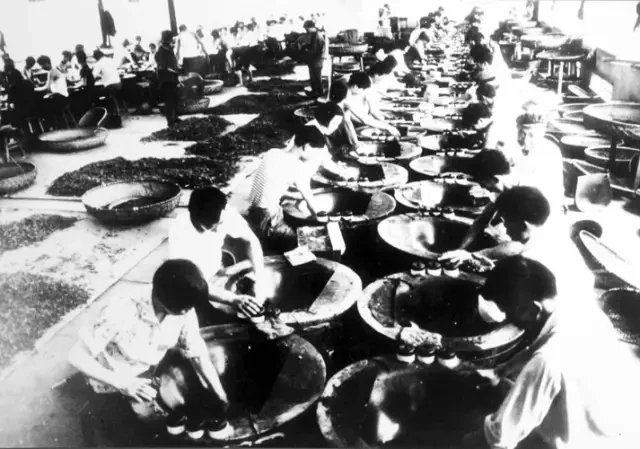
The original profile credits Lu with expanding tea cultivation and improving production methods. These are historical accounts of village development, rather than claims that every modern packet carrying his name was grown in a particular garden.
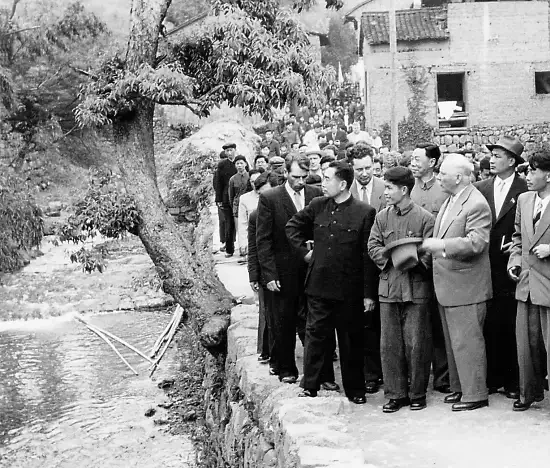
The father Lu Jiangmei remembered
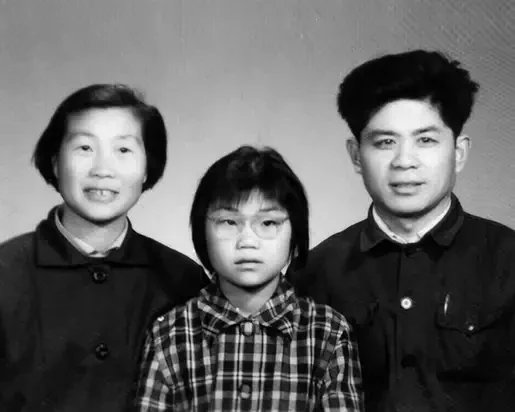
The family portrait adds a quieter side to the public story. Lu Jiangmei remembered an optimistic father who brought questions and laughter to the dinner table. The qualities she later emphasized were honesty, generosity and taking responsibility for other people.

The family account also describes difficult years and a childhood memory of taking food to her father. His delight at seeing his youngest daughter stayed with Lu Jiangmei. Years later, her recollection of that encouragement became part of the story she told about starting the business.
A daughter takes her father’s name into business
After her father’s death in 1991, the profile recounts, Lu Jiangmei wanted to continue his work of bringing Meijiawu tea to more buyers. The early business was called Hangzhou Zhenghao Tea Trading, using his name. It became the starting point for the Lu Zhenghao tea brand.
That choice gave the enterprise a very personal measure of success. Each sale carried a name she associated with her father, not simply a name selected for a new package.
Taking fresh tea-making to Beijing
A memorable part of the family’s account concerns Beijing in the early 1990s. Hu Biru recalled her mother traveling with tea makers, fresh leaves and iron woks so customers could watch the tea being pan-fired and buy it on the spot. It was a practical introduction to a Chinese tea that many shoppers might otherwise have known only by name.
The supplied profile adds memories of long train journeys and repeated spring selling seasons. Some transport details differ between the accounts, so it is better to keep the shared point: the family took the craft to customers instead of relying entirely on a label to explain it.

For an overseas reader, Longjing and Dragonwell are two familiar names for this tea. Watching a batch take shape in a wok gives those names a physical meaning: fresh leaves, heat, hand movements and the finished tea.
From a tea shop to online retail
The business later developed stores and online sales. In her 2018 interview, Hu Biru dated the Tmall flagship opening to 2011. For the family, online retail offered another way to carry a name already known to shop customers to a wider audience.
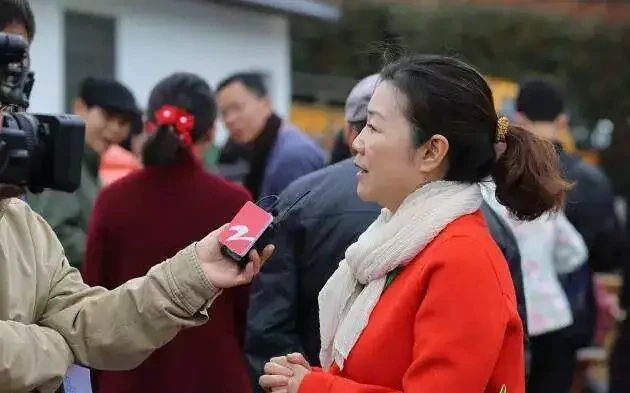
Expansion also brought new production methods. A report published by the Zhejiang tax authority on 14 April 2022 identified Lu Jiangmei as chair of Hangzhou Zhenghao Tea and discussed investment in a smart tea factory. That is a dated report of the company’s development, not a claim that every product is entirely hand-made.

What “honesty in people, excellence in tea” means in this story
The motto in the supplied profile is 人至诚,茶至臻, which can be rendered as “honesty in people, excellence in tea.” Lu Jiangmei connected it to the way her father treated others. Its appeal lies in the link between a product and the conduct of the people making and selling it.
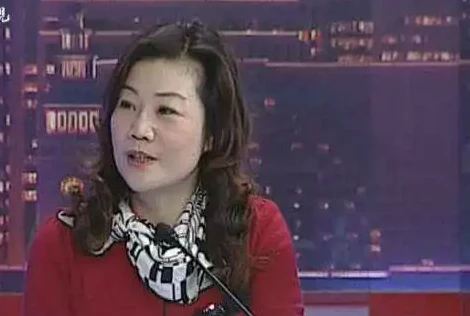
A motto is a statement of values, not a batch certificate. A brand history can explain why a business matters to a family; a product page still needs to explain the tea itself. When choosing a tea, read its declared origin, harvest year, grade and processing description alongside the story.
A family story within the larger story of Chinese tea
Lu Zhenghao’s name connects a village leader’s working life to his daughter’s business and the next generation’s memories. It is one way of seeing how Chinese tea culture travels: through gardens and workshops, certainly, but also through families deciding what they want to carry forward.
That does not require a claim that one brand is best. It gives a familiar tea name a human setting—and a good reason to learn more about the people and places behind the next cup.

Explore the wider Longjing tea and West Lake Dragonwell collection, or read our guide to West Lake Longjing origins and grades.
Sources: adapted from the supplied profile credited to the Hangzhou Women’s Federation; cross-referenced with the 2018 Hu Biru family interview and the dated 2022 Zhejiang tax-authority report linked above. Photographs are supplied archival illustrations, kept in the original sequence; the repeated opening portrait is retained. Physical Chinese signs remain intact, with their meaning explained in English captions. Edited 23 October 2026.