चाय और चाय के बर्तनों के मार्गदर्शक
Chenpi Tea Benefits: What Research Can and Cannot Tell Us
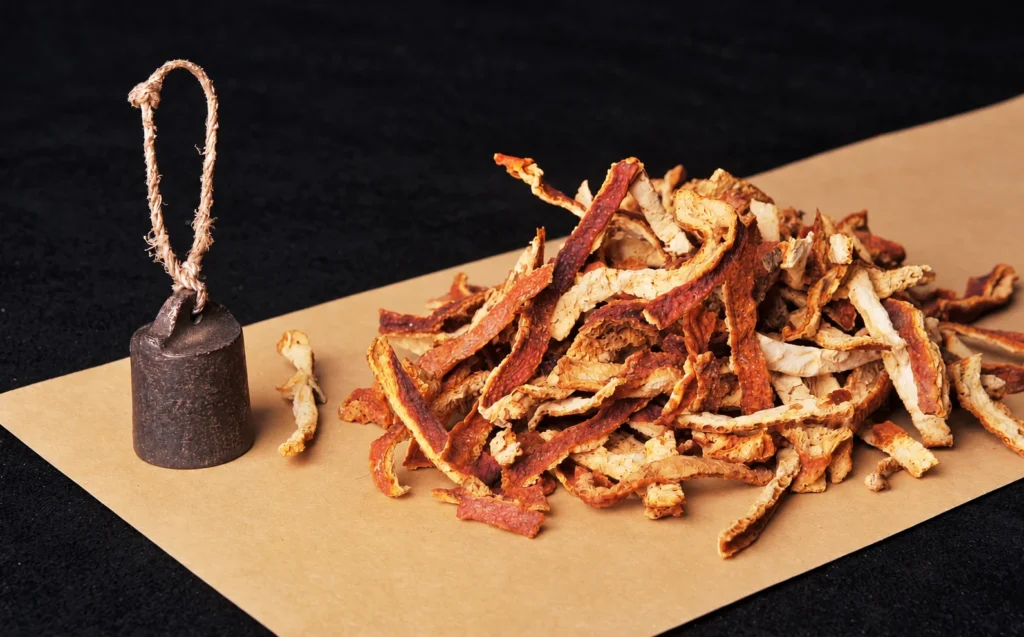
Searching for chenpi tea benefits brings up an impressive list: digestion, cough relief, weight loss, clearer skin and much more. The problem is that these statements often describe different kinds of evidence as though they all referred to the same cup of tea.

Begin with benefits you can actually judge
Chenpi offers aroma, flavor and another way to enjoy an unsweetened drink. It can add interest to a tea session or a meal. Those are meaningful culinary qualities without requiring a disease-treatment claim.
Choosing it in place of a sweetened drink changes the drink you consume, but chenpi is not a special fat-removal ingredient. Sweetened peel snacks and bottled drinks also need their own ingredient and nutrition checks.
What research is studying
A 2024 systematic review of Citri Reticulatae Pericarpium surveys chemical constituents and pharmacological research, including flavonoids and terpenes. It also identifies gaps in understanding how components relate to effects and how they behave in the body. This supports continued research, not a blanket clinical promise for a household infusion.
Four questions for any health headline
- What was tested? Whole peel, a concentrated extract or an isolated compound?
- Where was it tested? A laboratory assay, animals or people?
- How was it used? Dose and preparation may differ greatly from brewing.
- What outcome improved? A biochemical marker is not automatically a meaningful benefit for patients.
An antioxidant result in a test system does not establish that drinking chenpi prevents disease. Nor can an extract experiment be converted into instructions to drink a certain number of cups.
Traditional use deserves accurate wording
Chenpi has a long place in Chinese food culture and traditional medicine. A statement about historical use should say that clearly, with the relevant context. It should not be silently rewritten as a modern clinical conclusion.
Recipes promoted for burns, breast lumps, persistent stomach pain or bronchitis should not replace medical assessment. Peel should not be applied to damaged skin on the strength of an online tea article.
How to read a sales claim
Be cautious when a seller moves from “contains flavonoids” to “treats your condition,” or from “older batch” to “stronger therapeutic effect.” Ask for research on the actual preparation and use being claimed. Testimonials and age premiums are not substitutes for that evidence.
A reasonable place for chenpi tea
Enjoy a suitable product for its flavor if it agrees with you. Keep medical goals separate, and discuss medicinal or concentrated use with a qualified professional. Our traditional-use guide and precautions guide cover those decisions without turning a drink into a cure-all.