Sandao · الصينية أدوات الشاي والثقافة
China Tea (Zhongcha): Company, History & Tea Brands
Chinese Tea Brands & Companies
China Tea Co., Ltd., known as Zhongcha (中茶), is the tea company within the COFCO group whose business spans many of China’s best-known tea regions. Its official history begins in 1949. Today, the China Tea name sits alongside specialist brands such as Sea Dyke, Butterfly and Monkey King, covering everything from jasmine tea and oolong to pu-erh and Liubao tea.
For an overseas reader, one distinction makes the catalogue much easier to understand: China Tea is a company and brand name here, while Chinese tea describes the wider world of tea grown in China. This profile introduces the company, its brand family and the regional businesses behind the names on the package.
China Tea company at a glance
| Chinese company name | 中国茶叶股份有限公司 |
|---|---|
| English name used by the official website | China Tea Co., Ltd. |
| Core brand | China Tea · Zhongcha · 中茶 |
| Group affiliation | COFCO |
| History | The company traces its establishment to 1949; the core trademark dates to 1951. |
| Head-office location | Chaoyang District, Beijing, China |
| Business | Tea sourcing, processing, research, brand operations, domestic sales and international trade |
| Official website | chinatea.com.cn |
The company introduction presents an operation connecting tea resources, manufacturing, technical work and distribution. Beijing is the headquarters location; it is not the growing origin of every tea sold under the group’s brands.

From a national tea company to a family of brands
China Tea’s official account places its establishment in 1949, during the development of China’s national trade organizations. Its long involvement in tea exports helps explain why the brand is familiar to tea drinkers outside China as well as to shoppers in its domestic market.
In 1951, the company introduced the trademark often called “Hong Ba Zhong”: a green Chinese character for tea, 茶, surrounded by eight red 中 characters. The official core-brand page explains the design through the idea of Chinese tea reaching markets in every direction. It remains one of the easiest ways to recognize the brand.
| Year | Milestone in the official account |
|---|---|
| 1949 | Establishment of China Tea, the starting point used in its company history. |
| 1951 | Introduction of the core China Tea trademark. |
| 1973 | The Yunnan business’s historical account describes work by its predecessor and Kunming Tea Factory on ripe pu-erh fermentation. |
These dates refer to different parts of the story. A brand’s founding year, a regional company’s establishment and a tea’s production year are separate facts; none should be substituted for the date on a particular product.
The China Tea brand family
The official category-brand page introduces Sea Dyke, Butterfly, Bai Nian Mu Cang and Monkey King. The company introduction also names Long Guan and the core China Tea brand. The table below is a practical map of that family.
| Brand | Chinese name | How to understand its focus |
|---|---|---|
| China Tea / Zhongcha | 中茶 | The core brand across multiple tea categories, including well-known pu-erh products. |
| Sea Dyke / Haidi | 海堤 | The Xiamen business, particularly associated with oolong and black teas. |
| Butterfly | 蝴蝶 | The Fujian business’s multi-category brand, including white, jasmine, oolong, black and green teas. |
| Monkey King / Houwang | 猴王 | A jasmine-tea brand; the official account records trademark registration in 1982. |
| Bai Nian Mu Cang | 百年木仓 | Anhua dark tea, with a brand story connected to historic wooden tea warehouses. |
| Long Guan | 龙冠 | Longjing green tea, named in the company’s product and brand introduction. |
A family relationship does not make the products interchangeable. A Butterfly white tea, a Sea Dyke oolong and a China Tea pu-erh cake call for different storage, brewing and buying decisions.
Regional businesses behind the teas
Xiamen: Sea Dyke, oolong and black tea
The Xiamen company profile describes Xiamen Tea Import & Export Co., Ltd. as a tea-brand operator focused on oolong and black tea. Its Sea Dyke identity is closely tied to Xiamen’s trading history and the sea wall that connected the island with the mainland.

Fujian: the Butterfly range
Fujian Tea Import & Export Co., Ltd. describes a range including oolong, jasmine, white, black, green and dark teas. Its profile connects the Butterfly brand with tea sourcing, processing, blending, testing and export business.
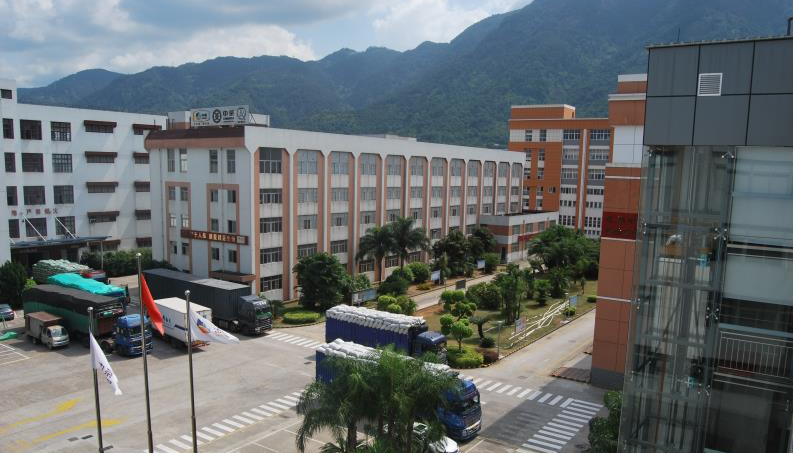
Yunnan: pu-erh and black tea
The Yunnan profile identifies Yunnan China Tea Co., Ltd. and discusses its predecessor’s role in pu-erh production, including historical red-, green- and blue-mark products. It also describes the development of ripe pu-erh processing. Those historical references explain the brand’s background; an old-style wrapper alone cannot establish a tea’s age or authenticity.
Guangxi: Wuzhou and Liubao tea
Wuzhou China Tea Co., Ltd. carries forward a regional business in Liubao tea production and export. Its profile distinguishes the present company’s establishment in 2007 from the earlier Wuzhou tea-export operation dating to the 1950s, and records a new processing plant entering operation in 2018.

Hunan: Anhua dark tea and warehouse heritage
The Anhua First Tea Factory profile links the site to a tea business established in 1902. Its wooden warehouses and industrial buildings form part of the story behind the Bai Nian Mu Cang range. The regional history is older than the 1949 China Tea company history, so the two timelines should be read separately.
Tea categories, production and research
COFCO’s China Tea introduction describes coverage of China’s six traditional tea categories—green, yellow, white, oolong, black and dark tea—alongside scented teas. The regional company pages make that broad description more useful by showing which businesses work with particular teas.
China Tea’s own introduction describes sourcing through company operations, suppliers and growers, together with processing, blending, product standards and technical research. It also discusses specifications for several tea categories and assessments of aged teas. A group-level description helps explain the business model; the growing area, ingredients and certification applicable to a purchase still belong to the individual product.
Published company and parent-group pages use different figures for gardens, factories and stores. This profile therefore maps the businesses and brands without treating undated totals as a current count.
Sales channels and what to check before buying
The official company introduction describes wholesale distribution, specialist stores, e-commerce and international business. Buyers can begin with the business directory and the relevant company’s official contacts to identify the right channel for a brand or tea category.
Check the exact producer, tea category, origin, production date, net weight and storage instructions. For pu-erh or other aged teas, ask for a clear production and storage history. For overseas orders, confirm delivery availability and import requirements with the seller; a national brand presence does not mean every sales channel ships internationally.
Official company contact
| Company | 中国茶叶股份有限公司 · China Tea Co., Ltd. |
|---|---|
| Address shown on the website | COFCO Fulinmen Building, No. 8 Chaoyangmen South Street, Chaoyang District, Beijing, China |
| Postal code | 100020 |
| Public company email | chinateadongban@cofco.com |
| Official contact page | China Tea contact information |
Common questions
Is Zhongcha the same as China Tea?
In this company context, yes. Zhongcha is the pinyin reading of 中茶, while the official English website uses China Tea. The broader phrase “Chinese tea” includes many unrelated producers and brands.
Does every China Tea product come from one factory?
No. The official business directory includes several regional companies and production operations. Read the producer named on the specific package.
Are all teas under the group one tea type?
No. The portfolio includes multiple tea types and regional brands. “Black tea” in English corresponds to hong cha (红茶); post-fermented hei cha (黑茶) is usually described as dark tea.
Sources and further reading
Prepared by Sandao from the official company, brand, regional-business and contact pages linked above, with the COFCO company introduction as a parent-group reference. Reviewed October 26, 2026. Images are credited to China Tea’s official website; the photographs are presented in the context given by their source pages.
Continue with Tea Knowledge, the Longjing tea guides, or the Chinese tea brand directory. This is Sandao’s independently prepared company profile.