أدلة الشاي وأدواته
Wuyi Rock Tea Toad-Back Leaves: A Quality Sign?

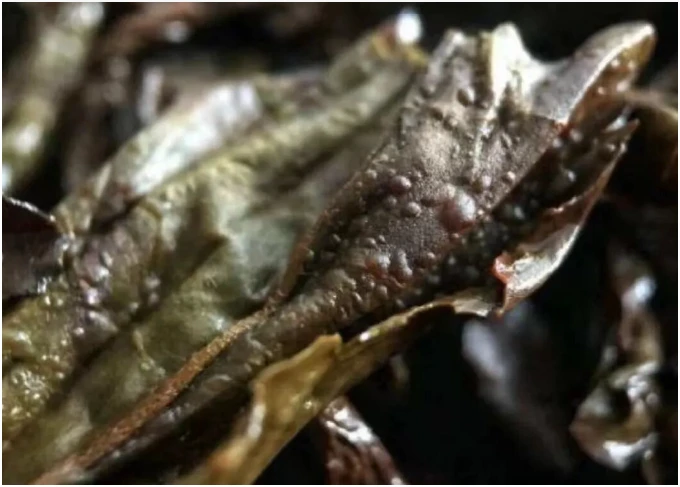
Tiny raised points on infused Wuyi rock tea leaves are often called hamabei, literally “toad back.” The term is vivid, but the sales claim attached to it can be misleading: more bumps do not automatically mean better tea. The texture is a clue about processing that must be considered alongside aroma, liquor and the condition of the leaves.
What is being observed?
The bumps can become more visible when a roasted leaf rehydrates. Their size and distribution vary with the leaf material and the roasting history. Inspect several leaves under ordinary light. One close-up photograph is useful for showing texture, but it cannot establish the overall quality, origin or authenticity of the whole lot.
How roasting affects the leaf
Heating drives moisture from the leaf and changes its structure. The resulting texture depends on more than a peak temperature: duration, moisture distribution, leaf thickness and how the tea is handled all play a part. Avoid turning a descriptive pattern into a universal temperature chart. Different cultivars and batches do not respond identically.

Three situations worth separating
A lighter roast may show few obvious bumps and a relatively supple leaf. A more developed roast may show clearer texture and deeper color. Excessive roasting may leave a harsh burnt smell, brittle structure or a flat cup. These are possible combinations, not fixed grades. Darker color or stronger texture cannot, on their own, distinguish a well-developed roast from damage.
Judge the cup as a whole
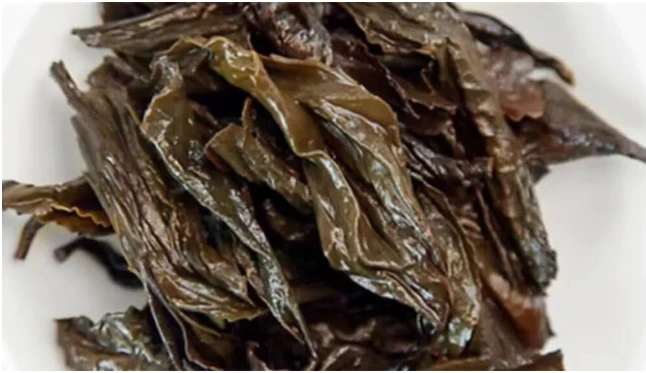
Look for a clean aroma, a roast that supports rather than overwhelms the tea, and a satisfying progression through infusions. Compare the cooled leaves for consistency without demanding identical color in every leaf. A sound site, suitable material and careful manufacture work together. Toad-back texture can be part of that picture, but it is never a substitute for it.