Ratgeber zu Tee und Teegeschirr
Tea Technology in China: Cultivars, Gardens and Processing
Edited and translated from the original. Historical industry views and case studies; company accounts and period data do not describe current operations.
From research to practical use
Tea technology is more than a machine on a factory floor. The original review separates knowledge creation, technical application and changes in management. Research builds understanding; applied technology turns that understanding into usable processes; management provides the conditions for both.
The source surveys work associated with China’s 2016–2020 period and examples discussed in 2021. It groups the subject into cultivar development, planting and cultivation, tea processing, and further processing of tea ingredients. This article follows that structure rather than presenting the examples as the latest available technology.
Cultivars connect plant traits with product possibilities
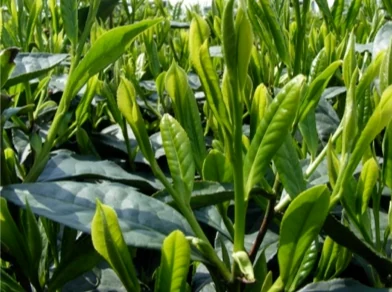
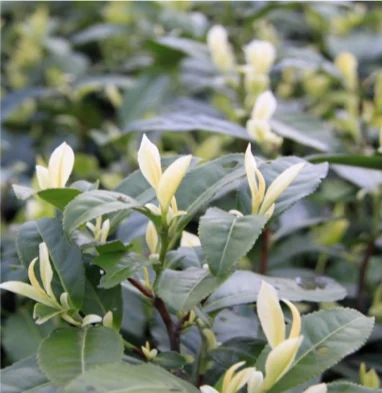
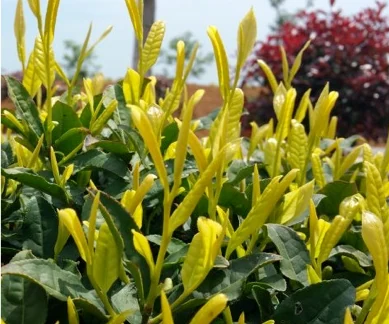
Cultivar work begins with germplasm resources, genetics and breeding methods. Different leaf colors, growth patterns and processing suitability can create different opportunities for producers. The source illustrates this with Shuchazao, Ganbaixiang, Huangkui and Ziyan.
A pale or purple leaf is a plant characteristic, not enough by itself to identify the finished tea category or judge its quality. Cultivar choice still needs suitable growing conditions, management and processing.
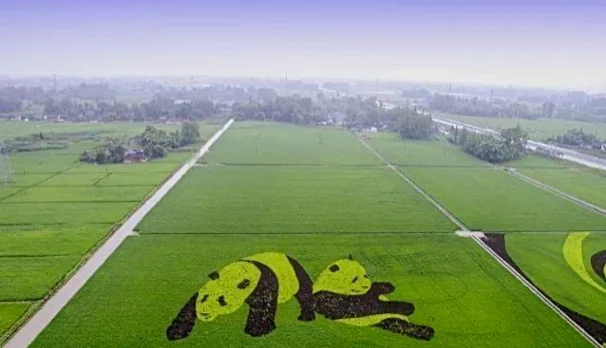
Colorful plantings can also contribute to a landscape experience. That creates another possible use for the garden, but a striking photograph is not a substitute for evaluating the crop’s practical performance.

Manage the garden as an ecological system
The cultivation section connects weed management, pest management, fertilization and environmental monitoring. Instead of treating each as an isolated operation, it considers how soil, water, beneficial organisms and crop growth interact.
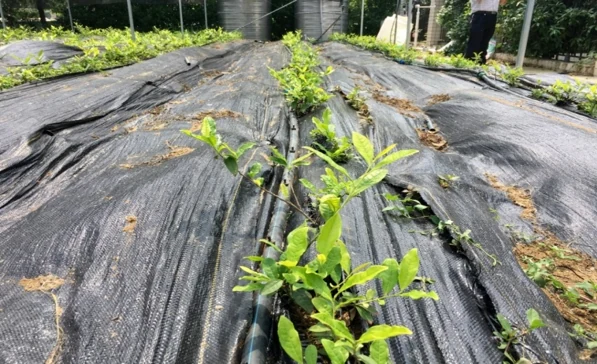
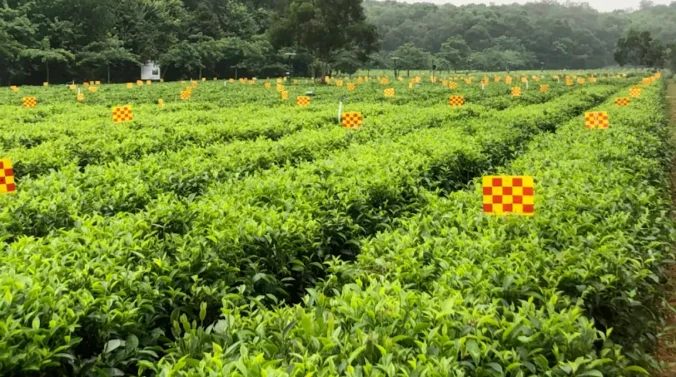
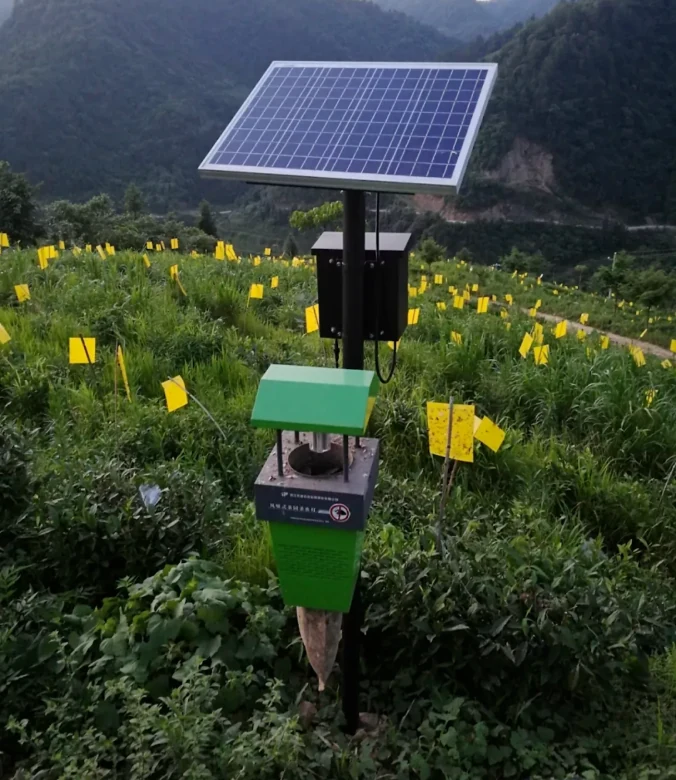
Examples include ground-cover fabric, rice-husk mulch and living cover between rows. Their purpose is to manage unwanted plants and soil conditions while reducing repeated manual work. The source also illustrates colored insect traps and a solar-powered light device as parts of pest-management systems.
These are historical examples rather than instructions that one treatment works equally in every garden. Site conditions, organisms present, maintenance and monitoring determine how a method performs. The broader technical direction is to use observation and integrated management rather than a single automatic remedy.



Automation needs to respect tea shape and process
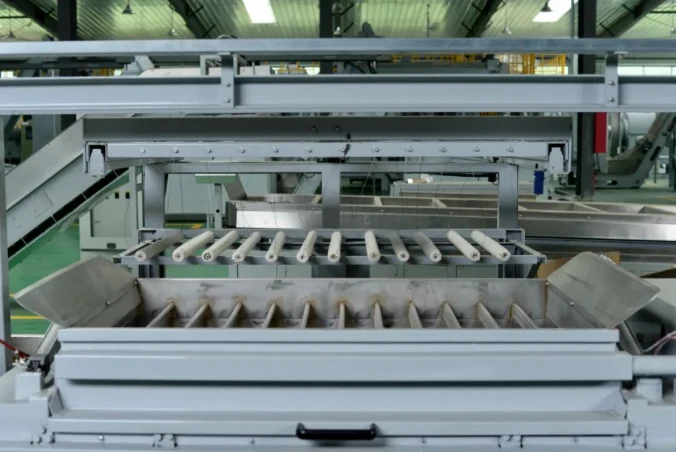
Traditional tea processing contains many operations whose effects depend on time, heat, moisture and movement. The review describes attempts to make these variables more measurable and repeatable, including continuous processing and digital quality control.
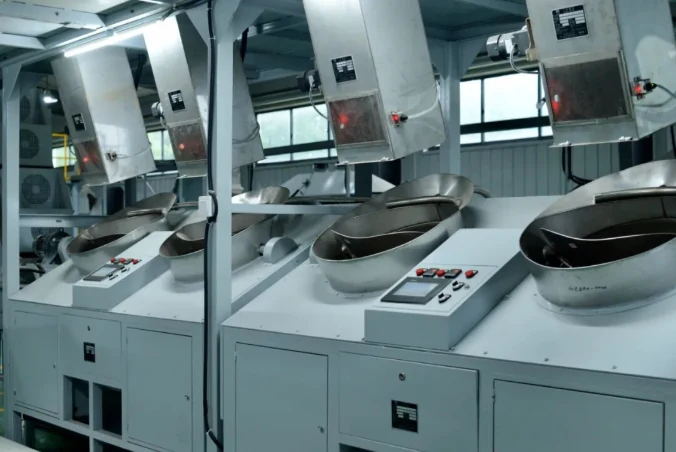
Different green-tea shapes require different forming actions. The photographs illustrate equipment associated with bud-like, granular, twisted or strip-like, and flat leaf forms. A line suited to one shape is not automatically suitable for another.
The source also discusses optical sorting and the combination of several cleaning and sorting stages. Their purpose is to improve consistency and reduce repetitive labor. Equipment still needs appropriate input material, operating settings and checks on the resulting tea.


Measure quality without losing the cup
The review points toward combining sensory descriptions with instrument measurements and predictive models. Such systems can help connect processing variables with observable outcomes.
Measurement is useful when its purpose is clear. A reading for color or composition does not, on its own, answer every question a drinker asks about aroma, texture or suitability. The most valuable link is between a measurable process, a repeatable product and a cup that meets its intended specification.
Further processing opens different product routes
Extraction, separation, concentration and drying allow tea materials to enter applications beyond loose-leaf tea. The source covers tea-derived ingredients, soluble tea, prepared beverages and foods containing finely milled tea.
These routes are not interchangeable. An extract dissolved in water differs from a suspension of whole-leaf powder. Matcha is a specific type of processed tea powder; not every ultrafine green-tea powder should be described as matcha.
For an enterprise, the useful questions concern intended application, flavor, solubility or dispersion, stability, safety and consistency. A laboratory finding about an ingredient does not automatically establish a health effect for every finished product. The technology becomes commercially meaningful when it fits a defined use and can be delivered reliably.
Related reading
- Chinese Tea Innovation: Barriers and Practical Priorities
- CHASLI: Tea Processing and the “24-Hour Tea Life” Idea
Explore Tea Industry Research in Tea & Teaware Guides
Source attribution
Reprinted from Deng Zengyong’s self-media publication, Tea Industry Management Review. Edited and translated into English by Sandao. Original byline / case supplier: 宁井铭、邓增永 / Ning Jingming and Deng Zengyong。