Ratgeber zu Tee und Teegeschirr
How to Brew Jin Jun Mei: Water Temperature, Ratio and Time
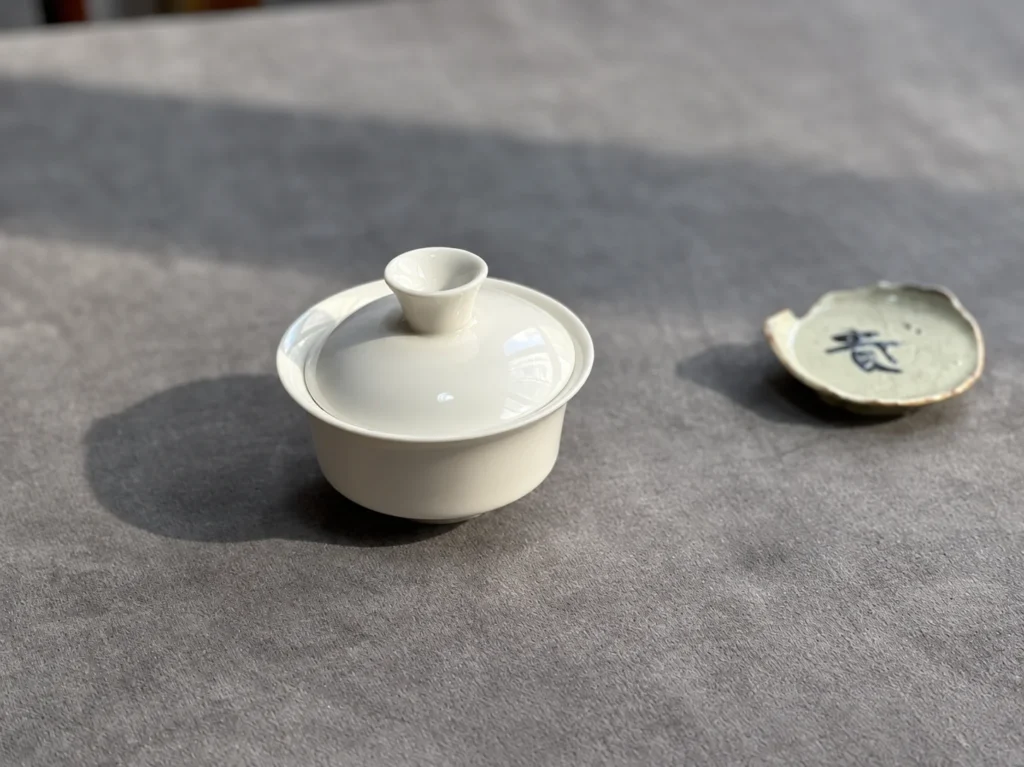
For a first gaiwan brew, try 4–5 g of Jin Jun Mei with 100–120 ml of water around 90–95°C (194–203°F), then pour off promptly after roughly 5–10 seconds. This is a starting recipe, not a test of authenticity. Adjust to the leaf, vessel and strength you enjoy.
Choose a vessel that pours comfortably
A plain porcelain gaiwan makes aroma, liquor color and leaves easy to observe. A teapot or infuser mug also works. What matters is enough space for the tea and a way to separate the leaves from the drink when it reaches the strength you want.

Warm clean teaware
Rinse the clean vessel and cups with hot water, then empty them. This warms the brewing setup and helps you smell the dry tea. Handle a gaiwan only if you can hold and pour it safely; an infuser is a perfectly practical alternative.

Weigh the leaves
Use a small scale. For gongfu brewing, the 4–5 g starting dose gives a concentrated series of short infusions. For a larger mug, begin with 2–3 g per 250 ml (about 8.5 US fl oz), using around 90°C/194°F water and a 2-minute first steep. Strain and taste before extending the time.

Those are two different methods. Do not put a gongfu dose into a small mug and leave it for several minutes unless you deliberately want a very strong cup. If a sachet contains more than you need, weigh out the amount rather than assuming the whole packet is one universal serving.
Find a useful water temperature
Some producers recommend boiling water with a very fast pour; other teas taste better to you at a lower temperature. Start near 90–95°C, then compare. If using near-boiling water, shorten the infusion first. Tender buds are not automatically ruined by hot water, but good tea can still become bitter when over-extracted.

Neither surviving boiling water nor tasting bitter in one brew proves where the tea came from. A brewing adjustment is not an origin test.
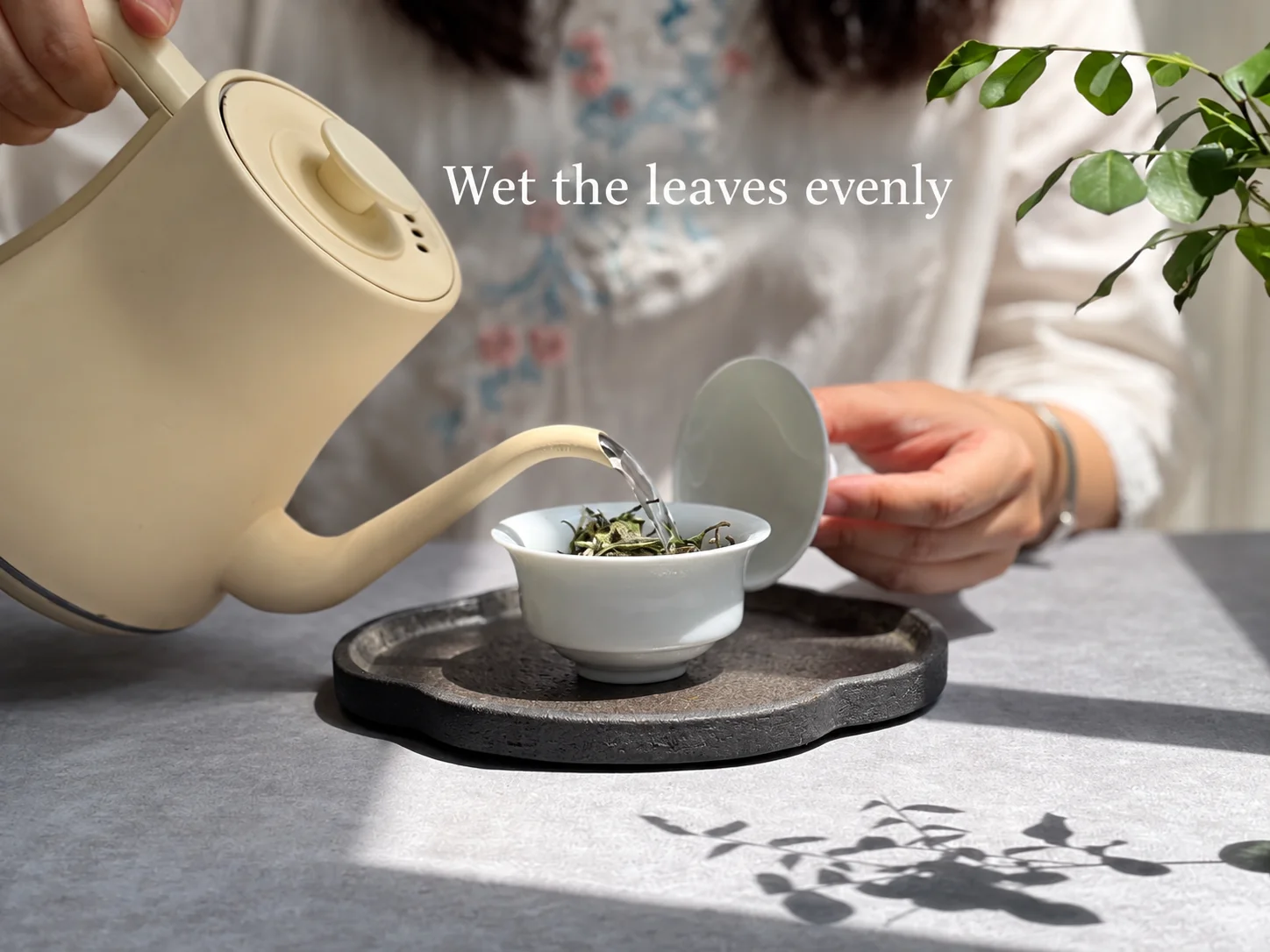
Wet the leaves evenly
Pour from a comfortable height, with the spout near enough to control splashing. A gentle circular motion can help wet the surface evenly. There is no need for a dramatic high pour or a rigid ritual; aim for repeatable contact between leaves and water.

Short infusions first, then extend by taste
Start with a quick first pour. If the next cup is still full, keep the time short. When flavor begins to fade, extend in small steps rather than jumping immediately to a long soak. You might move from about 5–10 seconds to 15, 20 or 30 seconds as needed; the actual sequence depends on the sample.

You do not need to reach a promised ten or twelve infusions. Stop when the remaining cup no longer gives you pleasure. Rinse requirements also depend on the actual tea and maker's directions; a routine rinse does not make questionable tea safe.
Drain between rounds
Pour off as completely as is comfortable and safe. Leaving leaves in a pool of hot tea continues extraction and makes the next round less predictable. Use a pitcher to share an even-strength infusion, and let each cup cool enough to drink comfortably.
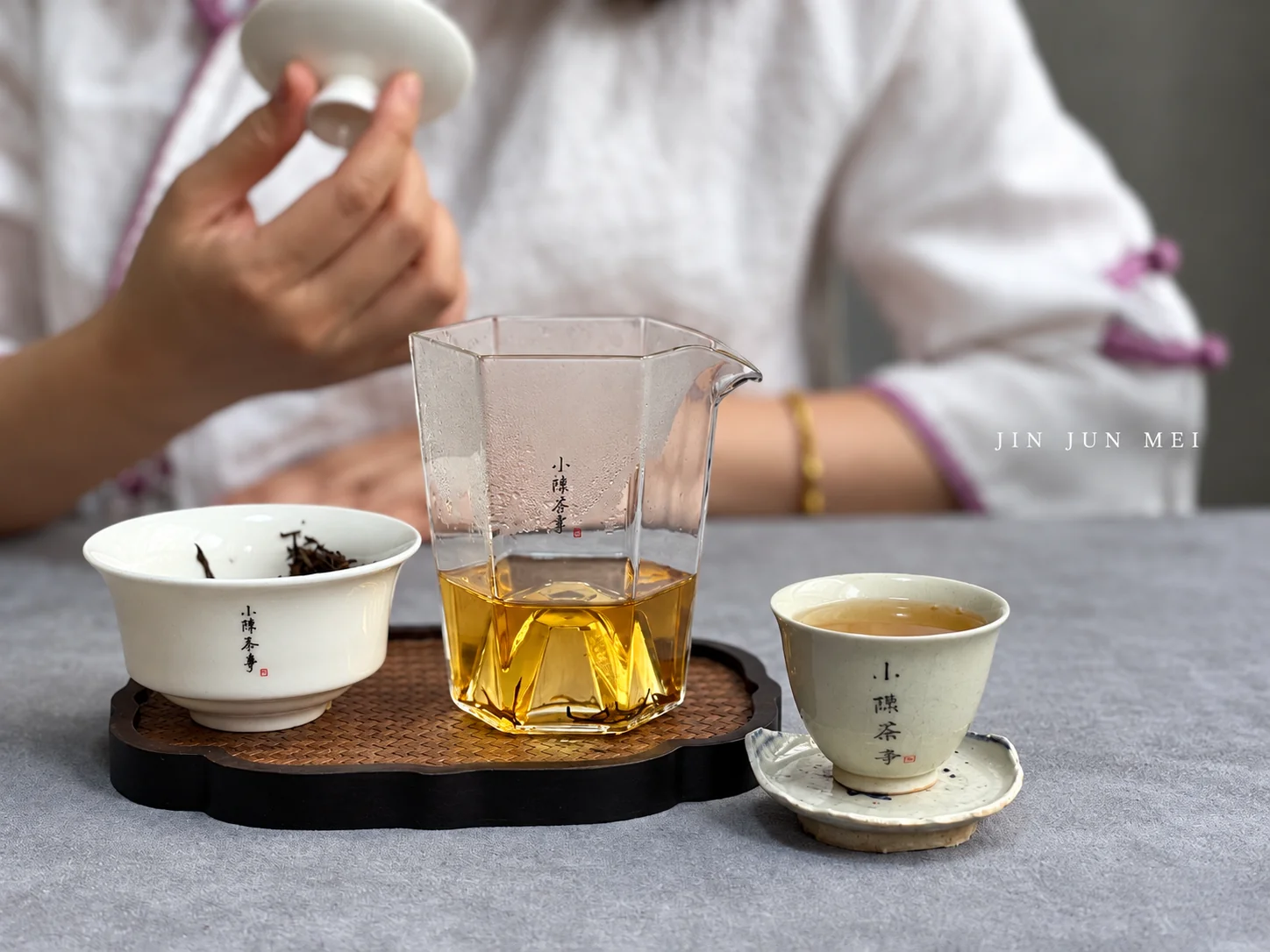
If the cup is harsh, shorten the steep or reduce the dose; if it is weak, add time or a little more leaf next time. Change one variable at a time and write down the result. For storage between sessions, keep unused dry tea sealed, cool and dry.