Ratgeber zu Tee und Teegeschirr
Liubao Tea Storage Regions: What Climate Can Change

The same Liubao tea can take different paths in different storage spaces. A city name such as Wuzhou or Guilin gives some climate context, but a label on a box cannot tell you the humidity inside a particular room. Regional storage comparisons are most useful when they lead to better questions about the actual environment, rather than a league table of good and bad cities.
A six-year comparison gives one example
The source discusses a study in which a Liubao batch was stored for six years in Guilin and Wuzhou. Both sets developed aged aromas, while the warmer, wetter Wuzhou setting was associated with a deeper amber cup and differences in extracted compounds. The comparison suggests that storage environment can matter even within Guangxi. It represents those teas and those storage sites; it cannot isolate every feature of an entire city.
Color changes are not a complete quality score
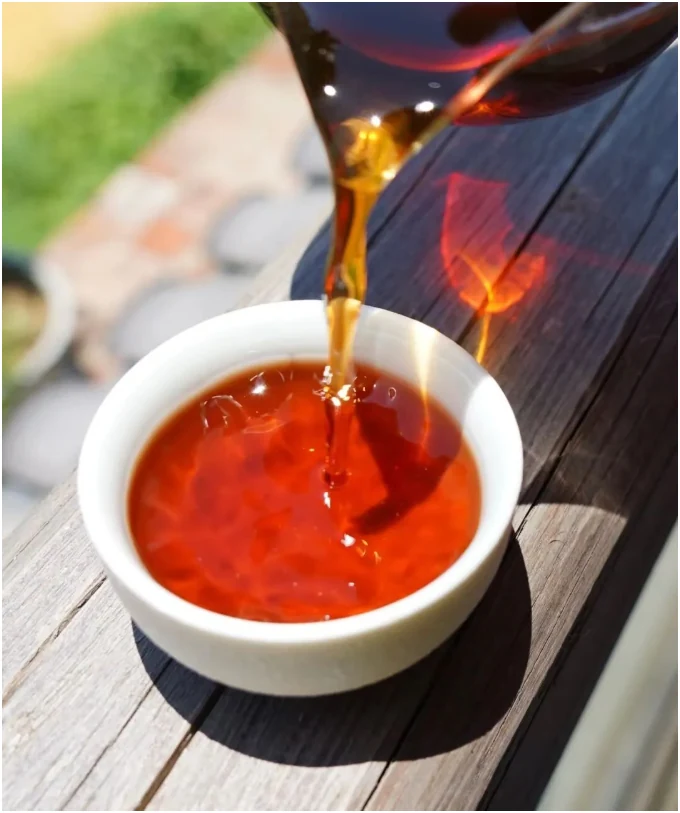
During storage, oxidation and other transformations can alter polyphenols and tea pigments. A deeper red-brown liquor can accompany a softer or fuller impression, but it does not establish cleanliness, safety or superiority. Brewing strength also changes color. Compare leaf weight, water, temperature and infusion time before attributing every difference to a warehouse or a regional climate.
The room matters more than the regional slogan
Keep tea away from kitchens, fragrances, direct sunlight, damp walls and condensation. Use clean packaging appropriate to the product and monitor the storage space with a hygrometer if conditions fluctuate. During humid seasons, reducing moisture exposure may be necessary. In a dry room, do not add open buckets of water or mist the tea simply to imitate a southern warehouse. A commercial aging room has controls that an ordinary cupboard may lack.
Ask for records and a sample
A useful storage account identifies where the tea was kept, for how long, how it was packed and whether it moved between environments. Tasting notes can describe the current cup, while records help explain how it arrived there. Neither “northern dry storage” nor “southern natural storage” should substitute for those details. Choose the style you enjoy without assuming that faster transformation is always better.