Ratgeber zu Tee und Teegeschirr
Longjing Tea Myths: Color, Buds, Harvests and Water

Several Longjing tea myths start with a detail that is easy to see: a bright green leaf, a tiny bud or a very early spring launch. Those details can be interesting, but they are poor shortcuts for deciding origin and overall quality. A more useful comparison separates where the tea comes from, how it was picked and processed, and how it tastes under sensible brewing conditions.

The supplied buying guide combines history, origin, cultivars and brewing. This edited version concentrates on the assumptions most likely to mislead a purchase. Detailed provenance checks are covered separately in our West Lake Longjing authenticity guide.

Myth 1: all Longjing is West Lake Longjing
Longjing and West Lake Longjing are not interchangeable origin claims. The geographic-indication standard addresses Longjing tea, while West Lake is a more specific origin. The national standards database lists GB/T 18650-2008 as current, with a 2025 review concluding that it remained valid.
A familiar flat shape or the name of a cultivar does not locate a tea garden. Ask for the precise product origin and supporting batch details. For the regional distinction, read West Lake Longjing versus Longjing.

Myth 2: greener leaves always mean better tea
The source guide favors the yellow-green or brown-rice tones often associated with traditional processing. Treat that as a description of some teas, not a color test for authenticity. Cultivar, processing, age, storage, lighting and photography can all affect what a leaf looks like.
Very green does not automatically mean false, and a yellow cast does not automatically mean genuine. Assess the condition of the leaf, the aroma and the cup, alongside traceable origin information. A single photograph is especially weak evidence because cameras and screens can shift color.

Myth 3: the earliest tea must be the best Longjing
Early availability is a calendar fact, not a quality guarantee. Different cultivars and growing places begin at different times. A claim that tea appeared exceptionally early deserves a question about origin and harvest, rather than automatic acceptance or an automatic accusation of fraud.

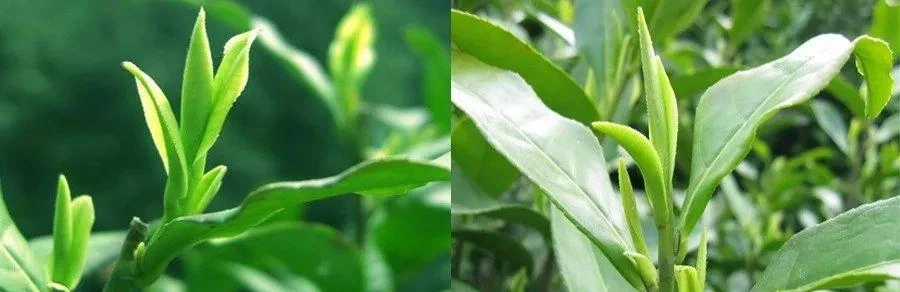
Wuniuzao is not a synonym for West Lake Longjing. Equally, its name should not be used as a blanket insult to an otherwise honestly labeled tea. The issue is whether the product is represented accurately. See our focused guide to early spring Longjing and Wuniuzao.
Myth 4: an all-bud tea is automatically superior
Small buds are visually appealing, but leaf shape alone does not rank every tea. The source describes bud-and-leaf picking for fine Longjing. The useful questions are whether the plucking standard suits the product, whether processing is careful and whether the cup is balanced.

Do not reject a tea simply because a leaf opens beside the bud. Do not accept an all-bud claim as proof of a premium origin either. Harvest timing, tenderness and finished quality are related without being identical. Our Mingqian versus Yuqian guide explores that comparison.
Myth 5: bean aroma or zero bitterness can prove origin
Bean-like, nutty, floral and fresh aromas are useful tasting words. They are not a laboratory fingerprint. It is too absolute to say that genuine West Lake tea must always smell of one particular kind of bean or can never become bitter or astringent.

Brewing strength can change the impression dramatically. If a cup tastes harsh, compare tea weight, water temperature and steeping time before drawing a conclusion about the seller. The bitter-or-weak troubleshooting guide keeps that separate from origin verification.
Myth 6: any bottled water will produce the same cup
The original guide includes research tables about water and sensory scores, but does not provide a complete bibliographic reference. We have not repeated the numerical rankings as established results. For a practical comparison, use drinkable water without strong off-odors, hold the brewing variables steady and try another water if the tea seems dull or harsh.

Do not assume that “natural,” “mineral” or “purified” on a bottle predicts exactly the same composition across brands. Water choice is worth testing with your own tea, rather than turning one study’s samples into a universal shopping rule.
A simpler way to buy and brew
Read the exact origin statement, compare the same harvest year and pack weight, and ask how the tea was stored. If possible, try a small sealed pack first. Keep your first brew moderate, then change one variable at a time. Our brewing guide provides proportions and temperatures without making one method compulsory.

Adapted from the supplied article attributed to Dongchadi. Unsupported celebrity quotations, sweeping fraud claims, fixed authenticity-by-color rules and numerical water rankings without a full source have been omitted or qualified. Image subjects follow the order of the selected original illustrations.