Ratgeber zu Tee und Teegeschirr
You Hua Xiang Dancong: Pomelo Blossom, Roast and Patience
A spring tea that takes its time
A tea picked in spring is not always ready for the cup in spring. The source tasting account follows a You Hua Xiang Phoenix Dancong from Guangdong, China, through sorting, charcoal roasting and a long rest before an autumn tasting. The wait is part of the craft, rather than a promise that every batch needs the same number of months.
You Hua Xiang means pomelo-blossom fragrance. It describes an aromatic resemblance in the tea, not a recipe that calls for adding pomelo flowers. A clear floral opening, honeyed sweetness and a rounded finish are the features to look for.
What charcoal roasting changes
After the initial processing, sorting removes unwanted material and the roast is adjusted to the leaf. Controlled charcoal heat can bring the floral character together with cooked-fruit sweetness and a gentle woody note. Too much heat can obscure the tea; an uneven roast can leave it unsettled.
Freshly roasted tea may taste predominantly of the roast. Resting gives the maker a chance to taste it again as that impression settles. This does not remove caffeine or establish a medical benefit. Keep the tea dry, sealed and away from strong odors during that rest.
Taste the tea through several infusions
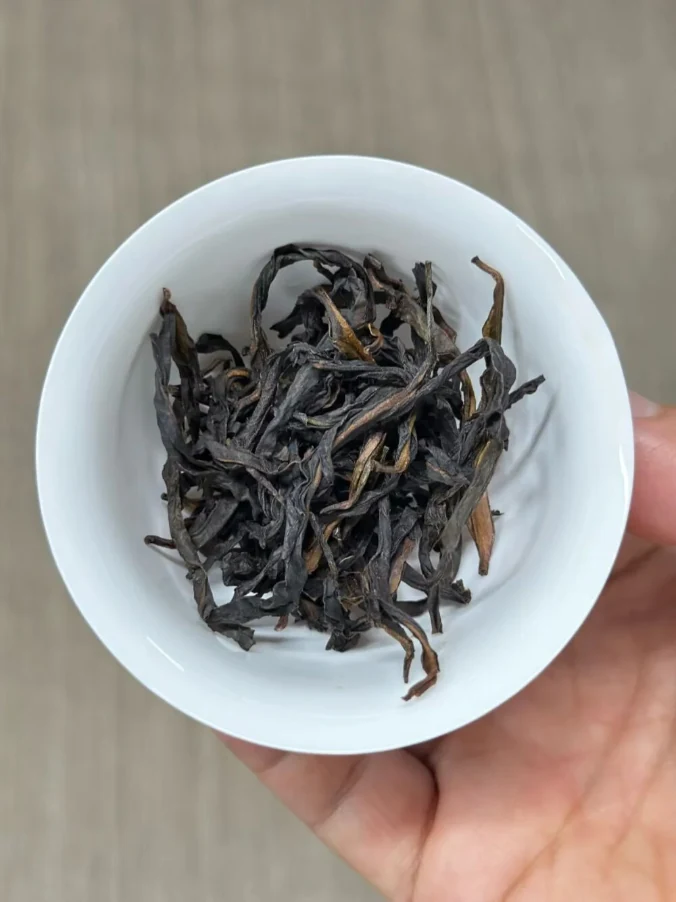
The photographed leaves are dark, long and twisted. In the source session, the liquor was bright gold: a clean blossom note came first, followed by honeyed fruit, some roast and a lingering sweet finish. These are tasting observations, not flavors guaranteed by the name alone.
Notice whether the fragrance also appears in the liquor. A powerful lid aroma is less persuasive when the cup underneath is thin or harsh. Later infusions should be judged for clarity and sweetness rather than forced to reach a fixed infusion count.
A practical brewing starting point
Use a small porcelain gaiwan and enough hot water to let the leaves open. About 5–6 g in a 100–120 ml vessel, with water close to boiling and short initial steeps, is a workable tasting starting point. Adjust the leaf quantity first if the cup is too concentrated. Pour completely between infusions.
Choose a small sample before buying a larger quantity. Ask about harvest season, roasting date and storage, then let your own cup decide whether the wait has been worthwhile.