Guías de té y utensilios
Hand Pan-Fired vs Machine-Made Longjing Tea
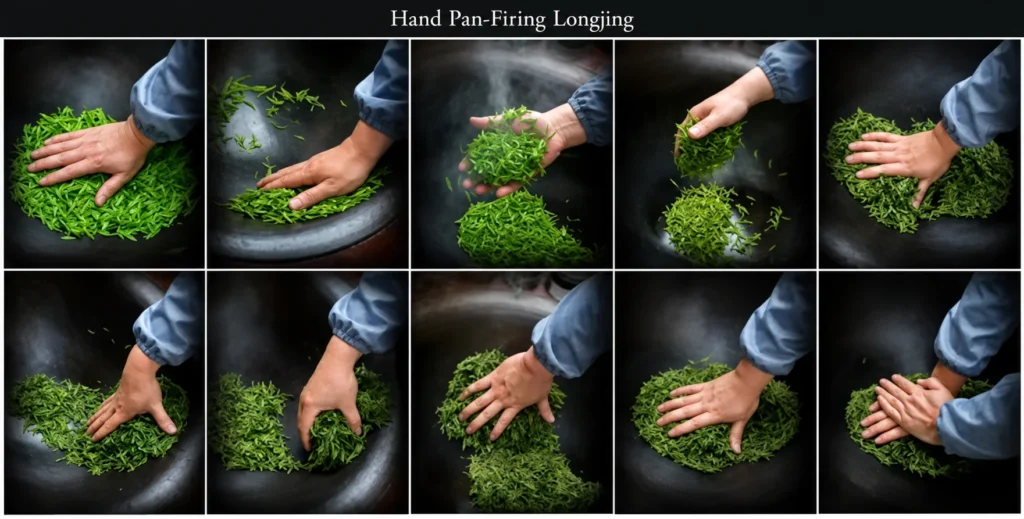
Traditional Longjing shaping asks a maker to respond to the leaves in a hot pan. Modern equipment can take over part or most of that work. The useful buying question is what was done, and how well, rather than whether one word on a label makes every handmade tea superior to every machine-made tea.
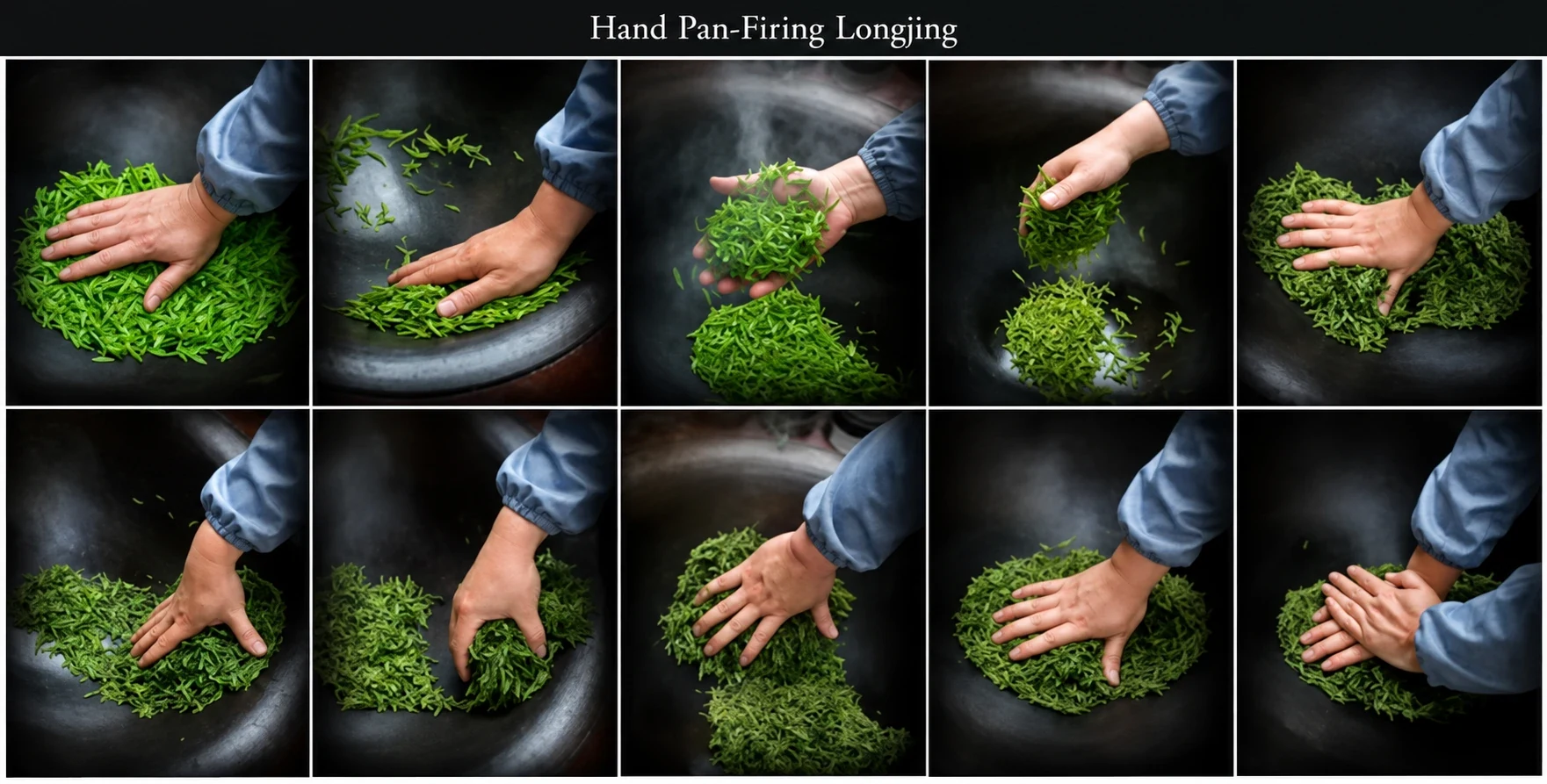
Three descriptions need a clear definition
Fully hand-fired generally describes manual pan work. Partly mechanized tea may use equipment for an early stage and manual work for finishing; the division varies. Machine-made describes mechanized processing, with people still responsible for settings, monitoring and raw-material decisions. Ask the producer which stages are manual, rather than assuming a universal meaning for “half handmade.”

What a sample comparison can show
The supplied account describes a tasting of selected Shifeng-area teas made by three approaches, both fresh and after storage. Its tasters favored the handmade sample. That is evidence about those particular samples, not proof of a universal ranking: raw leaf, maker skill, drying and storage can all influence the cup. The original scores should not be treated as a standard applied to all commercial Longjing.
Do not use sinking as an authentication test
Hand work and pressing can change shape and density, while water temperature, flow and trapped air alter how leaves wet and sink. A floating leaf is not proof of inferior tea. Likewise, uniform shape can reflect careful machinery rather than deception. Assess the complete tea: clean aroma, appropriate roast, texture, sweetness and a comfortable finish.
Pay for a cup you can verify
Detailed hand work can cost more, especially in small spring batches. Compare similar origins, grades and harvests, and ask for a sample. A higher labor cost does not guarantee your preferred flavor. Choose a traceable product whose style you enjoy, with a process description specific enough to be useful.