Tea & Teaware Guides
Chinese Green Tea Types: 10 Famous Teas Compared
Chinese green tea types range from the flat leaves of Longjing to the tiny curls of Biluochun and the broad blades of Taiping Houkui. The names can be confusing at first, especially when Anji “white tea” turns out to be green tea.
This guide compares ten well-known teas from China by origin, leaf style and the kind of cup you might enjoy. The numbering is for easy reference, not a best-to-worst ranking. A famous name is a useful starting point; the actual harvest, processing, storage and your own taste matter more than a position on a list.
Quick choice: try Longjing for a toasted, rounded direction, Biluochun for a fragrant, delicate one, or Lu’an Guapian if you would like to explore a fuller leaf-based style. These are broad flavor directions, not tasting results for the teas pictured here.
What makes these teas green tea?
Green tea is heated early in processing to limit enzymatic oxidation, then shaped and dried. The heating, shaping and drying choices help explain why two Chinese green teas can look and taste so different. “Non-fermented” is a common shorthand, but it does not mean the leaf undergoes no chemical change.
A tea name may point to a place, a leaf shape, a cultivar or a commercial brand. It does not automatically identify a botanical variety. Nor is there one universal “top ten Chinese green teas” ranking: lists can combine historical fame, regional recognition and editorial preference.
Ten Chinese green teas at a glance
| Tea | Associated origin in China | Leaf style |
|---|---|---|
| Xihu Longjing | Hangzhou, Zhejiang | Flat |
| Dongting Biluochun | Suzhou, Jiangsu | Small curls |
| Xinyang Maojian | Xinyang, Henan | Fine, downy tips |
| Huangshan Maofeng | Huangshan, Anhui | Bud-and-leaf shoots |
| Taiping Houkui | Huangshan, Anhui | Long, broad and flat |
| Lu’an Guapian | Lu’an, Anhui | Individual leaves |
| Zhuyeqing | Mount Emei, Sichuan | Slender, bamboo-like |
| Anji Baicha | Anji, Zhejiang | Pale spring shoots |
| Duyun Maojian | Duyun, Guizhou | Curled, downy |
| Lushan Yunwu | Lushan area, Jiangxi | Rolled, downy |
Origin names describe the teas, not proof of where any photographed batch was grown.
1. Xihu Longjing: West Lake Dragon Well
Explore our Longjing tea topic guide for origins and buying advice, including three checks for authentic West Lake Longjing.
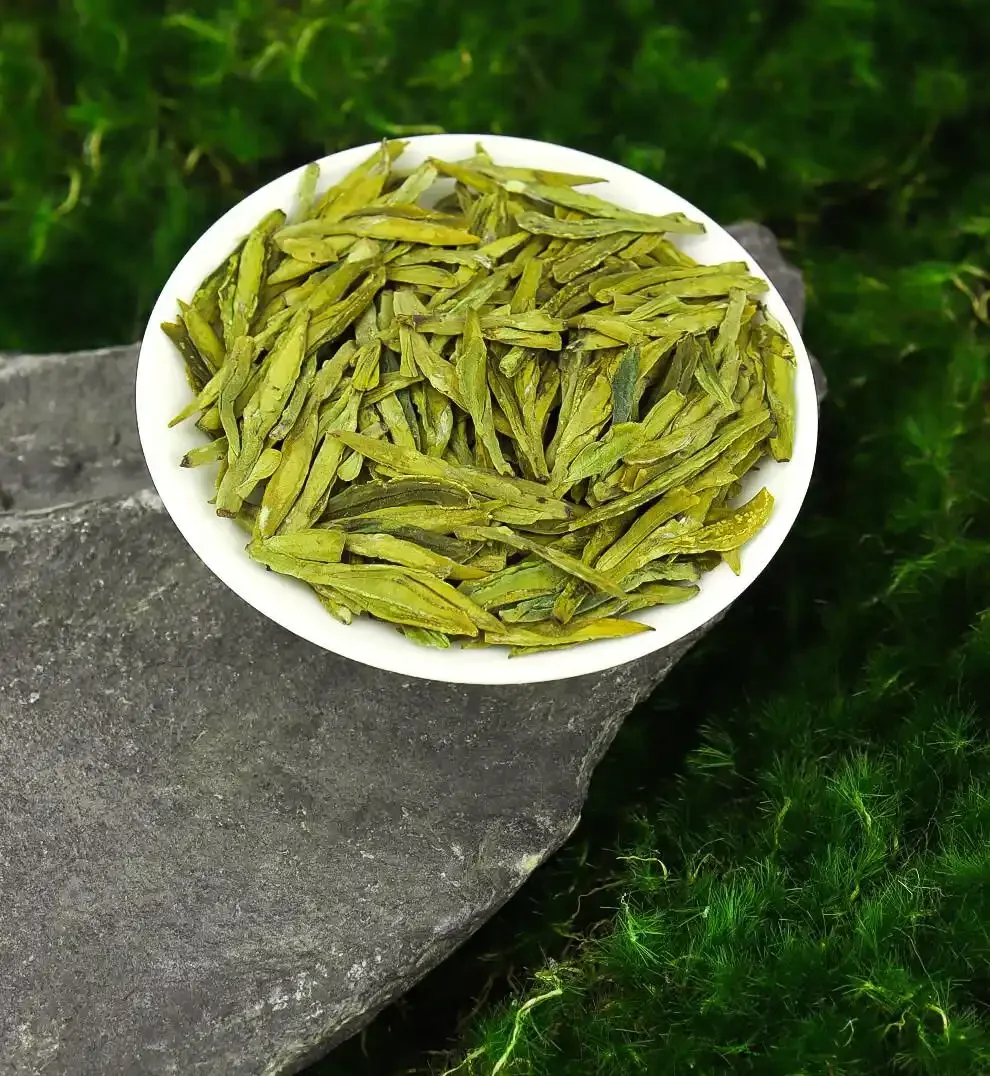
Longjing is often sold in English as Dragon Well. Its flat leaves make it one of the easiest Chinese teas to recognize. Xihu Longjing refers specifically to the West Lake origin in Hangzhou, Zhejiang; not every tea labeled Longjing is Xihu Longjing. The Hangzhou origin definition describes it as a locally processed, flat green tea.
A toasted or nutty impression is a useful flavor direction when shopping, though roast and freshness vary. Ask for the actual origin and harvest rather than assuming a prestigious village name guarantees a better cup. Longjing from other recognized origins should be identified accurately, not dismissed as a single lower quality grade.
2. Dongting Biluochun: small curls, lifted fragrance

Dongting Biluochun comes from the Dongting hills beside Lake Tai in Suzhou, Jiangsu. This is different from Dongting Lake in Hunan. Suzhou’s official introduction places the tea in Wuzhong by Lake Tai.
The tightly curled leaves often carry pale down. Floral or fruity descriptions are common, but they should not be read as a promise of added fruit flavor. For tender leaves, adding water before the tea can be a gentle brewing option. It is a choice, not a rule that every Biluochun must sink immediately or be brewed only one way.
3. Xinyang Maojian: fine tips from Henan
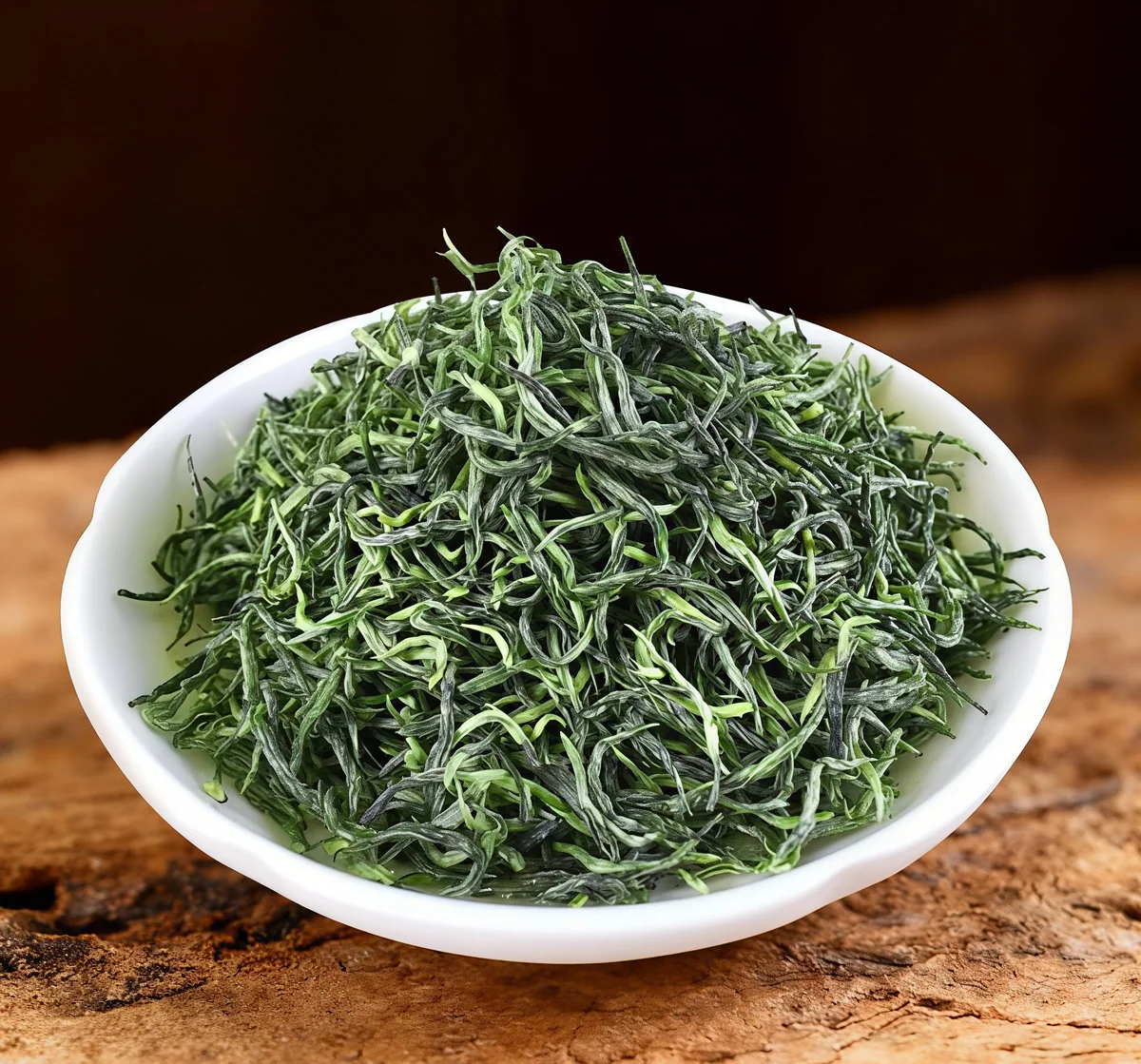
Xinyang Maojian is associated with the Xinyang area of Henan. The State Council Information Office’s Henan profile identifies its fine, green, downy appearance and fresh aroma.
It is a useful tea to explore if you like a fresh, lively cup with some structure. Harvest terms such as Mingqian (before Qingming) and Guyu (around Grain Rain) give seasonal context; they are not a complete grading system. Ask what the seller means by the term and which harvest year it refers to. A balanced later-picked tea may suit you better than an expensive early picking.
4. Huangshan Maofeng: an elegant bud-and-leaf style

Huangshan Maofeng is associated with the Huangshan area of Anhui. Its shoots often show a pointed bud nestled against a young leaf. Huangshan’s local introduction highlights this characteristic appearance.
Expect descriptions that lean toward gentle floral or chestnut-like notes rather than one guaranteed aroma. A clear, light-colored infusion can still have plenty of flavor. Watching the leaves open in glass is enjoyable, but upright leaves, a particular shade of liquor or a dramatic “dance” in the cup cannot authenticate the tea by themselves.
5. Taiping Houkui: give the long leaves space

Taiping Houkui is known for large, elongated, flattened shoots. The Huangshan municipal description identifies it as a green tea associated with Huangshan District and notes its distinctive two-leaves-and-a-bud form. See the local product description.
A tall glass or roomy gaiwan lets you enjoy that shape without snapping the leaves just to fit a small infuser. Orchid-like fragrance is a familiar tasting reference. Even a well-made tea can become bitter or drying if the leaf quantity, water temperature and steeping time push extraction too far; “never bitter” is not a reliable buying test.
6. Lu’an Guapian: a tea made from individual leaves
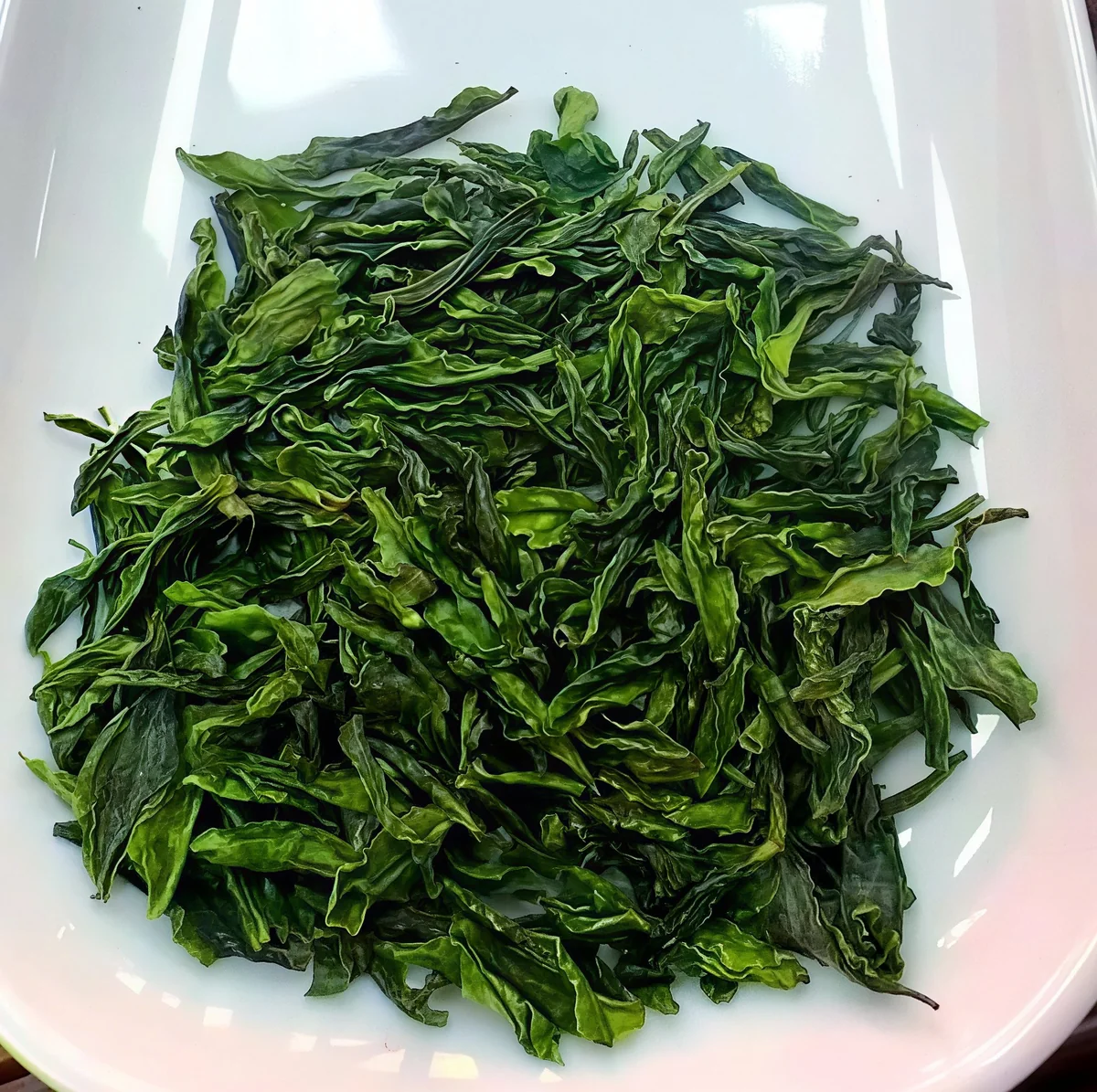
Lu’an Guapian comes from the Lu’an area of Anhui. Its important distinction is the use of individual leaves, with buds and stalks removed, rather than intact young shoots. The Ministry of Agriculture’s introduction explains this leaf-focused picking style.
That makes it an interesting comparison with the bud-led teas in this guide. It can offer a more substantial, savory or toasted direction, depending on the making. The name is often translated as Melon Seed, but no melon is an ingredient. Avoid treating one famous production site as the only legitimate source, or assuming leaf-only tea is automatically free of bitterness.
7. Zhuyeqing: a bamboo-like style associated with Emei
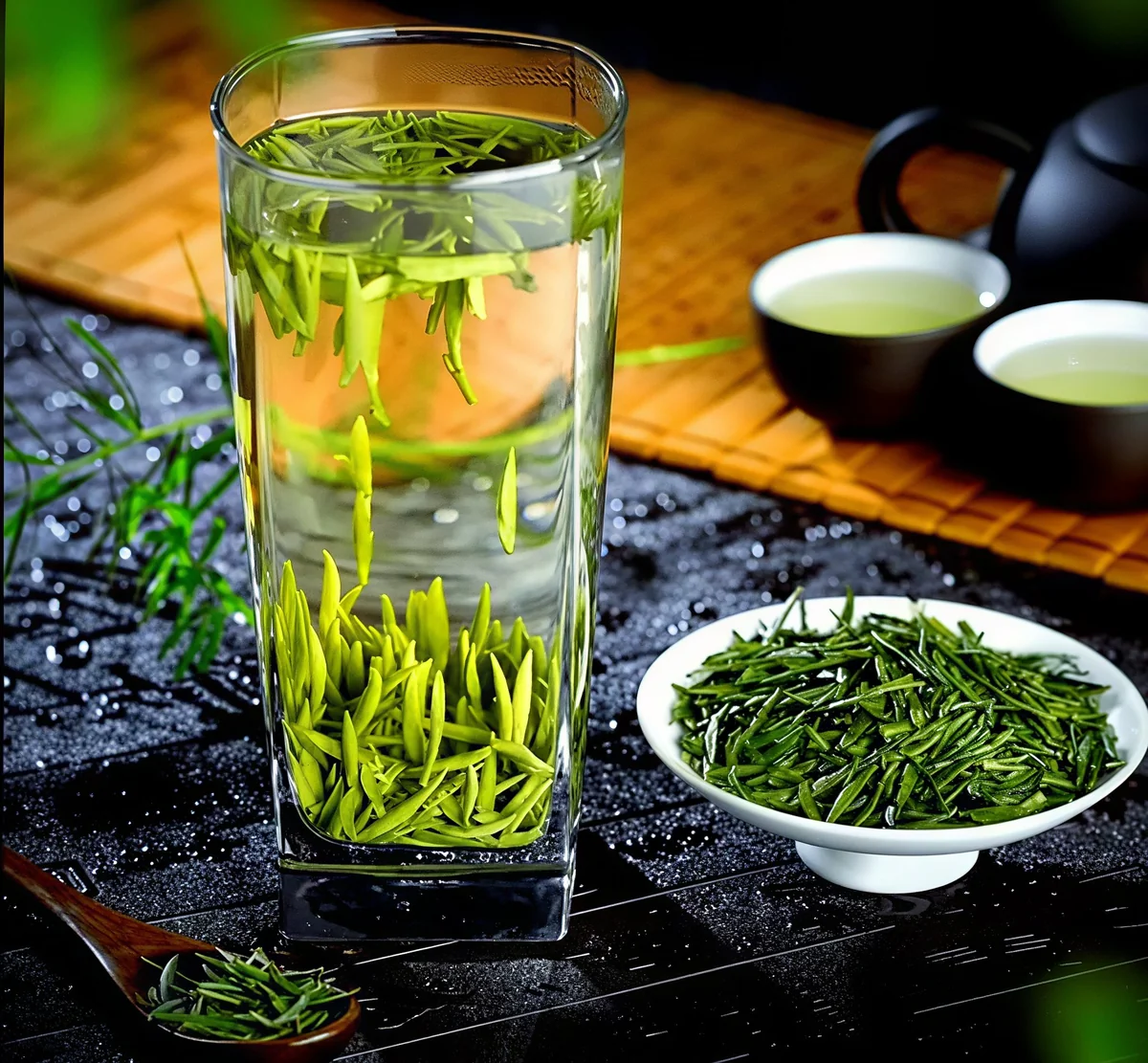
Zhuyeqing is associated with Mount Emei in Sichuan. The name evokes slender bamboo leaves and also appears as an established commercial tea brand. Emeishan’s local court reporting distinguishes the regional Emeishan tea identity from company brands including Zhuyeqing.
Look for the actual producer and product information rather than assuming every bamboo-shaped Emei tea is the same branded product. A fresh, clean, lightly nutty direction is a useful starting expectation, with considerable variation between teas. Harvest requirements and grades should be checked against that particular product, not a universal “three to five days before Qingming” rule.
8. Anji Baicha: “white” in name, green in processing

Anji Baicha is a green tea from Anji, Zhejiang. Its name refers to the pale spring leaf character associated with the Baiye No. 1 cultivar, not the processing category called white tea. The Zhejiang product introduction identifies Baiye No. 1 and describes the pale opened leaves.
It is worth exploring if you enjoy a light, fresh, mellow direction. Do not expect a paper-white dry leaf or assume paleness alone proves authenticity. Tea color in photographs changes with lighting and editing, and a pale-looking cup is not a measure of caffeine content. Check origin and harvest information just as you would for Longjing.
9. Duyun Maojian: a curled green tea from Guizhou
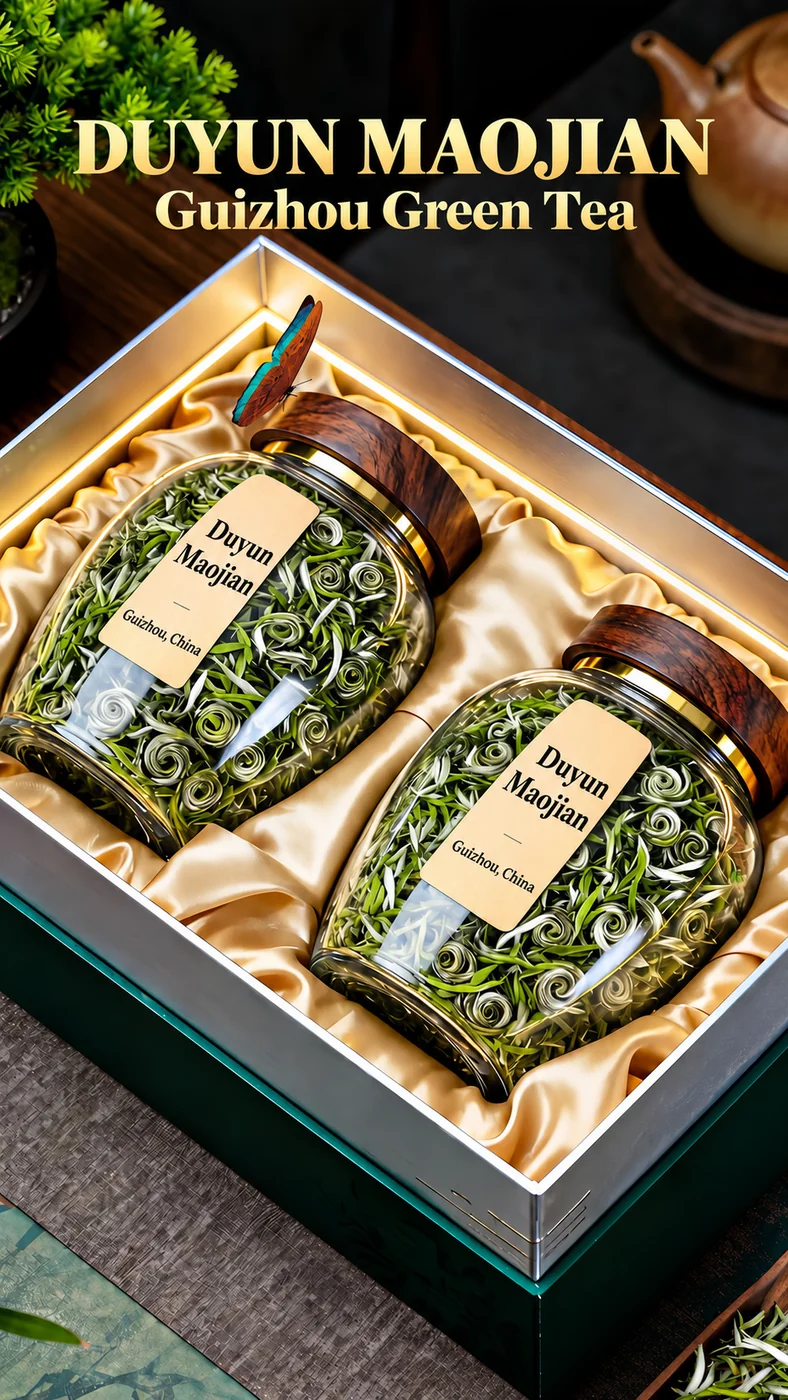
Duyun Maojian is associated with Duyun in Guizhou, southwestern China. Guizhou’s published product-standard text describes it as a curled green tea with defined characteristics.
It offers another way to explore the relationship between fine down, curled leaf shape and a fresh, rounded cup. The packaging picture above is an illustration supplied with the article; its labels have been adapted into English. It is not a reference standard for authentic leaf shape. An ornate jar, an “authentic” headline or a famous naming story cannot establish where a batch was grown. Ask for traceable product details and, where possible, a small sample.
10. Lushan Yunwu: a Jiangxi green tea
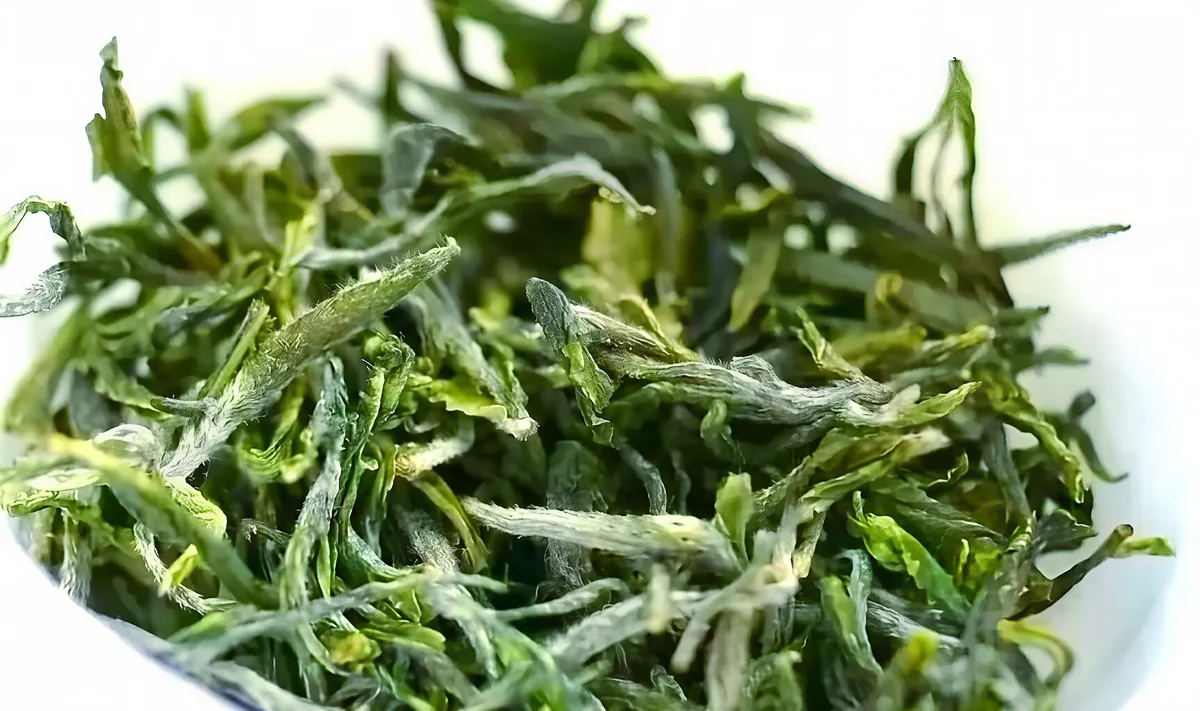
Lushan Yunwu is associated with the Lushan area of Jiangxi. Its name means Clouds and Mist. A Lushan agricultural plan describes the tea’s shaping and drying processes and its bright liquor and mellow character.
It is another option for someone seeking a fresh but rounded green tea rather than a strongly roasted profile. “Yunwu” also appears in other Chinese tea names, so read the full origin rather than treating the words Clouds and Mist as unique proof of Lushan provenance. A misty mountain story may be appealing; the cup still deserves to be judged on its own.
How to choose and brew your first Chinese green tea
Buy a small amount of two contrasting styles rather than ten large tins. For example, compare a flat Longjing with a curled Biluochun, or a bud-and-leaf Maofeng with a leaf-only Guapian. Brew them in the same vessel with similar leaf-to-water ratios before deciding which you prefer. No single tea here is everyone’s “best.”
A practical starting recipe: use about 2–3 g of leaf in 200 ml (about 7 US fl oz) of water at 75–85°C (167–185°F), and taste after about one minute. Adjust from there and follow the producer’s instructions when available. This is a light mug or glass method, not a high-leaf gongfu recipe. Large, bulky Houkui leaves are easier to measure by weight than by teaspoon.
If the cup is harsh, try less leaf, a shorter steep or slightly cooler water. If it is thin, increase extraction gradually. For a glass with leaves left inside, top up before the remaining tea becomes too concentrated. Re-steep while the flavor stays enjoyable rather than expecting a fixed number of infusions.
Store dry green tea sealed, away from moisture, heat, light and strong odors. Buy quantities you can finish while fresh. If using cold storage, keep the package well sealed and let it reach room temperature before opening to reduce condensation.
Glass, porcelain or a Chinese Yixing teapot?
For comparing these teas, start with a glass or porcelain vessel: it is easy to clean between teas, and glass lets you watch the leaves open. A porcelain gaiwan also makes it easy to separate the liquor from the leaf.
If you prefer a Chinese Yixing teapot, pay attention to how the pot retains heat and how quickly it drains. Delicate green tea can become over-extracted in a hot, tightly closed pot. Use a modest leaf quantity, pour promptly and compare the result with porcelain. Choosing a Chinese tea pot is about the tea you enjoy and how you brew, not a mandatory clay match for each of these ten names. Our six tea types and Yixing teapot guide explains that comparison in more detail.
Common questions
Is Anji Baicha the same as Chinese white tea?
No. Anji Baicha is processed as green tea. White tea is a separate processing category; the shared word “white” does not make them interchangeable.
Which of these green teas should a beginner buy?
Choose by the flavor direction that appeals to you, then buy a small, clearly labeled sample. Longjing, Biluochun and Anji Baicha make useful starting comparisons, but good storage and transparent product information matter more than a famous name.
Does more white down mean better tea?
No. Down is a leaf characteristic, not a universal grade. Compare a tea with its own style and production standards: a smooth flat leaf and a downy curl can both be well made.
Can I judge freshness or authenticity from these photographs?
Photographs help explain appearance, but lighting, editing and packaging can mislead. Use them alongside the seller’s origin, harvest, storage and producer information, and taste the actual batch when possible.