Sandao · Chinois ustensiles pour le thé & culture
Chunfeng Xiangyu and Old Guihexiang Teaware
Chinese Tea Brands & Companies · Jingdezhen Teaware
Chunfeng Xiangyu · Zou Jun’s Jingdezhen kiln · Jingdezhen, Jiangxi, China
From Guihexiang to Chunfeng Xiangyu
Chunfeng Xiangyu is the contemporary Jingdezhen teaware brand founded by Zou Jun. The Beijing Tea Expo exhibitor profile traces the workshop’s beginnings to 1989. China Guardian documents a succession of names, from Guihetang to Guihexiang around 2000 and then to Chunfeng Xiangyu after 2007. The dates describe different milestones in the same workshop’s history.
Ming and Qing influences
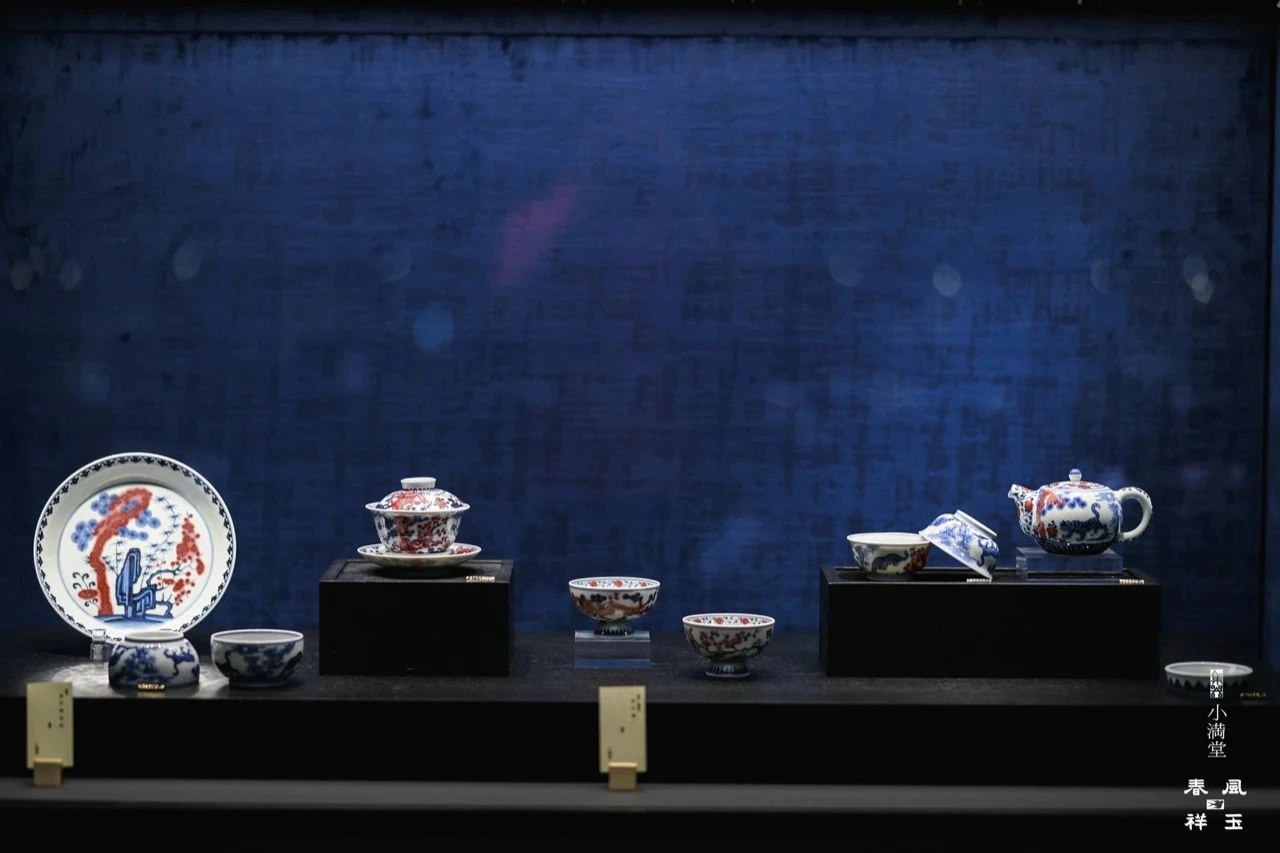
Zou Jun drew on Ming and Qing porcelain, bringing softly curved profiles, graded cobalt blues and all-over decoration to modern tea tables. Start with the rim, belly and foot of a cup. The low yashou cup, named for how it sits in the hand, makes those proportions easy to compare. Cobalt gives blue-and-white porcelain its color, and copper supplies the red in underglaze-red decoration. Firing affects how both colors develop beneath the glaze.

Tea cups and exhibition pieces
The 2024 Beijing Tea Expo featured Xiaomantang’s Chunfeng Xiangyu Art Space, highlighting a series of blue-and-white scrolling-lotus yashou cups alongside underglaze-red pieces and more elaborate works. Turn a scrolling-lotus cup slowly to see how its continuous stems link the blossoms and how the painter varies the spacing around the vessel.

An Old Guihexiang cup and its mark
China Guardian lot 10997 is an 8 cm cup covered in cobalt-painted plum blossoms inside and out, catalogued with a Jingde Yao Guihexiang mark. The sale uses Old Guihexiang for early pieces associated with Zou’s kiln. For any piece offered under the Guihexiang name, ask for a complete photograph of the mark, detail views and a record of where it came from.

Early Chunfeng Xiangyu and floral offering dishes
China Guardian lot 10995 is a pair of 9 cm blue-and-white offering dishes with floral and pendant ornaments and a Jingde Chunfeng Xiangyu mark. The catalogue calls these early Chunfeng Xiangyu pieces Old Chun. The high feet, painted bands and open porcelain surface offer another way to study the workshop’s drawing outside its more familiar tea cups.

What to look for in person
A familiar motif can appear on several shapes. Collectors can record rim diameter, height, base mark and provenance, then compare the object to named and numbered catalogue examples. For regular brewing, useful details include capacity, rim thickness and how comfortably the piece sits in the hand. The company name supplied for this profile is Jingdezhen Chunfeng Xiangyu Ceramics Culture Communication Co., Ltd. Exhibition material and auction catalogues identify the brand and kiln. An independent brand website and the registered company details could not be verified.
How Zou Jun connected painting and firing
China Guardian describes Zou’s family connection to ceramics education and his experience managing a college porcelain factory. That background helps explain his attention to the way a piece’s body, glaze and silhouette work together. On a blue-and-white cup, fired color depends on the glaze, clay body and kiln conditions as well as the painter’s brush. Compare the foot wall, glaze surface and areas of concentrated cobalt on two cups of the same shape.
From the brand name to the Zou Jun kiln mark
China Guardian records early marks with the Chunfeng Xiangyu name alone or with Jingde or Zou Jun added, as well as later examples bearing a cyclical date. The catalogue notes marks incorporating Zou Jun Yao with Zhencang or Zhi around 2013. Transcribing the whole mark makes comparison easier. Dating a specific piece still calls for provenance and a documented comparison.