चाय और चाय के बर्तनों के मार्गदर्शक
How to Brew Longjing Tea: Temperature, Ratio and Time
Start with 3 g of Longjing tea, 200 mL of water at 80°C (176°F), and taste after one minute. This is a practical baseline for a cup you can drain, rather than a rule every Chinese tea producer must follow. Adjust one variable at a time to suit the batch and your taste.
Longjing, or Dragonwell, is a pan-fired green tea from China. A clear glass lets you watch the leaves open; a glazed porcelain cup or small pot with a removable strainer makes it easier to control the steep. You do not need elaborate equipment.
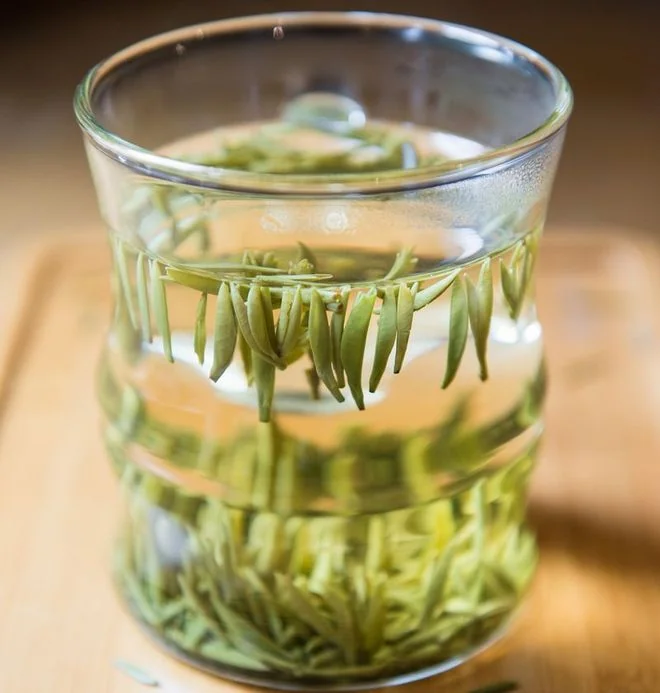
A simple Longjing brewing recipe
| Variable | Starting point |
|---|---|
| Dry leaves | 3 g, weighed if possible |
| Water volume | 200 mL, about 6.8 US fl oz |
| Water temperature | 80°C / 176°F |
| First taste | After 60 seconds |
| Finish the steep | Drain when balanced; extend by 15–30 seconds if too light |
This recipe assumes you can separate the liquid from the leaves. A larger mug, a higher leaf dose or leaves left in the cup all change extraction. Read temperature, volume, dose and time together; a recipe for one vessel is not a universal standard for every method.
1. Choose a vessel and measure the water
Use clean, heat-safe glass or glazed porcelain. Warm it with a little hot water, then empty it. This warms the vessel; it is not a substitute for cleaning it. Avoid holding a thin hot glass by its bowl or shaking a glass full of hot water.
Measure how much water your cup actually holds at a comfortable fill level. A ‘cup’ is not a consistent volume across kitchen mugs, tea glasses and measuring cups.
2. Weigh the leaves
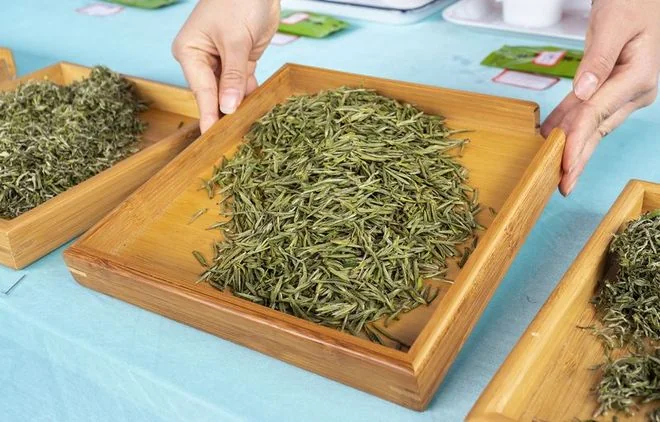
Add 3 g for 200 mL. Flat leaves do not pack evenly into a spoon, so a small scale gives a more repeatable result. Once you know how your own scoop looks at that weight, daily brewing becomes simpler.
3. Add water gently and start timing
Use water at about 80°C. Pour gently, with the vessel stable on the table, and start the timer when you add the water. A temperature-controlled kettle is convenient; waiting a fixed number of minutes after boiling is less predictable because kettle size and room conditions differ.
You do not need a rinse for this starting method. Rinsing uses up some of the first infusion without solving an unclear origin or poor storage. Taste at one minute, then drain the tea if it is balanced.
4. Taste, then change one thing
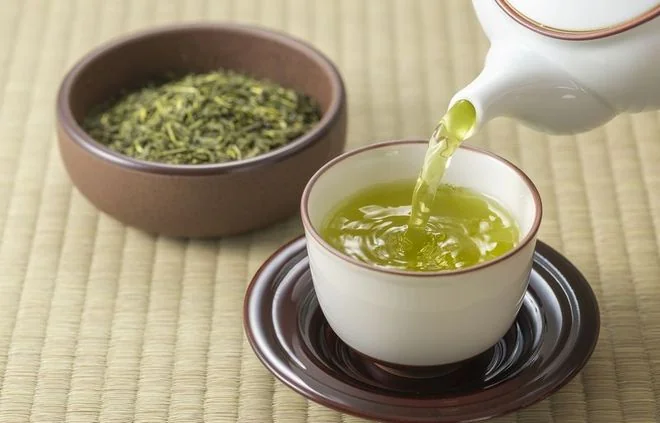
Let a small sip cool enough to taste comfortably. Look for a clean aroma and a balance you enjoy, rather than trying to match a photograph’s green color.
- Too bitter or drying: first shorten the next steep. If needed, reduce the dose or try water 5°C cooler.
- Too weak: extend by 15–30 seconds while keeping the other settings fixed. If still thin, add a little more leaf on the next fresh brew.
- Muted aroma: check the tea’s storage and your water as well as the recipe.
Water and temperature: a starting range
Use fresh drinking water without a strong smell. If your tap water tastes heavily chlorinated or produces a dull cup, compare it with suitable filtered water. Strongly mineralized water can change the result too; the most expensive bottled water is not automatically the best choice.
For this drained-cup method, 75–85°C (167–185°F) is a useful adjustment range around the baseline. Delicate leaf and a long steep may benefit from the lower end; another batch may open up at the higher end. Boiling water is not a universal test of quality, and a single high-temperature cup cannot prove that tea is poor.
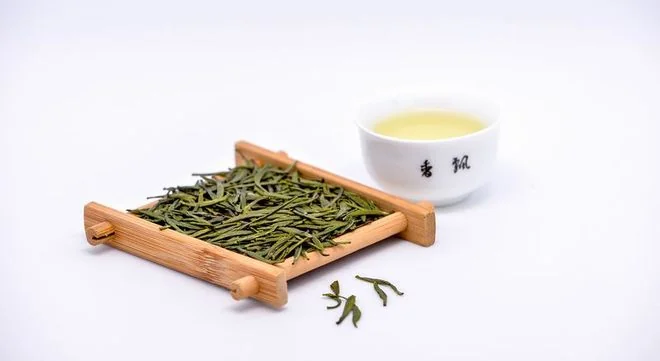
Longjing in a glass: water volume, wetting and refills
Calculate the ratio from water added, not the glass size
A 1:50 ratio means 1 g of dry tea for 50 mL of actual brewing water. That gives 3 g for 150 mL, or 4 g for 200 mL. The 3 g / 200 mL recipe at the start of this guide is lighter, approximately 1:67. These are different starting recipes, not interchangeable ways of writing the same quantity.
A glass labeled 200 mL but filled to 70% holds roughly 140 mL before allowing for the leaves. With 3 g of tea, that is approximately 1:47. Measure your usual fill level once, rather than using the capacity printed on the glass as the amount of water you have poured.
Is wetting the leaves the same as rinsing?
No. You can add a little of your measured hot water to wet the leaves, then add the rest without discarding that first water. Include both additions in the total volume. This differs from a rinse that is poured away. Keep the glass on a stable surface; there is no need to lift and rotate a hot, full glass.
Must you pour from a height or refill at exactly one-third?
The China National Tea Museum’s glass-brewing lesson presents the three-stage raised pour known as “phoenix nods three times” as a gesture of hospitality, and describes refilling when about one-third remains. These are useful cultural context, rather than compulsory movements or exact thresholds for every home brew.
For a simple daily cup, pour gently and keep your handling comfortable. Leaves left in the glass continue steeping as you drink, so adjust the dose and refill timing to your pace. If the cup gets too strong, try less tea next time or use a removable strainer to end the steep. Two or three refills may suit a batch, but stop when the flavor no longer appeals; there is no mandatory number.
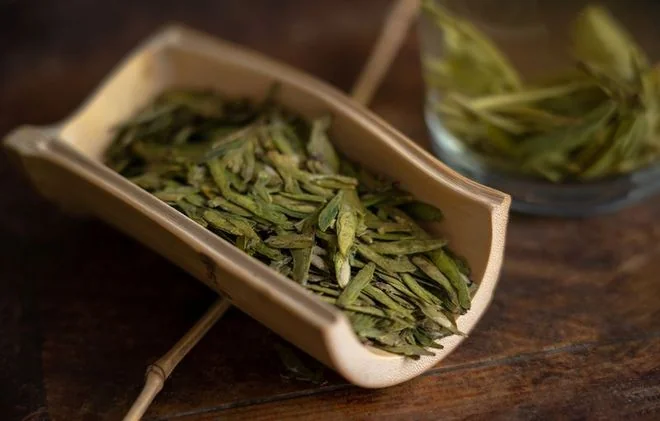
How to resteep Longjing
Add more water to the drained leaves and taste again. Start around the same temperature, then adjust the time according to how much flavor remains. Some leaves need longer on a later steep; wet leaves can also release flavor quickly at first, so tasting is more useful than a fixed rule.
Keep brewing while the cup is enjoyable. The number of infusions depends on dose, water volume, leaf and your preferred strength. ‘Three steeps’ is not a certificate of quality.
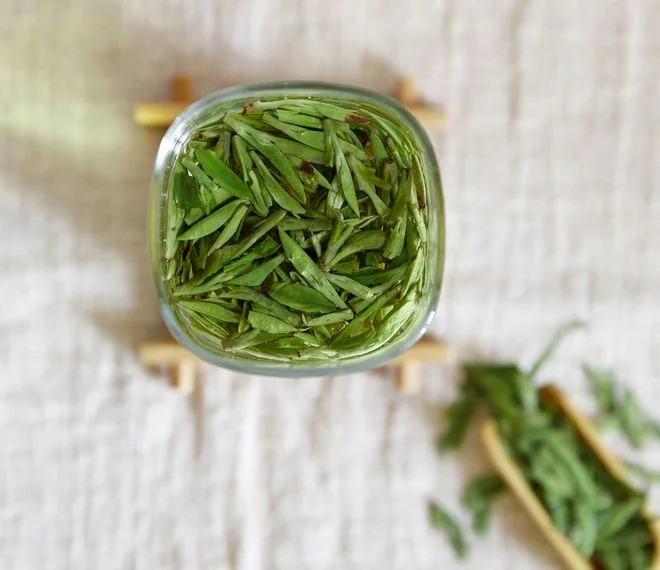
Do you need a Yixing teapot?
No. A Chinese Yixing teapot can be used with care, but its heat retention and the behavior of unglazed clay add variables. Glass or glazed porcelain gives a straightforward starting point for delicate green tea. Choose the vessel that helps you control the cup.
For a broader teaware comparison, see matching tea with a Yixing teapot. If your Longjing still tastes harsh or watery, follow the bitter-or-weak troubleshooting guide, or return to the Longjing tea guide.