お茶と茶器のガイド
West Lake Longjing Brand Protection: Shanghai 2021
On 13 July 2021, a press briefing in Shanghai brought West Lake Longjing brand protection beyond the tea gardens of Hangzhou, China. The discussion centered on a practical problem: tea can be grown in one place, sold in another and advertised online across the country. Protecting its declared origin needs cooperation along that whole route.
The event date is confirmed in a 2021 report carried by China’s intellectual-property protection website. This is a retrospective account; the enforcement figures and production information below belong to the period covered by the briefing.
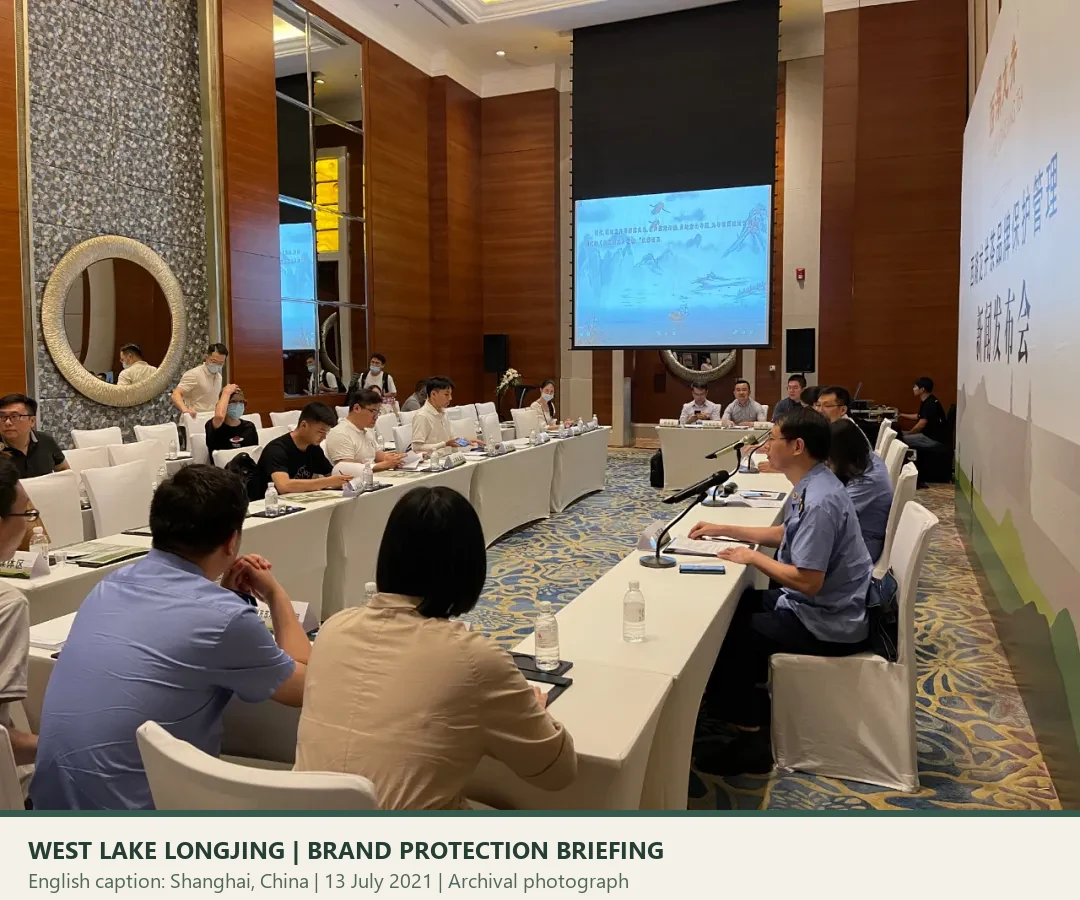
Why a Hangzhou tea was discussed in Shanghai
West Lake Longjing, also known internationally as West Lake Dragonwell green tea, is closely associated with Hangzhou. Its name reaches far beyond the city, however. A local authority’s work on production cannot, by itself, address misleading origin claims in a shop or online listing elsewhere.
At the briefing, Hangzhou market-regulation official Lin Xiao described cooperation under the Yangtze River Delta’s regional enforcement arrangements. The supplied report also referred to work with the tea association, police and authorities in other provinces.
The cooperation reported in 2021
- 26–27 May: Hangzhou officials visited Shanghai to discuss protection of the West Lake Longjing name with Shanghai’s market regulator.
- 2 June: Shanghai acted on leads supplied by Hangzhou. The reported operation involved 20 teams and more than 110 officer deployments.
- 13 July: the Shanghai press briefing presented the cooperation and the wider approach to brand protection.
The distinction behind that work is important: Longjing tea and a claim of West Lake origin are not interchangeable. Nor does the name of a tea cultivar, on its own, establish where a batch was grown. Our West Lake Longjing versus Longjing guide explains the naming question in more detail.
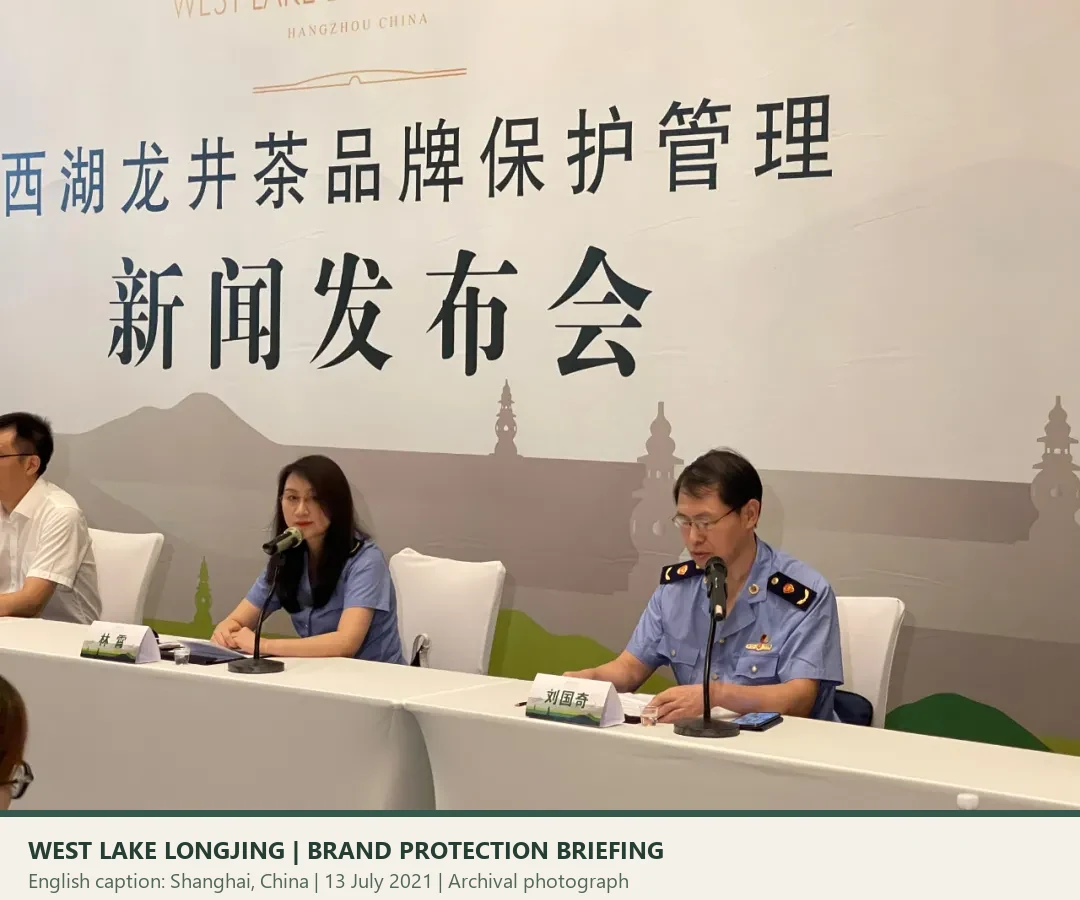
What the reported enforcement figures mean
The briefing described a wider Hangzhou protection effort alongside the separate Shanghai operation. These totals should not be read as the results of a single day in Shanghai, or as current annual statistics.
| Measure | Reported total |
|---|---|
| Officer deployments | 11,308 |
| Inspection visits to businesses and traders | 8,424 |
| Cases opened | 76 |
| Cases referred to police | 1 |
| Non-compliant West Lake Longjing packaging items seized | More than 490,000 |
“Deployments” and “inspection visits” count activities; they do not necessarily represent that many different officers or businesses. The packaging total refers to packaging items, not an equivalent number of finished tea products or a measured weight of tea.
Four checks across production and supply
The original report set out four areas of oversight for producers. Read together, they describe a chain of responsibility rather than a single label check:
- Raw materials: keep origin and harvest information accurate; do not pass tea from elsewhere off as local tea, or old tea off as a new harvest.
- Processing: control production and avoid unauthorized additives.
- Release from the factory: carry out the required product checks before sale.
- Traceability: keep contracts, purchase records and other supporting documents in order.
For physical shops, the account described checking business identification, the dedicated West Lake Longjing label, trademark-use authorization and purchase records. A recognizable package was therefore only one part of the picture.

Online sales: show the seller and the tea label
The campaign described at the briefing used the Chinese phrase 亮身份、亮茶标: make the seller’s identity and the tea’s dedicated label visible. The report named major Chinese shopping platforms and described asking sellers to display their business identity and provide authorization and purchasing documents for platform records.
The point was to connect the storefront a customer sees with an identifiable business and a documented supply source. For buyers outside China, that distinction remains useful: a brand logo, a store display name and the business named on an authorization record may be different pieces of information.
Digital traceability was part of the same effort
Agriculture official Shao Jinghua described the digital-management approach introduced in 2020. The supplied account covered verification of tea-growing area, electronic accounts, recording purchases and sales, and managing numbered origin labels. In that model, the label was connected to records of tea moving through the supply chain.
The report’s reference to a second phase being developed described work in progress in 2021. Likewise, its figures for tea gardens, growers and enterprises were a snapshot of that time. They should not be presented as today’s industry totals.
How to use this historical report today
The Shanghai briefing helps explain why West Lake Longjing protection involves producers, retailers, platforms and authorities in more than one city. It is a useful piece of the history of Chinese tea traceability, rather than a current list of authorized sellers.
For a purchase now, check the actual seller, package year and current supporting information through the West Lake Longjing Tea Management Association. An old label image or a logo in a product photograph is not enough to confirm a new batch. Our authentic West Lake Longjing guide covers the practical checks separately.
Return to the Longjing tea article collection for guides to origins, harvest terms, flavor and brewing.
Sources: adapted from the supplied document credited to Xihu Gongfu Tea (西湖工夫茶); event date and historical context cross-checked against the 2021 report linked above and Sina Shanghai’s contemporary coverage. The three supplied photographs retain their original order. Physical Chinese signs remain intact; English captions explain their context. Retrospective article edited 23 October 2026.