Keemun black tea, also written Qimen black tea, is a Chinese black tea associated with southern Anhui. Explore its origins, styles and aroma, then find practical answers about brewing, storage and buying. Each guide tackles a different question, so you can go straight to what you need.
Start here
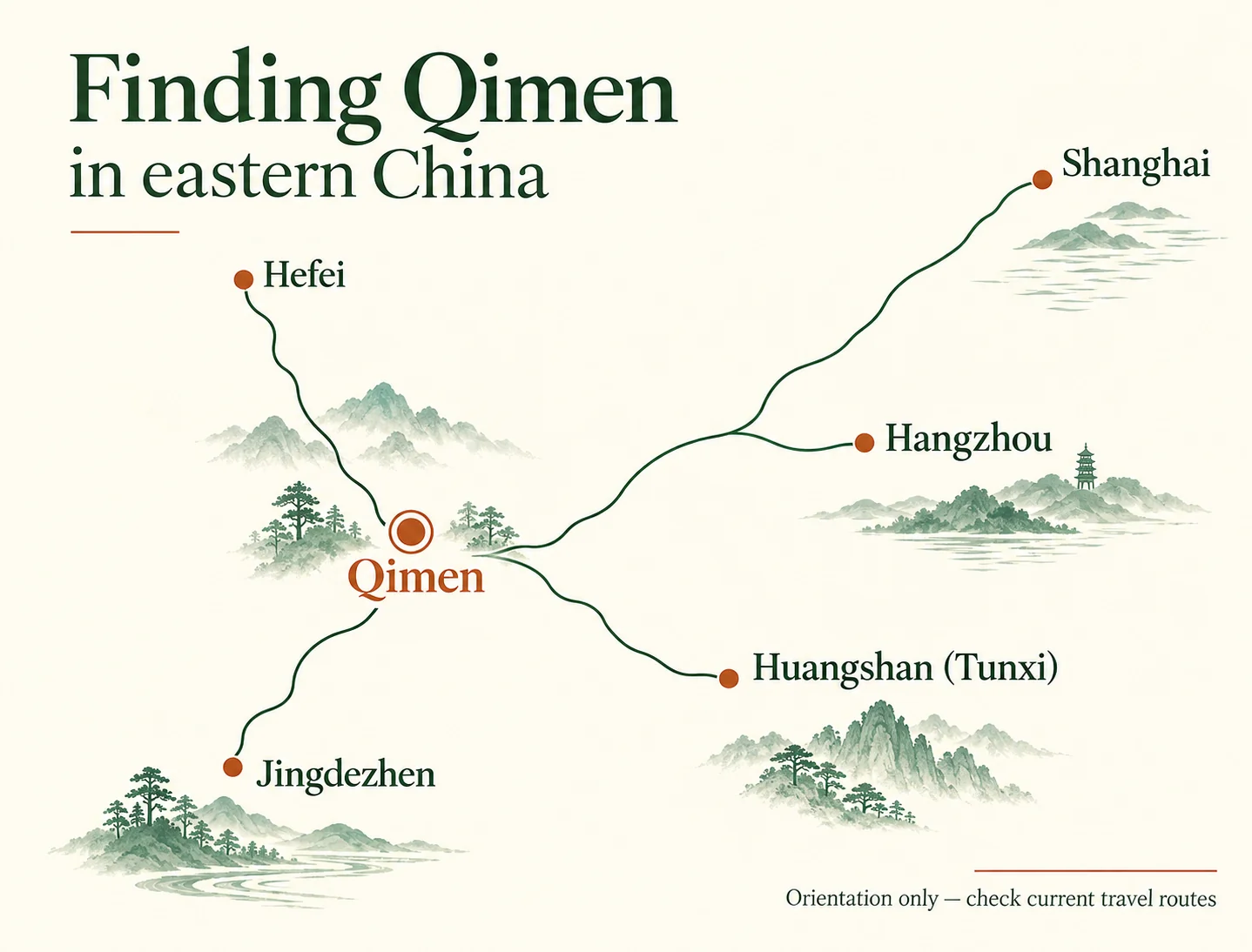
Locate Qimen in Anhui and separate historical trade regions from modern origin claims.

Explore Keemun black tea flavor, from floral and honeyed notes to its rounded finish, with a historical Qimen interview and aroma research.

Compare Keemun Gongfu, Mao Feng and Xiangluo, understand grade labels, and choose a style by leaf shape, processing and taste.
Brew and keep your tea
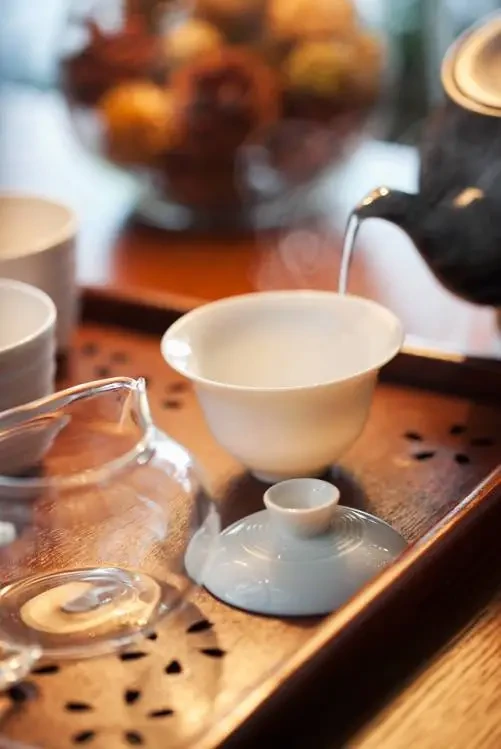
Brew Keemun black tea in a gaiwan, gravity brewer or infuser mug. Start with measured leaves, suitable water temperature and complete draining.

Keep Keemun black tea sealed, dry and away from odors. Compare pouches and tins, understand fridge risks, and know when to discard damaged tea.

Keemun contains caffeine. Understand why the amount varies, how to count total intake, and what pregnancy, iron medicine and sleep may change.
Compare before you buy

Compare Keemun, Dianhong and Lapsang Souchong by origin, leaf style and taste, including smoked and unsmoked Lapsang and tips for a fair tasting.

Check Keemun black tea origin, producer, batch and leaf style. Learn what taste and appearance can tell you, and what they cannot authenticate.

Compare Keemun tea prices per 50 g, separate leaf cost from gift packaging, and understand how grade, processing and seller claims affect value.
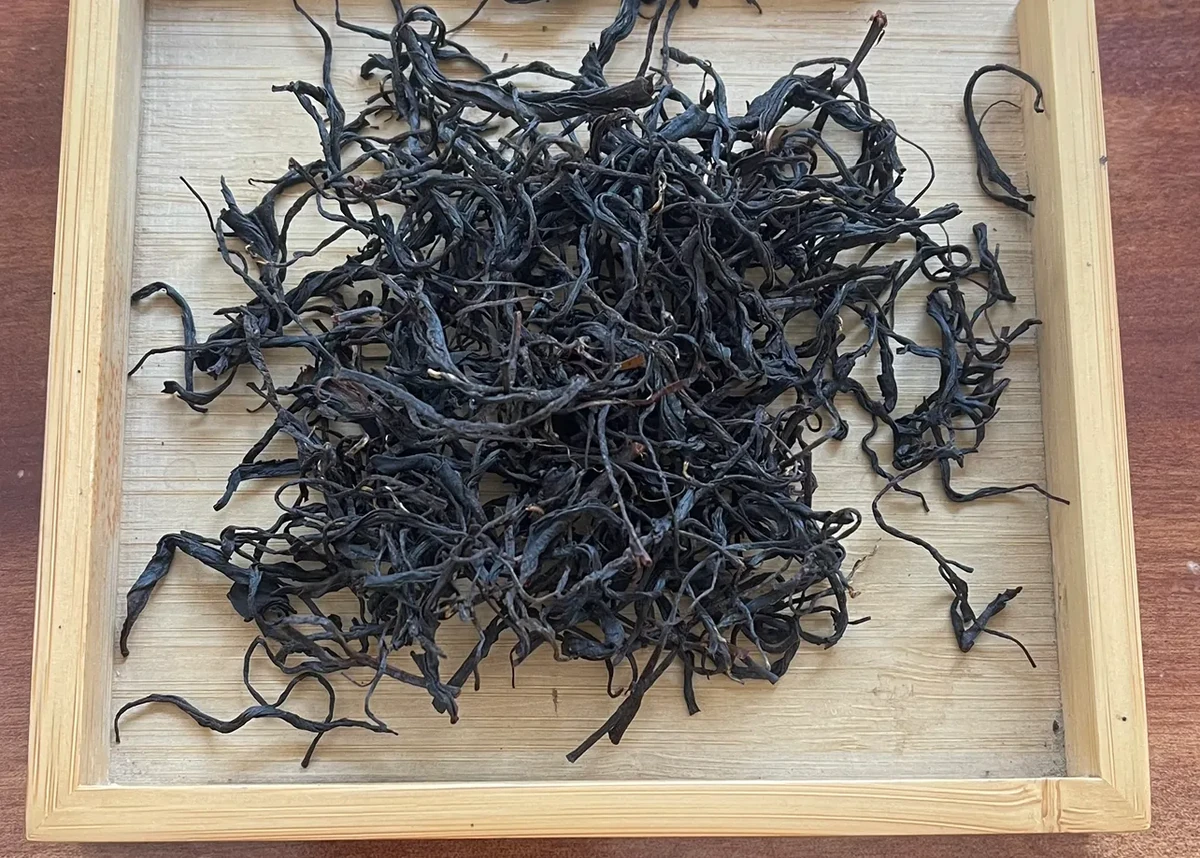
Compare handmade and machine-made Keemun by processing, consistency, labor and price, and learn which questions matter beyond the label.
Keemun or Qimen?
Both spellings appear in English tea listings. The name alone does not specify a style, grade, harvest or certification. The guides above explain those details separately, with photographs and practical comparisons.
Looking for a tea to try?
Visit the Keemun black tea collection for current products, prices and packaging details. This knowledge hub is separate from the shop, so you can read first and compare products afterward.
Back to Tea Knowledge