О чае и чайной посуде
Bad Tea or Poor Brewing? Six Variables to Check

Edited from the original six-variable essay. Historical product promotions and unsupported extraction or health claims have been removed or corrected. Waterfall photo credit in the supplied article: Li Yinong, Enshi, Hubei.
An unpleasant cup can make a buyer question the tea, even when the brewing method is partly responsible. That makes brewing an important part of the consumer experience as well as a practical skill.
The original essay expands four familiar variables—leaf quantity, water, temperature and time—by adding the leaf-to-water ratio and teaware. The point is to understand how the choices work together, then use them to bring out a particular tea’s character.
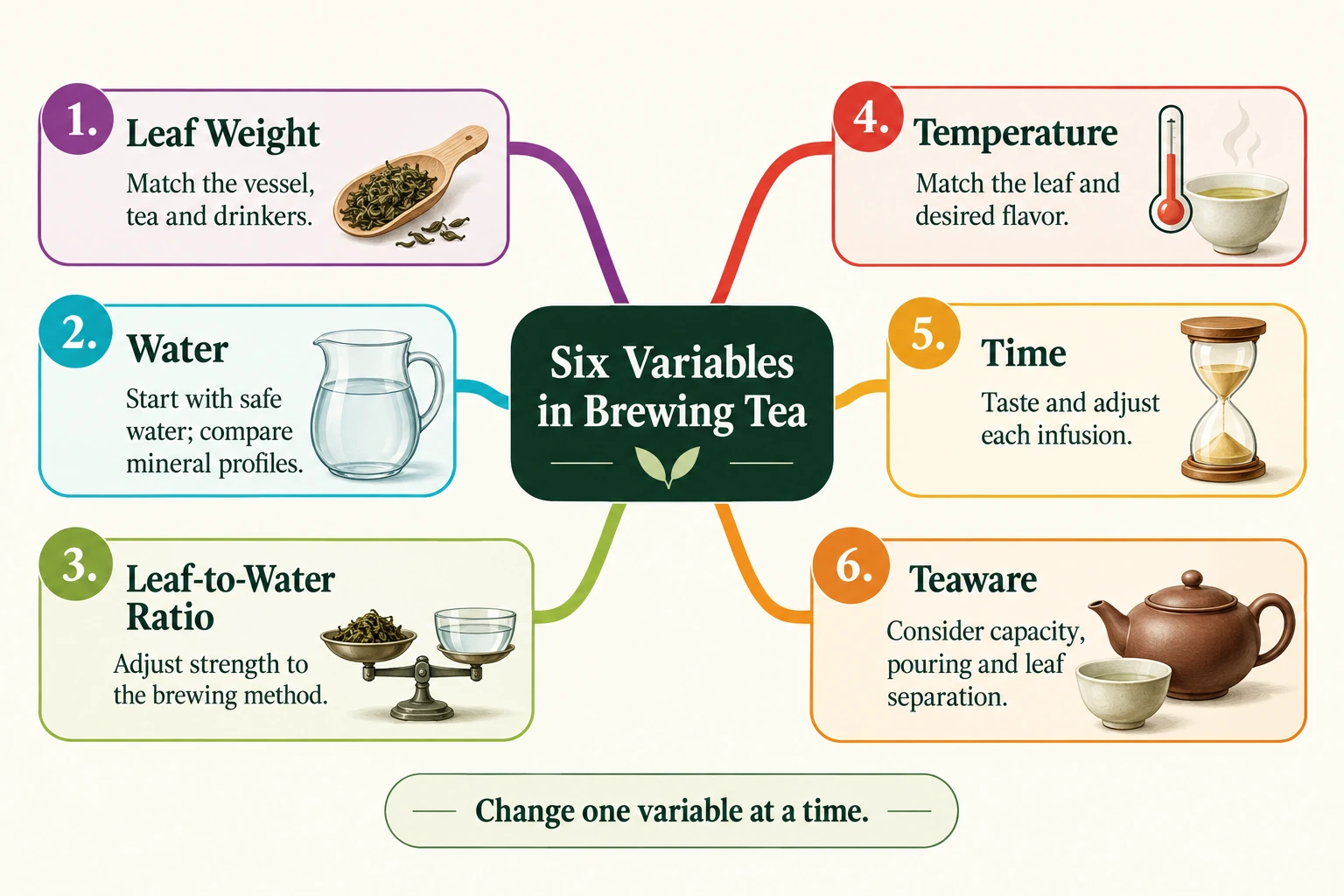
1. Leaf weight: measure before guessing
Leaf quantity should match the vessel, the number of drinkers, the intended number of infusions and the strength you enjoy. A pre-portioned packet is convenient, but its entire contents may not suit every cup.
A small kitchen scale makes comparison easier. If a familiar tea suddenly tastes too strong, knowing the starting weight helps identify what changed. For a glass in which leaves remain during drinking, a smaller amount may be more comfortable than a gongfu-style dose.
The source mentions common packet weights and a broad 4–10 gram range. Those are examples from its brewing context, not a rule for every tea or a daily intake recommendation.
2. Water: safety first, then compare flavor
Begin with water that is safe to drink. Hardness, dissolved minerals, pH and unwanted odors can change the appearance and flavor of the liquor. A water marketed as spring or mineral water is not automatically the best choice for every tea.
Try a controlled comparison: brew the same tea with the same weight, vessel, temperature and timing, changing only the water. Compare clarity, aroma and taste. The exercise is more useful than assuming that one brand or one mineral figure can settle the question.
Filtered tap water or a suitable bottled water may be practical options, depending on local supply. A scenic stream is an illustration of water in nature, not evidence that untreated water is safe for brewing.

3. Ratio: relate the leaf to the actual water volume
Five grams in a small gaiwan and five grams in a large mug do not create the same brew. Record the actual water volume, not just the capacity printed on the vessel. Leaves, lid position and practical pouring can reduce the space available.
A concentrated gongfu ratio relies on brief, separated infusions. A mug in which leaves remain needs a different approach. Do not transfer a ratio between the two methods without also changing the steeping time.
If the cup is too strong, reducing the leaf quantity, increasing the water or shortening the infusion are different tools. Change one at a time so the result teaches you something.
4. Temperature: match the tea and the result you want
Temperature affects extraction and the way aroma appears. Delicate teas may be easier to manage with cooler water; some roasted, mature-leaf or compressed teas can benefit from hotter water. These are starting directions, not absolute category rules.
Compare a modest temperature change while holding the other variables steady. If a cup becomes harsh, it may be useful to lower the temperature, shorten the infusion or use less leaf. Not every bitter cup proves poor tea.
At altitude, boiling water can be below 100°C. A kettle reaching a boil and water reaching a particular numerical temperature are not always the same thing.
Cold brewing changes the process, but it does not make tea caffeine-free. Prepare and refrigerate it hygienically; do not treat a bottle left warm for hours as a recommended method.
5. Time: the pour is part of the infusion
Timing depends on how the leaves are processed, shaped and rolled, how far they have opened, the dose, the water and the desired strength. Several variables change during a session, so a rigid sequence is rarely universal.
Remember the time needed to pour. A slow drain adds contact time even after you decide the infusion is finished. Pour as completely and consistently as practical when comparing cups.
The source offers a specific Keemun example: 4 grams, roughly 100 milliliters of water at 95–100°C, with successive infusions of 30, 25, 20, 30, 45 and 60 seconds. It is an illustration of adapting a session, not a required recipe for all Keemun.
If an early cup is too strong, adjust the next one. If the tea becomes thin, lengthen the infusion gradually. Stop when the result is no longer enjoyable rather than chasing a promised number of brews.
6. Teaware: choose control as well as appearance
Vessel capacity, material, opening and pouring speed all affect practical brewing. Choose a vessel that fits the method, rather than assuming an expensive pot will solve every problem.
A removable infuser, small teapot or gaiwan makes leaf-and-liquor separation easier. In an office, convenient pouring and cleaning may matter more than elaborate equipment. At a tea table, the pleasure of materials and craftsmanship can be an additional interest.
The useful outcome is a cup that expresses the tea clearly and suits the people drinking it. Take notes, change one variable at a time and keep the method flexible. Brewing becomes more repeatable through attention and practice, not through a single supposedly perfect formula.
Related tea industry perspectives
- Four Stages of Tea Drinking: From Flavor to Reflection
- Tea Values: Quality, Fair Pricing and Responsible Drinking
- Slow Down and Have a Cup of Tea
- Should You Follow Tea Trends? A Consumer Perspective
- Everyday Tea Questions: Brewing, Caffeine and Quality
Source attribution
Reprinted from Deng Zengyong’s self-media publication, Tea Industry Management Review. Edited and translated into English by Sandao; editorial updates are identified above.