أدلة الشاي وأدواته
Zisha Clay Quality: Material, Craft and Firing Explained

A teapot can have a beautiful surface and a vague clay story. Another can look quite plain yet come with a clear account of how it was made. When assessing zisha clay quality, it helps to separate three questions: what the material is, how the pot was formed, and how it was fired.
Those questions overlap, but they are not interchangeable. A “fully handmade” label does not establish a clay deposit, and a grainy surface does not establish good brewing performance. Here is a practical way to read the claims made about a Chinese Yixing teapot.
Start with the material, not a rare-sounding name
Zisha is associated with Yixing in Jiangsu, China. Wuxi Museum describes purple, green and red clay as broad raw-material categories. Commercial names can be much more specific, so ask the seller what a particular name means for the pot being offered. See our Yixing clay types guide for the wider vocabulary. Source: Wuxi Museum.
Ask whether the body uses one prepared clay or a blend, who supplied it, and what records support a claimed mining area. “Original ore,” “old clay” and “rare reserve” need an explanation tied to the actual item. Treat an undocumented story as an unverified claim, even when the pot itself looks appealing.
Keep clay identity and forming method separate
Traditional Yixing craftsmanship has its own cultural and artistic value. China’s national intangible cultural heritage register includes Yixing zisha pottery-making techniques. That recognition concerns a tradition; it is not a certificate for an individual pot.
Likewise, evidence that a body was formed by hand addresses workmanship. It does not, by itself, identify the clay’s source or establish the finished body’s pore structure. If you are comparing making methods, use our fully handmade and half-handmade teapot guide alongside the material description.
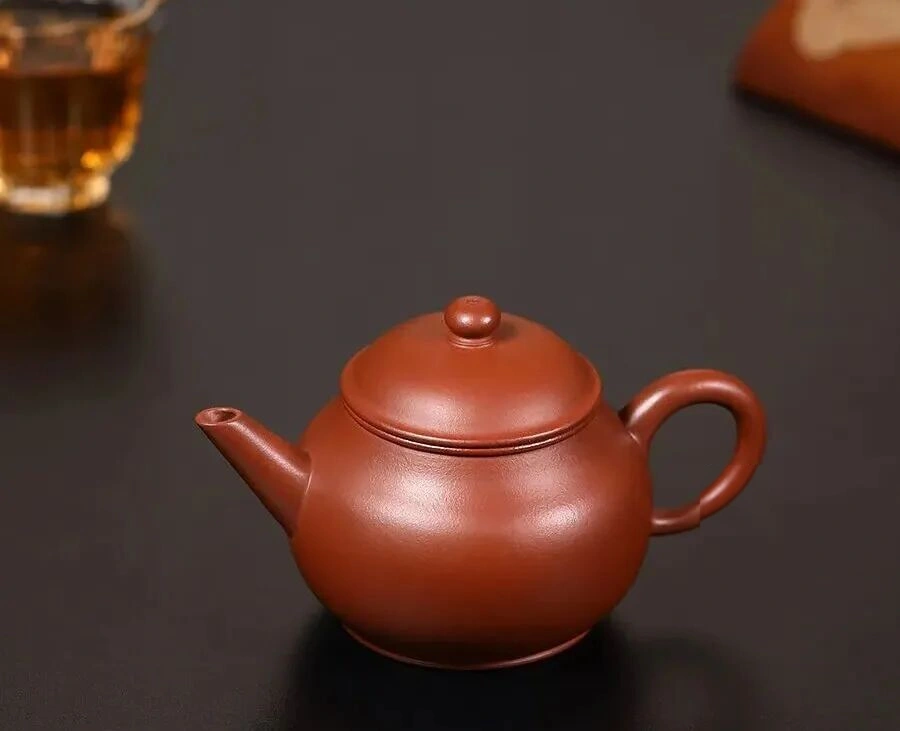
Grain and color are observations, not quality scores
Some buyers enjoy a pronounced sandy texture; others prefer a finer finish. Neither preference establishes a universal ranking. Note what you can actually see: an even finish, visible inclusions, decoration and the condition of the rim and body. Ask for daylight photographs of the exact pot, including its interior.
A photograph alone cannot tell you whether a color comes from the body recipe, firing conditions, a surface treatment or the lighting. The useful next step is a specific question to the seller, rather than a verdict based on redness, darkness or the number of visible grains.
What porosity research can—and cannot—tell a buyer
Porosity is a measurable material property. A 2013 study examined the composition, structure and performance of historical Yixing samples. A 2021 study investigated Dicaoqing clay after firing and compared its pore structure with porcelain and pottery. These are analyses of particular samples, not a visual authentication rule for every modern teapot. Historical Yixing study; Dicaoqing study.
Do not turn “breathable clay” into a simple better-or-worse scale. Nor should a claimed shrinkage percentage be treated as a fixed identifier for a whole clay family without the preparation, drying and firing conditions behind it. Ask how the figure was measured and whether it describes this production batch.
A useful set of questions before you buy
- Material: What exactly is claimed, and what supports the stated source or blend?
- Craft: How was this pot formed, finished and decorated?
- Firing: What can the maker explain about this batch, rather than zisha in general?
- Condition and use: Can you inspect the actual pot, its interior, lid fit and pour?
- Accountability: Are the description, seller identity and return terms clear?
For a first inspection, our look, touch and smell guide covers observable condition. This article adds the questions behind the material story. You do not need to become a ceramic scientist to buy thoughtfully; you need claims that the seller can explain and evidence that matches the item.