Ratgeber zu Tee und Teegeschirr
What Is Chenpi Tea? Dried Tangerine Peel Explained
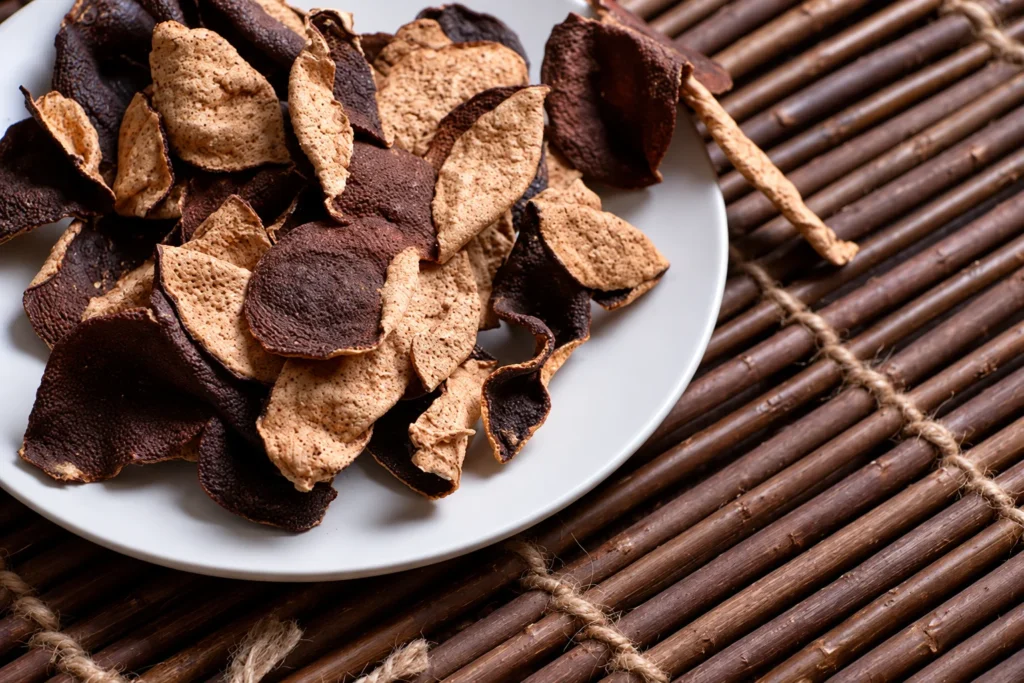
Chenpi is dried tangerine peel, often aged and valued in China for its distinctive aroma. Steep it in hot water and you have a peel infusion commonly called chenpi tea. Add actual tea leaves and it becomes a different kind of blend.
The English names dried tangerine peel and aged tangerine peel are useful descriptions, but a label should still tell you what product you are buying. The words alone do not establish origin or years of storage.

What part of the fruit is used?
The peel includes the colored outer surface and the paler inner pith. It may be sold in connected lobes, broken pieces or strips. The familiar three-lobed form is attractive, but shape alone cannot authenticate a batch.

Why Xinhui chenpi gets special attention
Xinhui, in Jiangmen, Guangdong, is a well-known origin in Chinese peel culture. Its protected-origin product has specific requirements, rather than simply meaning any peel shipped from Guangdong. Our Xinhui and ordinary chenpi comparison explains the distinction.
Chenpi also comes from other regions of China. “Not Xinhui” does not by itself mean counterfeit: the question is whether a seller describes the actual product honestly.
What does chenpi tea taste like?
Expect citrus fragrance with some peel bitterness. A batch may suggest fresh zest, dried citrus or a more mellow aromatic character. Harvest maturity, preparation and storage all play a part. Increasing peel weight or boiling time can make the same batch taste much stronger.

It also has a place in Chinese cooking. Small amounts can season soup, congee, braised dishes and desserts. Culinary use is a useful way to understand the ingredient without starting from exaggerated health claims.
Does it contain caffeine?
Plain tangerine peel, infused by itself, is naturally caffeine-free. Pu-erh, white tea, black tea and other tea-leaf additions normally introduce caffeine. Read a blend’s ingredient list before treating “chenpi tea” as an evening herbal drink.
Buying your first batch
- Choose a clearly labeled food-grade product intended for your use.
- Check producer, origin, storage instructions and any age claim.
- Buy a small quantity so you can judge aroma and bitterness.
- Avoid unusual dampness, mustiness or suspicious growth.
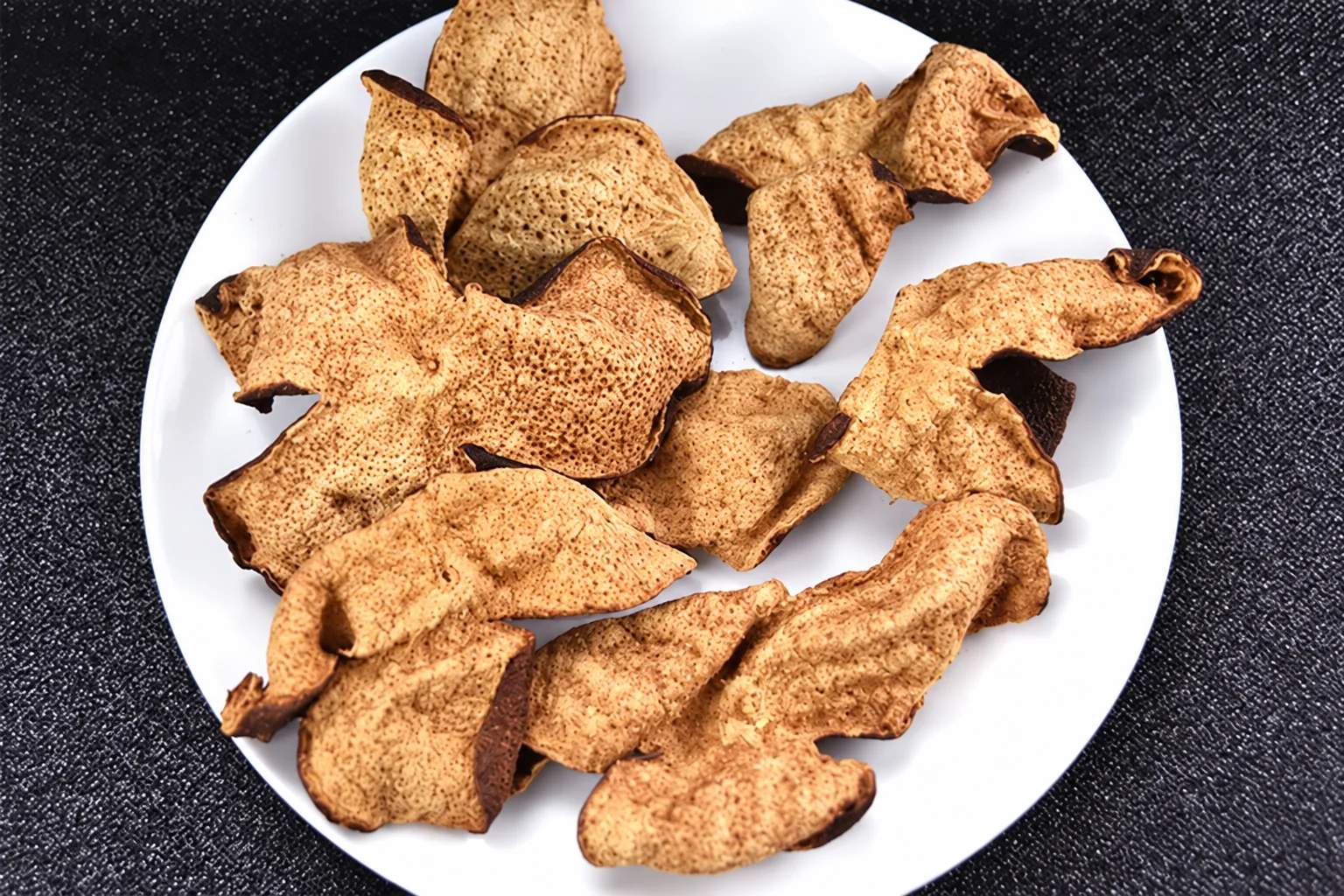
Start with a mild brew
Use the product directions, then adjust gently to taste. You do not need the oldest or most expensive peel to learn what you enjoy. Our brewing guide covers steeping, simmering and combining peel with tea. Health claims deserve a separate evidence check rather than being assumed from a pleasant aroma.