Guías de té y utensilios
Black Tea’s Golden Ring: A Clue, Not a Quality Guarantee
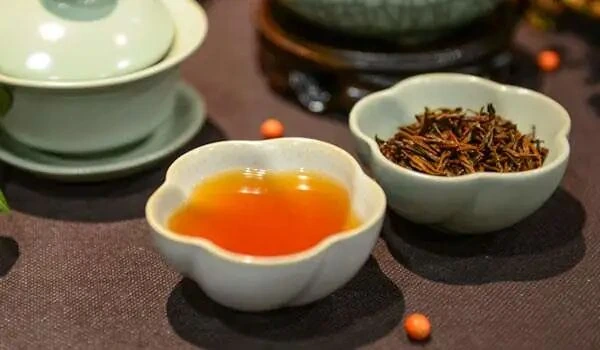
The “halo” around the edge of the cup
In a white cup, some black teas show a bright golden band near the surface at the edge. Chinese tea discussions call it a jin quan, or golden ring. The source playfully describes it as a halo.
It can be an attractive feature of a bright infusion. But it is an optical observation of the whole brew, not a certificate that a tea is rare, expensive or authentic.
Pigments help explain what you see
Theaflavins contribute yellow-orange color and brightness, while thearubigins contribute red-brown tones and body. More complex brown substances can deepen the appearance. Their combined effect helps explain why a red-amber tea may look more golden at a thinner edge.
The source links the ring particularly with theaflavins. That is a useful explanation of one contribution, but a visible ring is not a direct measurement of chemical concentration. Cup shape, the amount of tea and illumination all matter.
Golden tips and a golden ring are different things
Golden tips describe the appearance of the dry leaf’s fine bud hairs; the golden ring describes the brewed liquor. A tea with many golden tips may be appealing, but bud content, processing and brewing determine more than a photograph of the leaf can reveal.
Do not assume an all-golden dry tea is automatically a higher grade, or that a less obvious ring means poor tea. Different Chinese black tea styles are designed around different raw material and flavor goals.
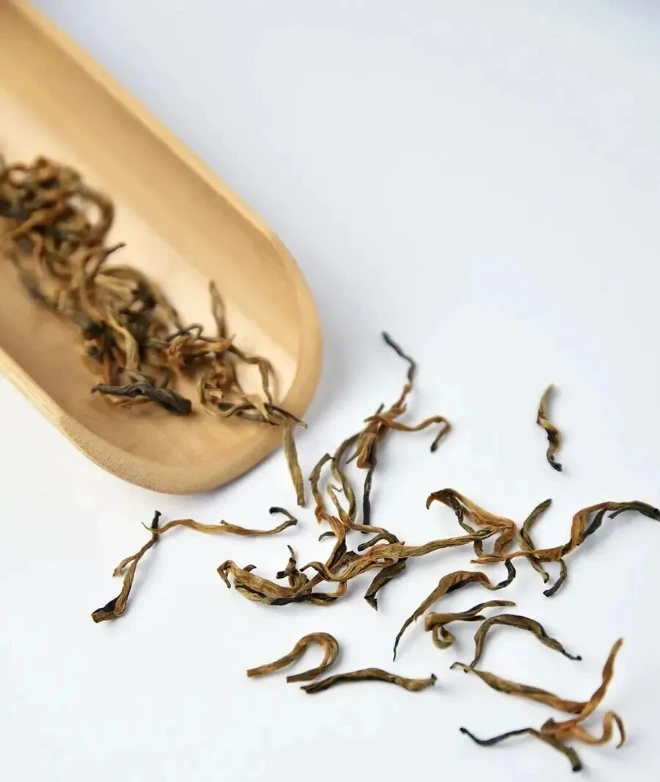
Why the same tea can look different in another cup
A wide, pale cup and oblique light can make the edge easier to see. A darker vessel, deeper fill or different background can make it less obvious. Concentration changes both the main liquor color and the apparent contrast at the edge.
If you want to compare the effect, use the same white cup, equal volumes and the same brewing recipe. Let the cup sit under steady light instead of chasing an especially dramatic camera angle.
Use the ring as one tasting note
Enjoy the appearance, then smell and taste the tea. Is the aroma clean? Does the infusion have a pleasant balance of briskness and body? Does the finish remain appealing after a few sips? Those questions tell you more than a ring alone.
A golden rim cannot prove an origin, exclude added flavoring or establish a medical benefit. Keep it as one interesting observation within a broader assessment of the cup.
Related black tea guides
- Red or Golden Black Tea? What Liquor Color Tells You
- Four Black Tea Myths: Color, Heat and Brewing Water
Source attribution
Reprinted from Dong Cha Di (懂茶帝), an independent tea media publication. Edited and translated into English by Sandao; promotional material has been removed and research findings are presented within their limits.