चाय और चाय के बर्तनों के मार्गदर्शक
Green, Part-Red and Red Chenpi: Harvest Stages Explained
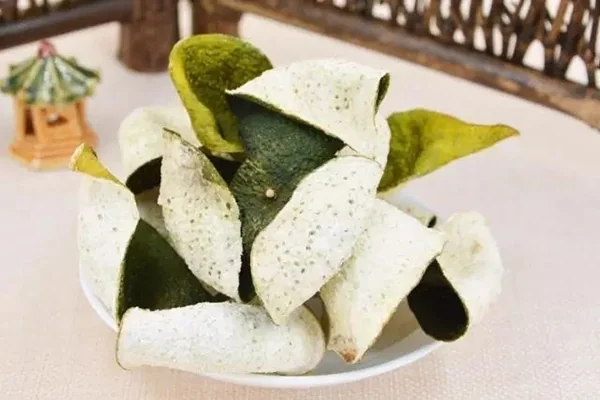
Green peel, part-red peel and red peel describe when the citrus fruit was harvested. They are not three storage ages. A ripe red peel can be newly processed, while a peel picked green can have years of storage behind it.
The three harvest categories
The Xinhui chenpi standard distinguishes gan qing pi, wei hong pi and da hong pi by the fruit’s stage of coloring and maturity. See DB4407/T 70—2021. Weather and growing conditions make fixed calendar dates a poor substitute for maturity.
Green peel: gan qing pi
Collected before the fruit has colored and matured, green peel often presents a firmer, thinner-looking structure. Its flavor may be more sharply citrusy and bitter. A small amount is a sensible tasting start.
Part-red peel: wei hong pi or er hong pi
The fruit has begun changing color but is not fully colored. This middle category can offer a balance between a lively citrus edge and a rounder peel character. It is not a guaranteed chemical or medicinal midpoint.

Red peel: da hong pi
From more mature, substantially colored fruit, red peel often looks fuller and is commonly chosen for a rounded citrus fragrance. Actual sweetness, bitterness and thickness still vary by batch and preparation.

Choose by flavor and intended use
| Question | What to check |
|---|---|
| Want a bright, sharper accent? | Try a small green-peel sample. |
| Want a gentler starting profile? | Compare part-red and red-peel samples. |
| Buying an aged batch? | Ask for harvest category and aging record separately. |
| Cooking rather than brewing? | Check food-use directions and start with a small amount. |
These are tasting choices, not a ranking of health benefits. No category makes a damaged product worth drinking.
Two naming traps
First, darker color after storage does not turn a green-harvest peel into a ripe-harvest peel. Second, the commercial term “green peel” should not be used to substitute automatically for the Chinese medicinal material called Qing Pi. Ask what the product actually contains and how it is intended to be used.

Storage still matters for all three
Every category needs suitable dry storage. It is too simple to assume that green peel cannot mold, or that red peel is inherently hard to keep. The condition of the batch and the storage environment deserve more attention than a slogan about sugar or collectability.