चाय और चाय के बर्तनों के मार्गदर्शक
How to Brew Xiaoqinggan: Whole, Broken or Pierced

A brewing and production guide, not a health-benefit claim. Production photographs have been restored and grouped into English-labeled panels; they illustrate the source report rather than certify a supplier.
What is inside a xiaoqinggan?
Xiaoqinggan is a small, hollowed green citrus peel filled with tea, commonly ripe pu-erh. The appeal is the meeting of bright citrus fragrance and the tea’s mellow, earthy character. It is not the same drink as plain chenpi water: the tea filling contains caffeine.
A whole fruit is a convenient package, not a standard serving size. Weigh it or check the label before choosing your pot. Using a large tea-filled citrus in a tiny gaiwan can produce an unexpectedly strong cup.
From green fruit to a clean hollow peel
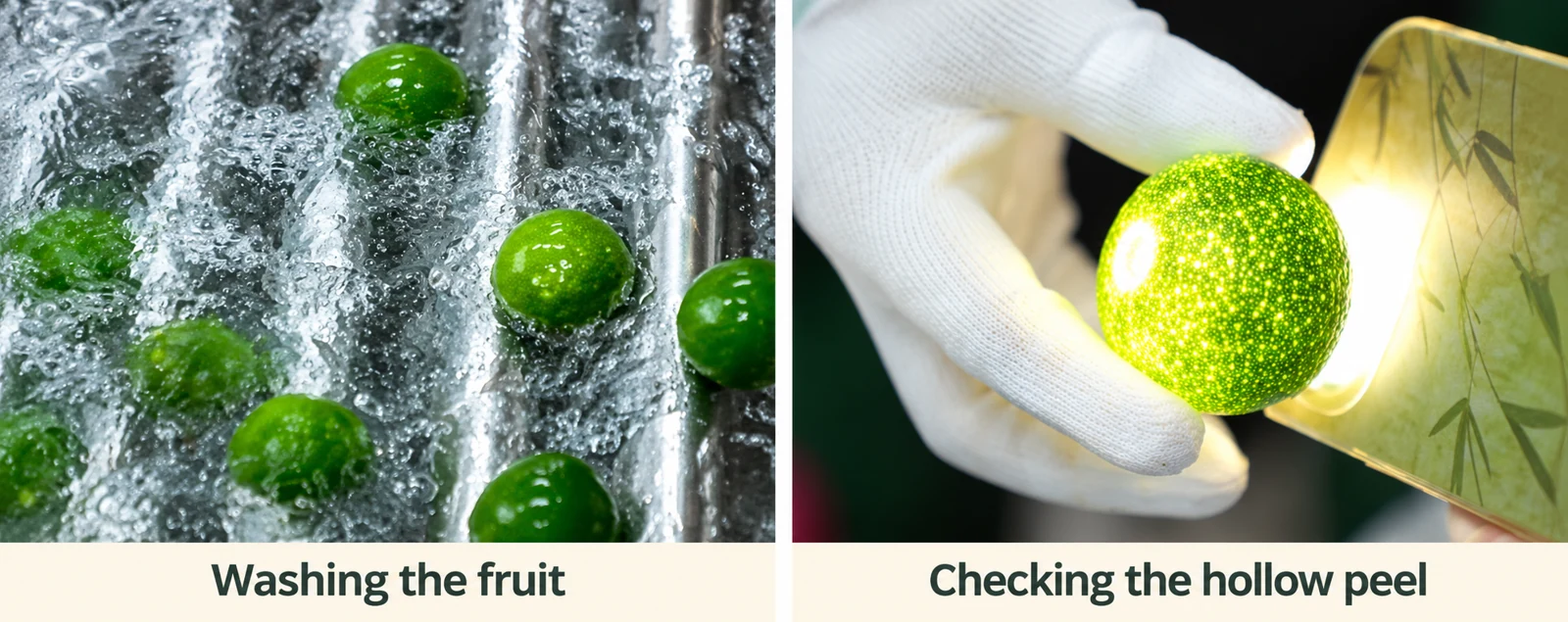
The source describes six broad production stages. First comes picking suitable green fruit, followed by washing and size sorting. Workers then remove the fruit cap and flesh while trying to keep the outer peel intact. Cleaning the inside and checking for remaining pulp matter because wet residues complicate drying.
The report describes one producer’s equipment and workflow. Exact harvest dates, cleaning methods and quality controls differ; do not treat a photograph of washing machinery as a food-safety certificate.
Filling, drying and wrapping
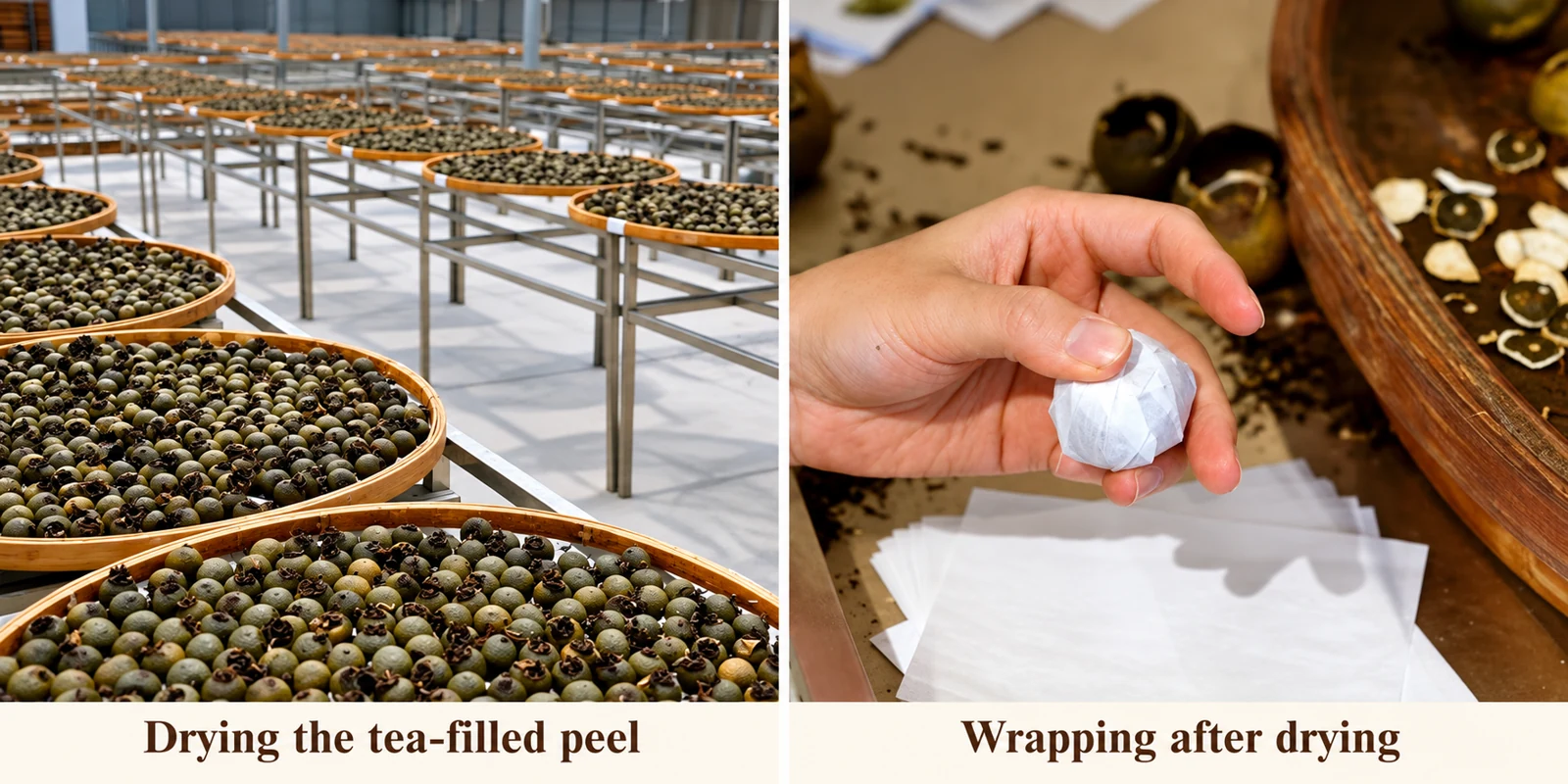
The hollow peel is filled with tea, then dried until the product is suitable for storage. Producers may combine sun exposure with controlled drying; the time required depends on weather, fruit size and equipment. “Sun-dried for a set number of days” alone does not establish that the centre is dry enough.
Once fully dried and cooled, the cap is replaced and the fruit is wrapped. Paper protects the surface but does not make an incompletely dried product safe. Look for a producer, batch identity and storage instructions rather than relying only on craft language.
Whole fruit: slower release, less handling
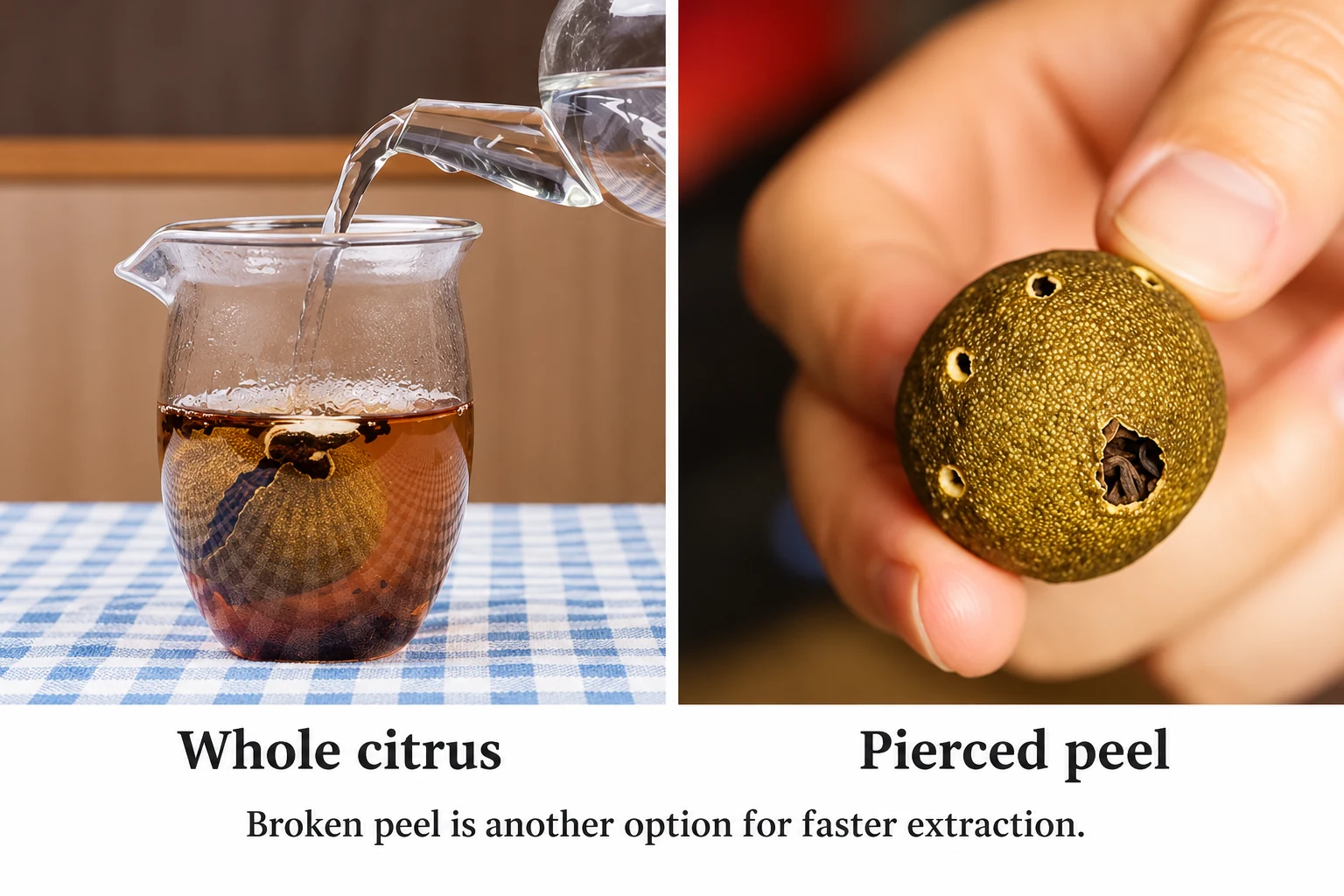
Remove the wrapper and cap. Put the citrus in a vessel large enough for its tea content, use freshly boiled drinking water, and begin with a moderate steep before tasting. Drain the liquor fully between infusions. If the cup is weak, extend the next steep; if it is heavy, shorten the steep or use a larger water volume.
Keeping the peel whole slows water access to the filling. This can make the release of citrus and tea feel more gradual, though neither flavor follows an identical timetable in every product. A lid opening is enough for whole-fruit brewing; forcefully piercing a brittle shell is not required.
Broken peel: control the portion yourself
Break off a little peel and combine it with a measured portion of the filling. This method is useful when one whole citrus is too much for a single drinker. Exposed leaves often release flavor quickly, so start with shorter infusions and adjust the peel-to-tea balance.
It is not an inferior method. It simply offers a different degree of control. Too much fragmented peel can taste sharply bitter; use a strainer for small fragments.
Pierced peel: a middle option
Small holes allow water to circulate while much of the shell remains intact. If you choose this approach, work on a stable surface with the tool pointing away from your hand; avoid forcing a sharp tea pick into a hard shell you are gripping tightly. Breaking off a small portion is a simpler alternative.
No method wins for every drinker. Compare the same product with the same water, then change one thing at a time. Stop when the flavor no longer pleases you rather than trying to meet a promised infusion count. Do not leave wet leaves warm overnight for the next day.
Continue exploring chenpi
- Two Chenpi Recipes: Bayberry Drink and Red Bean Dessert
- Mold, Insects or White Spots on Chenpi: What to Do
- Xinhui Chenpi Regions: Tianma, Dongjia, Chakeng and More
- What Is Chenpi Tea?
- How to Store Chenpi
Browse the complete Chenpi Guide
Editorial note: adapted from the supplied article screenshots, with text, image localization and English translation edited by Sandao. Food-safety, health and historical market claims are qualified as noted above.