お茶と茶器のガイド
Pu-erh Tea Storage Terms: Dry, Humid and Beyond
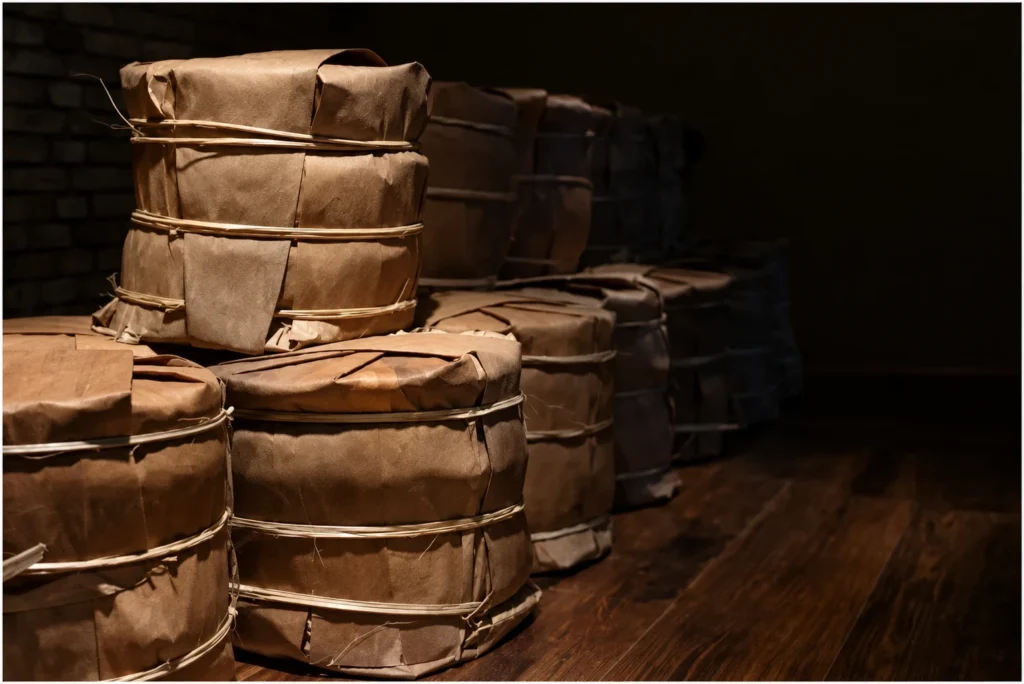
Pu-erh storage vocabulary mixes descriptions of climate, deliberate handling and commercial tradition. Dry storage and humid storage are useful starting terms, but they are not universal quality grades. A tea’s condition depends on the environment inside its packaging and on how that environment changed over time.
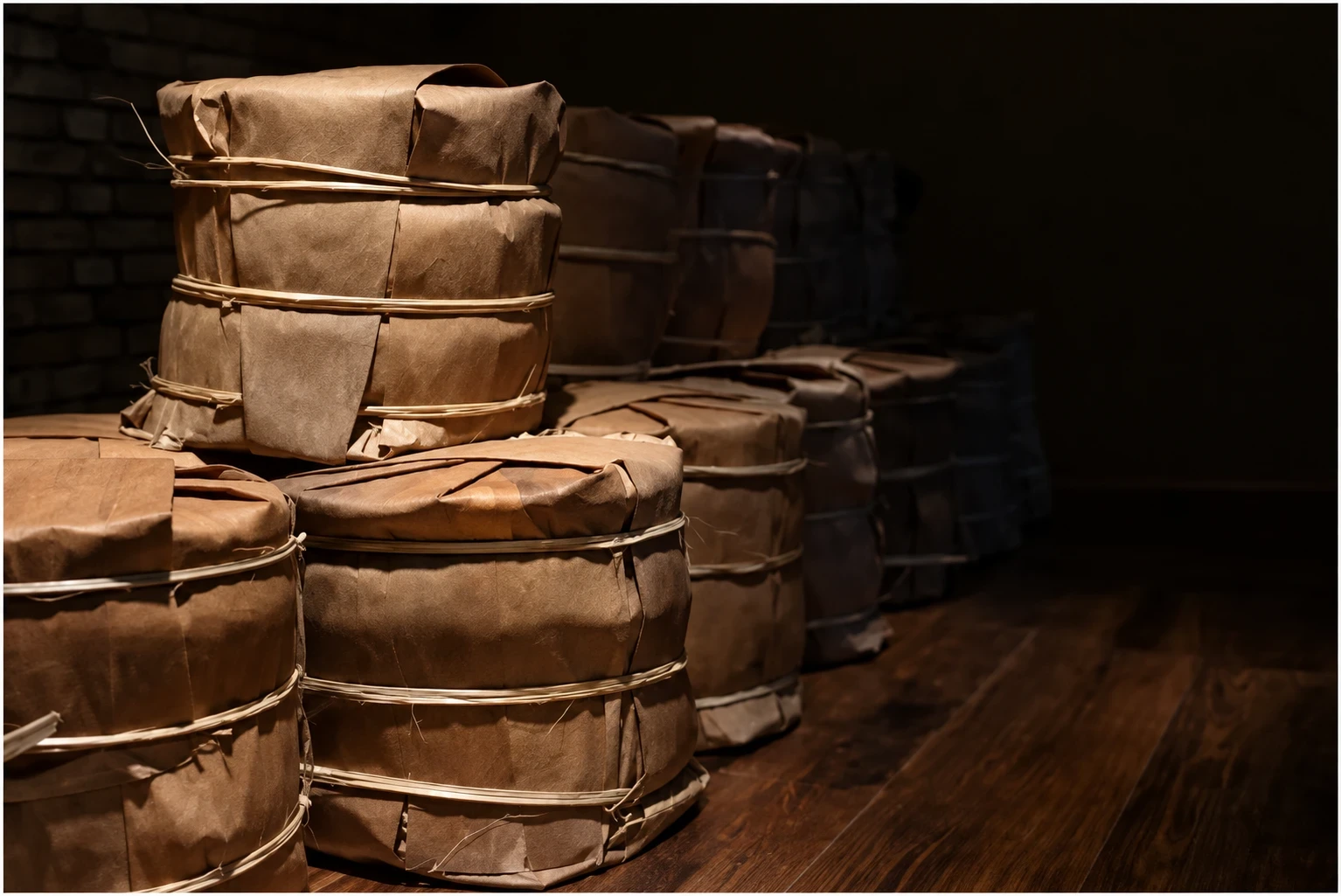
Dry and humid storage describe conditions
Dry storage generally suggests relatively restrained moisture exposure. Humid storage suggests greater humidity, sometimes with deliberate conditioning. Neither term identifies one fixed temperature or moisture number. Kunming, Hong Kong or Guangdong is not a complete description: rooms, seasons, ventilation and packaging differ within the same location. Ask for the actual storage history rather than judging by a city alone.
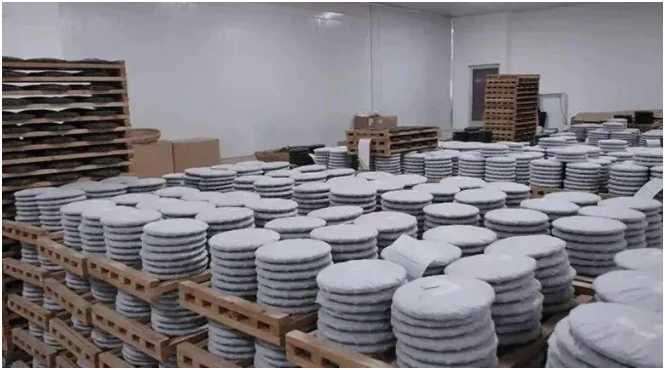
Entering, rotating and resting a warehouse lot
Entering storage can refer to placing tea in a deliberately managed environment. Rotating a lot redistributes packages to reduce differences within a warehouse. Resting after humid storage is often called tui cang, a period intended to reduce warehouse odors under different conditions. These are handling descriptions, not proof that damaged or contaminated tea has been made safe.
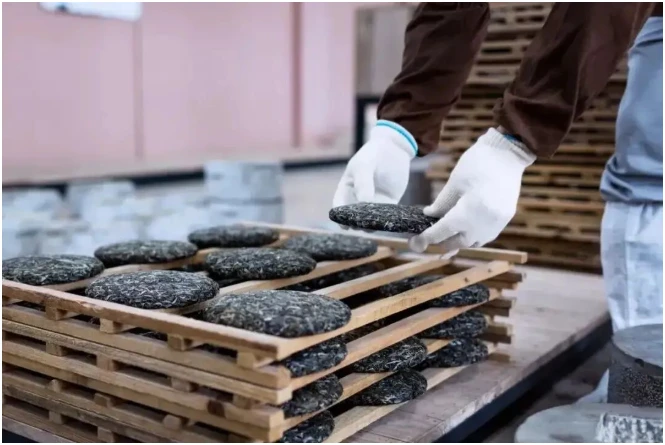
Temperature and moisture work together
Higher moisture and temperature can accelerate chemical changes, but faster is not necessarily better. Research using controlled conditions is not an instruction to heat or humidify tea at home. Avoid direct sun, kitchen odors, condensation and contact with damp floors or walls. Keep records and inspect packaging periodically. A musty smell or visible growth should not be relabeled as desirable aged character.
