О чае и чайной посуде
Jiangshan Lumudan Tea: Zhejiang Green Tea Beyond Longjing

Jiangshan Lumudan is a green tea from Jiangshan, in Quzhou, Zhejiang, China. It offers another way into Zhejiang tea beyond the familiar name Longjing. The two should not be confused: a shared province—or even a shared tea cultivar—does not make them the same product.
You may see the name written as Jiangshan Lu Mudan or 江山绿牡丹. Keeping the Chinese name alongside the English spelling is useful when asking a seller exactly which tea a listing describes.
Where is Jiangshan Lumudan from?
Jiangshan belongs to Quzhou, rather than Hangzhou. Zhejiang’s intellectual-property service records the name 江山绿牡丹茶 as a certification trademark associated with Jiangshan. A regional tea name is distinct from the individual producer whose name appears on a packet.
Peijiadi village is one place to know in this tea’s local story. A Zhejiang Shuren University fieldwork account describes visits to its tea gardens and Lumudan craft workshop. That gives useful context about a producing community; it is not evidence that every tea sold under the regional name comes from the same village.
The tea plant and the finished tea are different questions
The association’s November 2023 publication notice includes T/ZTIA 0001-2023, Jiangshan Lumudan Tea. The published text describes a green tea made in Jiangshan from local fresh leaves, including Longjing 43, Zhenong 117, Yingshuang and local seed-grown populations. Its processing includes spreading, heat fixation, rolling, shaping and drying.
That definition explains why “made from Longjing 43” does not mean “Longjing tea,” and certainly does not establish West Lake origin. Cultivar identifies the plant material; the finished tea name also depends on where and how it is made.
How does it differ from West Lake Longjing?
| Question | Jiangshan Lumudan | West Lake Longjing |
|---|---|---|
| Which origin? | Jiangshan, Quzhou, Zhejiang. | The designated Xihu production area in Hangzhou. |
| Which identity? | A distinct regional green tea. | A specific origin within the Longjing category. |
| Does Longjing 43 prove the name? | No. Ask about the finished tea and actual producer. | No. Cultivar alone cannot prove West Lake origin. |
The 2023 Lumudan text describes a tight, bud-and-leaf form and fresh flavor. Longjing is known for its flat leaf. Those observations are useful for learning, rather than a substitute for provenance records. For the wider distinction, read our Longjing production-area guide.
What about charcoal drying and the stories in older articles?
A producer may describe a particular batch as charcoal-dried or partly handmade. Ask which stages that describes instead of extending one workshop’s practice to every Lumudan tea. The process and the batch matter more than a romantic label.
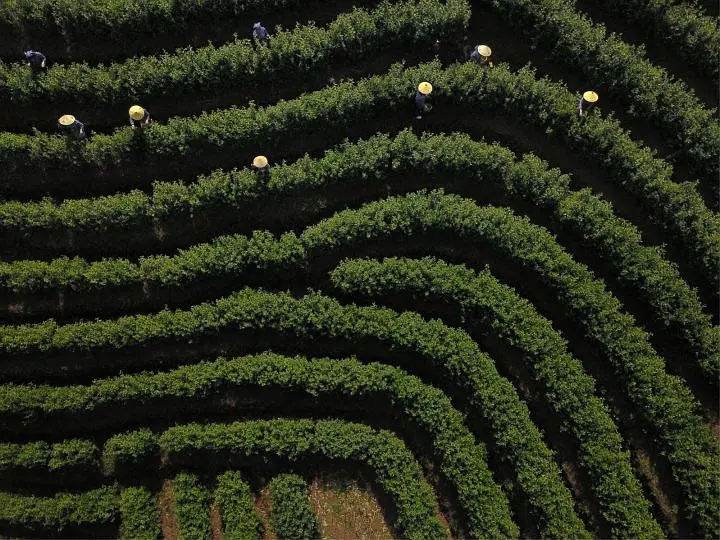
The 2018 account that prompted this guide is a personal tea-garden visit. Its old auction price, individual tasting experience and statements about farming inputs are not current facts about all Jiangshan Lumudan. A landscape photograph cannot establish how a particular crop was managed.
What to ask before buying
- Identity: confirm the full tea name, producer and actual growing area.
- Batch: ask for harvest year, picking information, net tea weight and storage conditions.
- Processing: clarify any handmade or charcoal-dried claim for that batch.
- Evidence: if a specific certification or test result is advertised, ask which product and date it covers.
Try a small quantity before committing to a gift box. Let the producer’s brewing advice be your starting point, then compare samples with the same water, leaf weight and timing. Our Chinese green tea guide introduces other regional teas you can explore alongside it.
Sources reviewed October 24, 2026. The 2023 standard text is cited as a dated technical reference, not a statement about its current status. The landscape and picking photographs come from the linked 2018 article; no first-hand Sandao tasting or farm inspection is claimed.