Tea & Teaware Guides
Celadon and Ru-Style Teaware: Read the Description Carefully
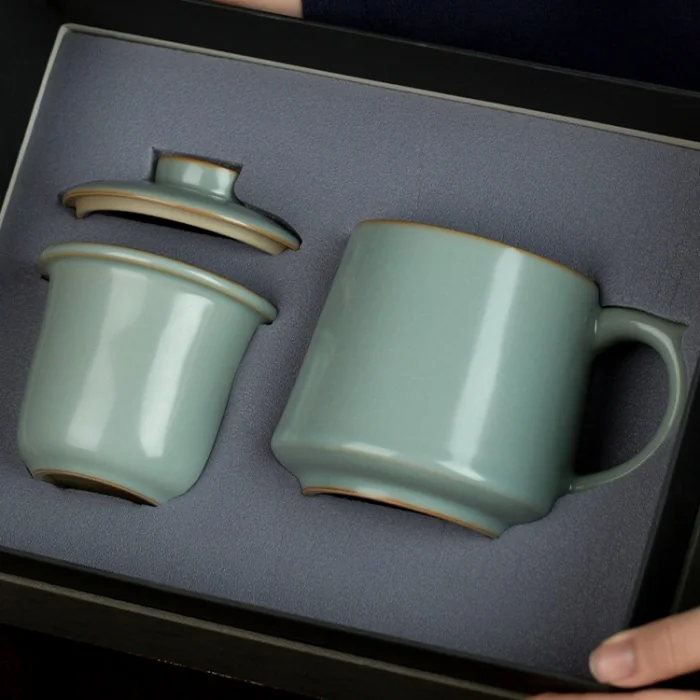
“Ru-style” on a modern teaware page should be read as a style description unless the seller explicitly provides another supported attribution. It does not mean the object is an antique Ru kiln piece. A pale blue-green appearance also cannot establish age or origin.
For everyday buyers, the most useful question is what the description tells you about the actual vessel: its material, glaze, maker, dimensions and intended use.
Separate colour from provenance
Museum collections use precise terms for historical ceramics. For example, the Met describes a Southern Song vase as stoneware with a crackled celadon glaze and identifies it as Guan ware. That record illustrates why a colour or a crackled surface is not enough to assign every similar-looking object to the same historical category.
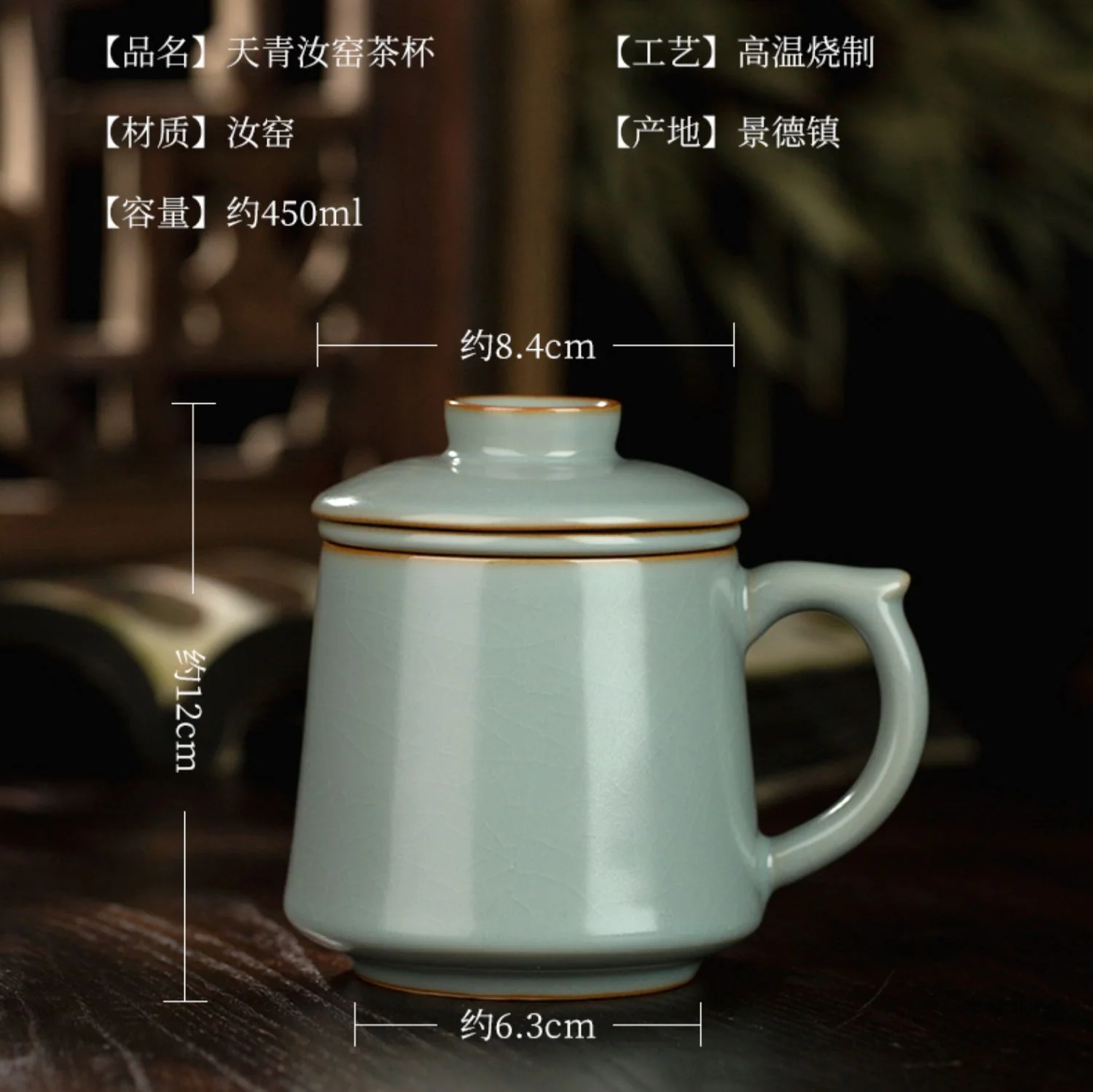
The mug shown in this article is a contemporary product described by Sandao as Ru-style. The photographs demonstrate its shape and pale green finish; they do not establish historical kiln provenance.
Read four parts of the product description
- Style: the appearance or tradition the design refers to.
- Material: the body and glaze information supplied by the maker.
- Origin: where the particular piece was produced.
- Use: the care and handling instructions for the finished object.
If a page combines these into a single phrase, ask the seller to separate them. This makes it easier to compare two products without assuming that a more historic-sounding name guarantees a better everyday mug.
Look at the surface and the practical details
Request an image of the interior, rim and base. Ask whether the photographed piece is the exact item or a representative sample, and whether visible variations are expected. A close photograph is helpful for discussing a detail, but it is not a substitute for the seller’s description.
For a handled mug, confirm that it is comfortable to lift at the intended fill level. If it includes an infuser, ask how the basket is supported and where you can place it after brewing. Those features affect daily use more directly than the style name.
Follow the instructions for this piece
Do not infer dishwasher or microwave compatibility from a glaze colour. Ask for explicit guidance, particularly where a piece has decorative finishes. If you notice a new crack, chip or unexpected change, stop using it until you have suitable advice from the maker.
See the Ru-style ceramic mug for the product information, or browse the Jingdezhen collection. Choose a piece for its supported description and useful design, while enjoying the tradition its appearance evokes.
Related guides
Sources and further reading
Product photography supplied for Sandao. The illustrated pieces are contemporary examples; historical references do not authenticate them. Sources consulted 3 October 2026.