Tea & Teaware Guides
Where Is Keemun Black Tea From? Qimen Origins Explained
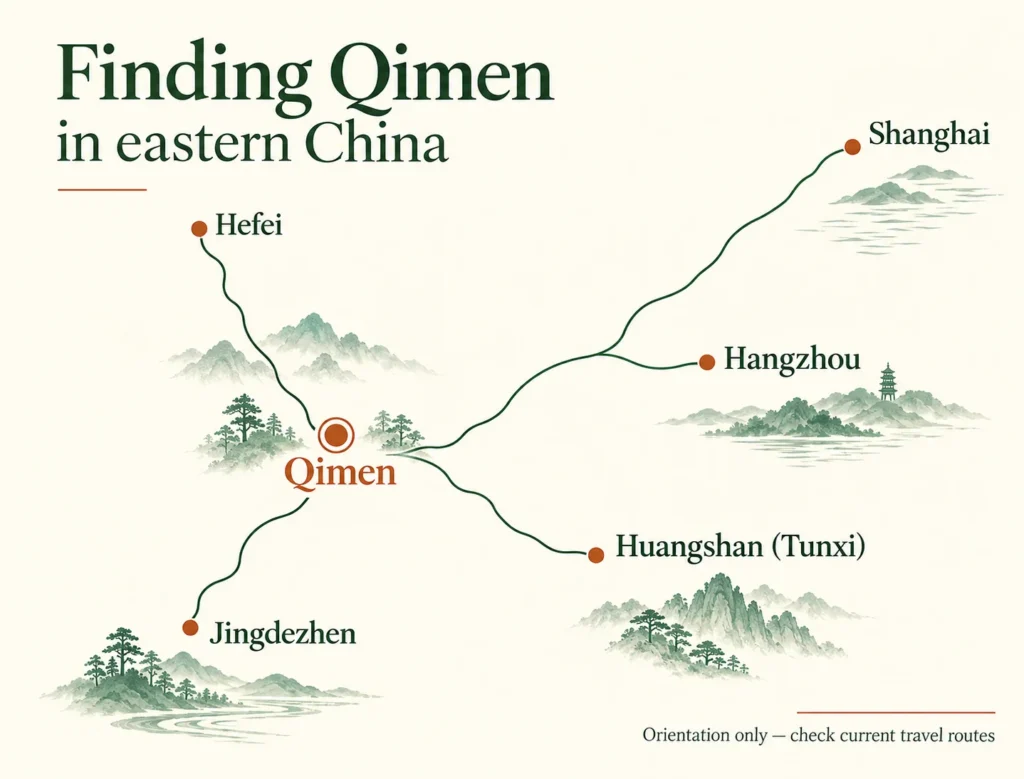
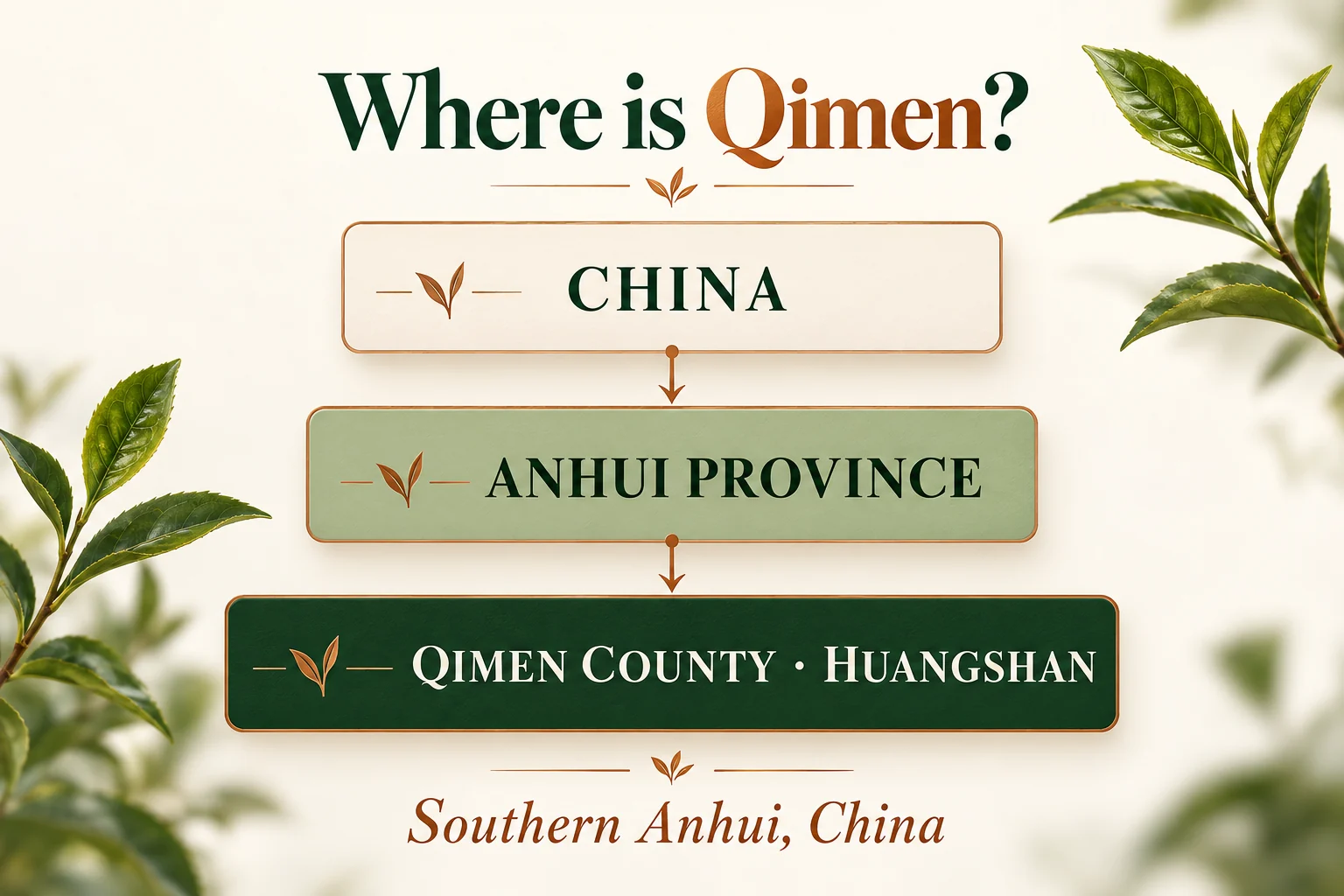
Keemun black tea takes its name from Qimen County in Huangshan, southern Anhui, China. That is the place to start when a packet says “Keemun” or “Qimen.” The complication is that older tea-trade accounts used the name for a wider producing region. A historical trade name, a modern origin statement and a certification claim do not necessarily describe the same thing.
This guide explains where Chinese Keemun black tea comes from, why neighboring places appear in its history, and what to ask before buying tea sold as Qimen-grown.
Where is Qimen in China?
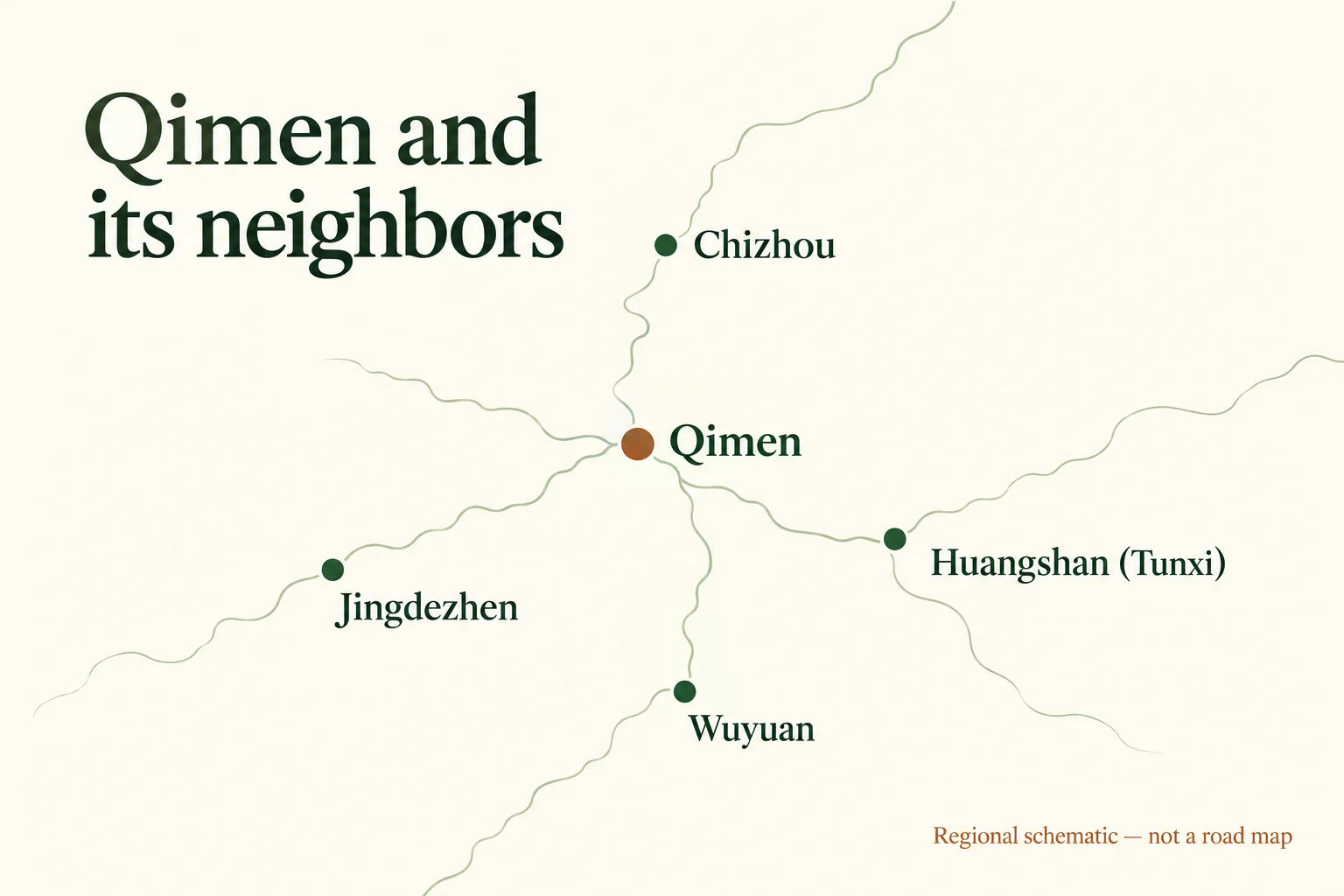
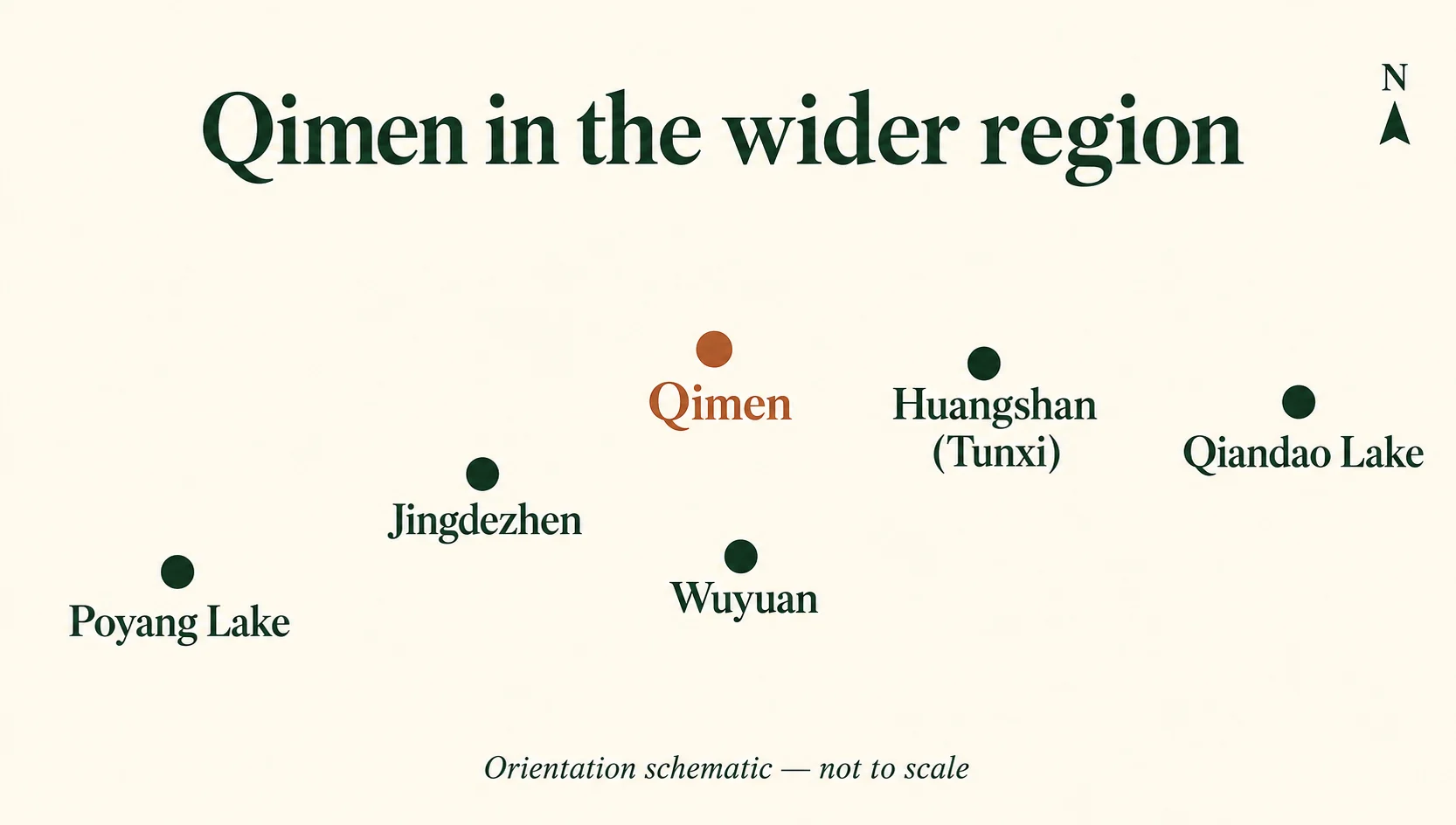
Qimen sits in the mountainous south of Anhui Province, in western Huangshan municipality. Jingdezhen and Wuyuan in Jiangxi, and Huangshan’s Tunxi urban area to the east, are useful reference points. Huangshan here can mean the municipality; it does not mean every tea garden is on the famous Huangshan mountain scenic site.
For an overseas buyer, “Anhui, China” is useful but broad. If the seller makes a more specific Qimen-origin claim, look for the county and, where available, the township or tea garden. The diagrams below show the administrative location and regional orientation.
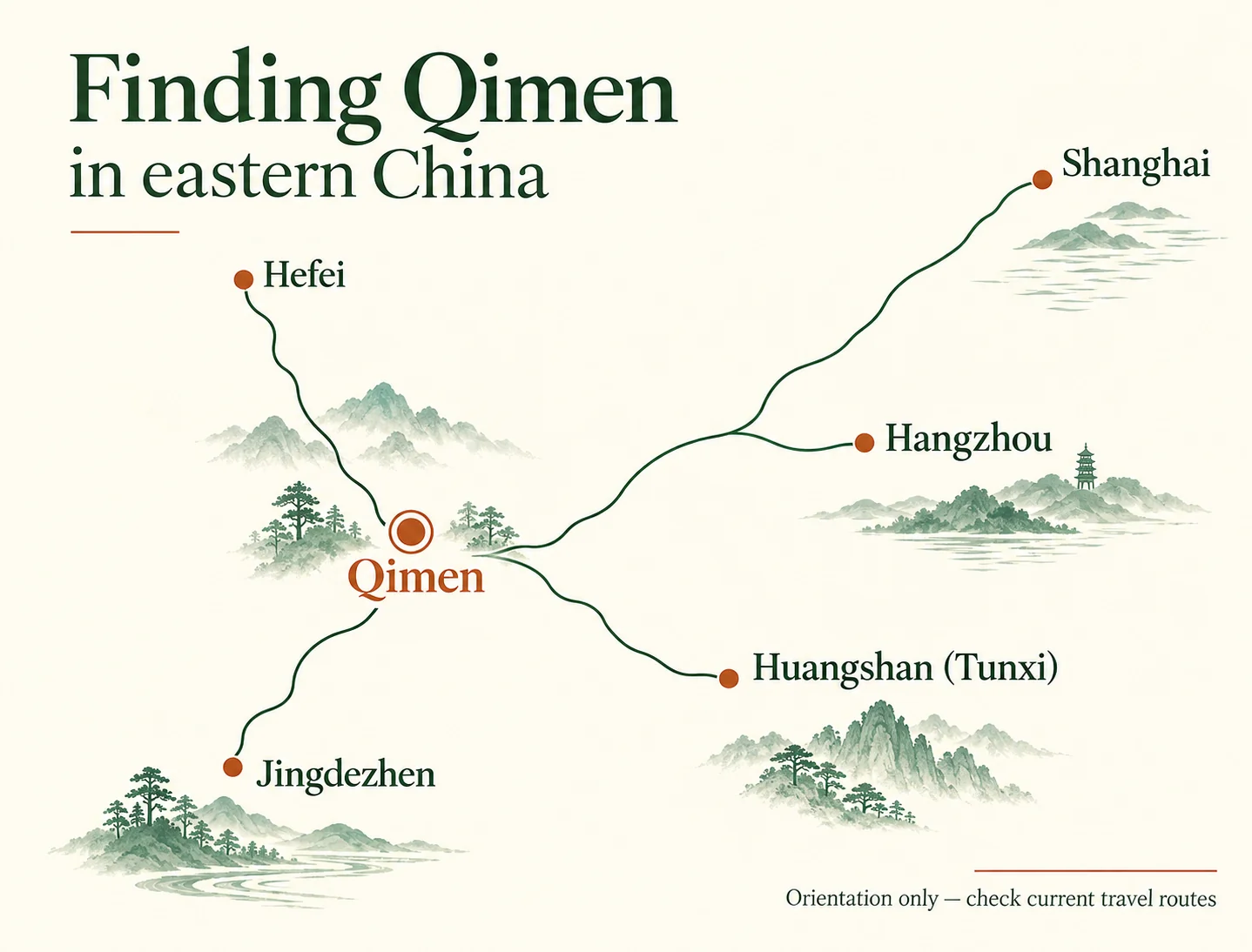
How a green-tea county became known for black tea
Qimen had a tea-growing tradition before it became famous for black tea. In the late nineteenth century, demand from the export trade encouraged producers to develop black-tea manufacture. Accounts differ on the precise starting date and the roles of individual pioneers: some historical accounts begin in 1875, while China’s national heritage register records successful creation in 1876. “The mid-1870s” is a useful way to describe the emergence without pretending the accounts are identical.
Tea firms, processing skills and trading routes helped the name travel beyond one county. Older records therefore need their own context. A merchant writing about the Keemun trade was describing production and commerce, rather than drawing the boundaries of a modern label scheme.
Why do Fuliang and Zhide appear in Keemun’s history?
Investigations from 1933 and 1936 offer useful context. They describe Qimen together with neighboring Fuliang in Jiangxi and the former Zhide area in Anhui, now part of Dongzhi. The 1936 account also mentions a small part of Guichi. These descriptions explain why older books sometimes use “Keemun” more broadly than a single county name.
Wu Juenong and Hu Haochuan’s 1933 discussion also grouped production by river drainage and treated western Qimen as an important center. That is valuable historical geography. It does not establish a permanent rule that every tea from one side of a line is better than every tea from the other.
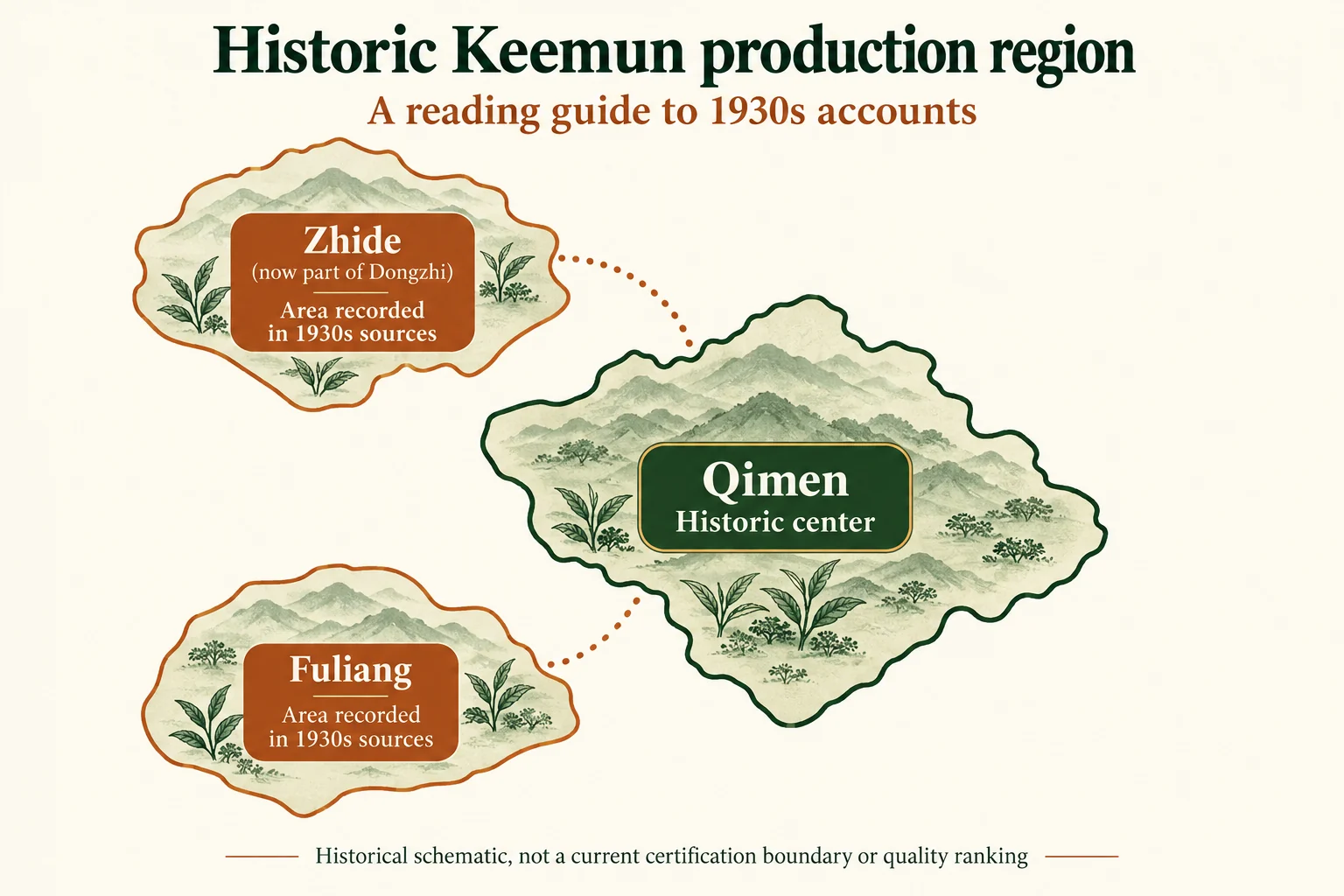
How should you read an origin claim today?
Start with the claim on the actual product, not a red outline on an old map. A producer’s address can identify where tea was processed or packed; it does not, by itself, identify where all the fresh leaves grew. Ask separately about leaf origin and processing location.
Current descriptions also need a named context. For example, Article 3 of the Huangshan Traditional Famous Tea Protection Regulations describes Keemun’s main producing area as Qimen County and the area north of Yuting in Yi County. That wording belongs to a regulation applying within Huangshan; it should not be stretched into a claim that every historical producing area outside the city is automatically counterfeit.
Similarly, a historical regional name does not authorize any particular certification mark. If a seller claims certification or a protected-origin label, check the scheme, authorized producer and batch information associated with that specific claim.
Four practical checks before you buy
- Ask where the leaves were grown. “Qimen County, Anhui, China” is more specific than a brand name or “Chinese black tea.” A township or garden name is useful when supported by records.
- Read the producer and batch details. Compare the company name, production location, product specification, date and lot number. Ask for clarification if the listing and packet disagree.
- Separate origin from grade and style. Gongfu, Mao Feng, Xiang Luo and Hao Ya are not substitutes for an origin statement. Neither a premium label nor an attractive gift box proves geography.
- Taste for quality, then evaluate the evidence for origin. Aroma, sweetness and a clean finish help you judge a tea you enjoy. Floral or honey-like notes alone cannot authenticate a county.
Keemun origin questions, answered
Are Keemun and Qimen different teas?
In this context they are two English spellings used for the same Chinese place name and its black tea. Check the rest of the label to understand the specific origin and product style.
Does all black tea from Anhui count as Qimen-grown tea?
No. Anhui is a province; Qimen is a county within it. If you want tea grown in Qimen, ask for that specific information.
Does the most famous place name guarantee the best cup?
No. Leaf quality, processing, storage and freshness all affect the result. Origin helps describe a tea; it does not replace a product-by-product comparison.
Sources and reading notes
- China’s national intangible cultural heritage register: Keemun black tea processing — the name, 1876 date and traditional processing.
- Huangshan Traditional Famous Tea Protection Regulations — Article 3, read within the regulation’s Huangshan jurisdiction; effective January 1, 2025.
- Huangshan government introduction to Keemun — regional production background.
Historical reading: Wu Juenong and Hu Haochuan, Qimen Hongcha Fuxing Jihua (1933); Qimen Hongcha zhi Shengchan Zhizao ji Yunxiao, University of Nanking, Department of Agricultural Economics (1936). Historical descriptions are paraphrased, not presented as today’s certification rules. Illustrations are newly prepared explanatory schematics for this guide.
Continue with the Keemun black tea guide, browse Keemun tea products, or return to Tea Knowledge.