Tea & Teaware Guides
Wuyishan Rock Tea: How Landscape, Cultivars and Craft Meet
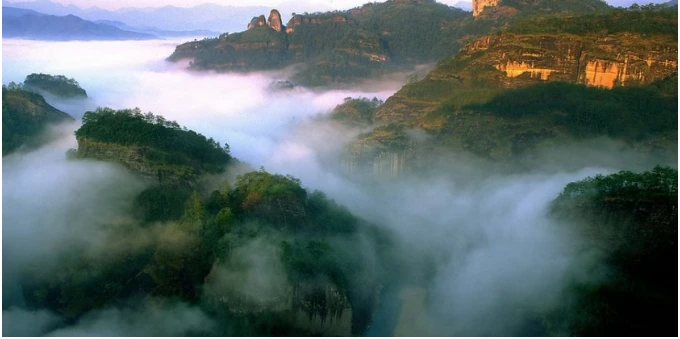
Wuyi rock tea comes from Wuyishan in northern Fujian, China. Its appeal lies in the meeting of landscape, plant material and manufacture. The cliffs and ravines provide distinctive growing settings, while generations of tea makers have developed cultivars and processing skills around them. No single part explains the finished cup on its own.
A landscape of small growing environments
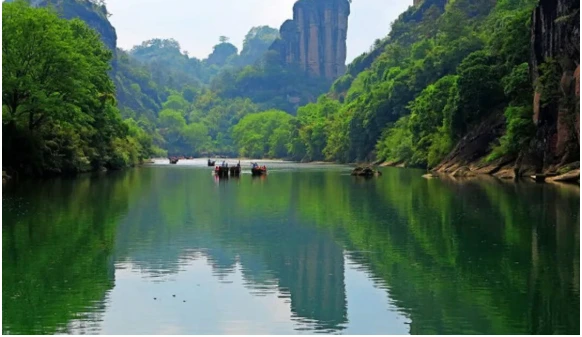
Cliff faces, sheltered valleys, streams and vegetation influence light, drainage and moisture. Tea gardens may occupy small terraces between rocks rather than broad, uniform fields. This helps explain the local attention to shanchang, the specific growing site. It does not mean that every tea grown beside rock has the same flavor or quality.
Cultivars add another layer
Shuixian and Rougui are familiar starting points. Shuixian is often chosen for a rounded body and Rougui for its distinctive spicy-floral character. Named bushes and selected cultivars broaden the range further. Dahongpao can also appear as a finished product name, including blends, so it is worth asking what a particular label means.
Processing turns fresh leaves into rock oolong
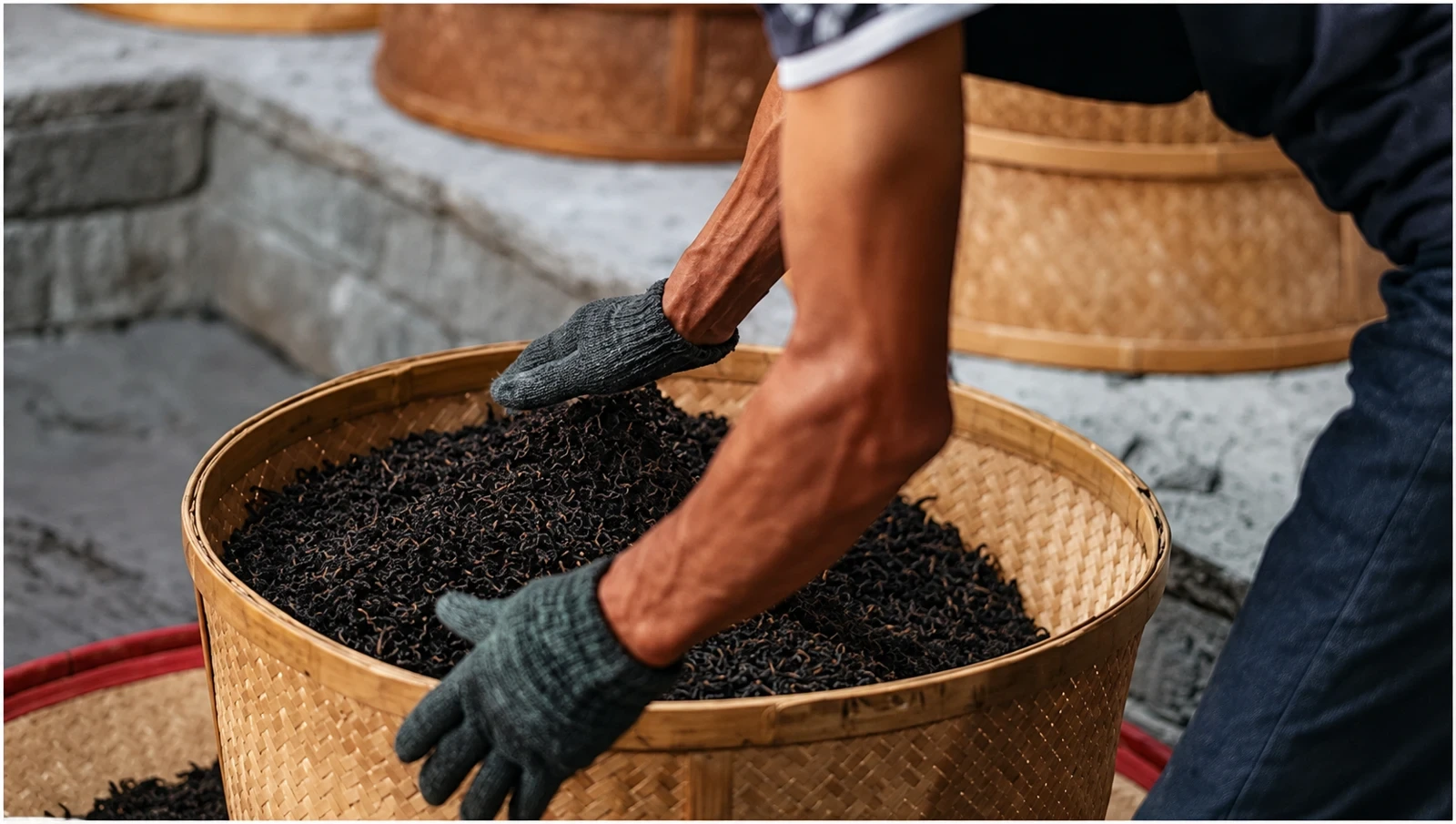
Withering begins water loss; repeated agitation and resting develop oxidation; heat fixation checks enzyme activity; rolling and drying shape and stabilize the tea. Sorting and roasting then help define its final style. Good processing responds to the leaves and weather rather than following an unchanging clock. A famous origin cannot compensate for careless manufacture.
Understanding rock rhyme in the cup
Yanyun, often translated as rock rhyme or rock character, is a tasting expression for the tea’s integrated fragrance, body and lingering finish. It is not a literal claim that the liquor tastes of stones. Explore it by comparing a few clearly described lots under consistent brewing conditions, and keep your own notes rather than trying to repeat someone else’s vocabulary.
