Tea & Teaware Guides
What Kind of Tea Is Ancha? A Chinese Dark Tea Explained
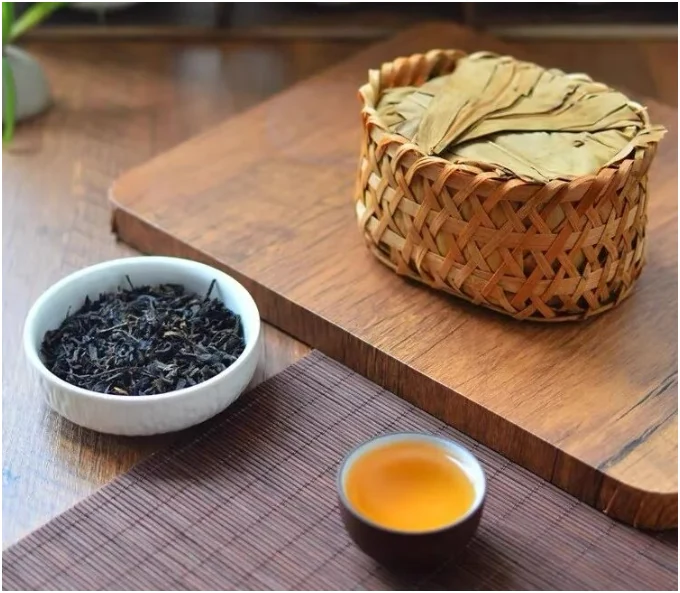
Ancha from Qimen in Anhui, China, has attracted more than one classification over its history. Green tea, qingcha and dark tea all appear in discussions. The most useful current introduction places it within dark tea, then explains the manufacturing features that make it unusual. Its home county also makes Keemun black tea, but the shared place name does not make the two products the same tea type.
Why older writers used a green-tea comparison
Ancha’s primary manufacture includes fixation, rolling and drying, and some young examples retain a fresh, brisk impression. Older trade writing also used classification language differently from today. Those points help explain the comparison with green tea. Shape and color alone, however, do not settle classification: a compressed tea can belong to several families, and yellow liquor does not automatically identify green tea.
Roasting explains part of the oolong analogy
Ancha’s later firing can produce a roasted impression, inviting comparison with roasted Wuyi oolong. Yet oolong’s characteristic fresh-leaf handling and oxidation are not simply a synonym for roasting. Ancha instead links primary manufacture to a later dew-resting, steaming, packing and drying sequence. Similar aromas can arise in different production systems.
Dew resting and later transformation explain dark tea
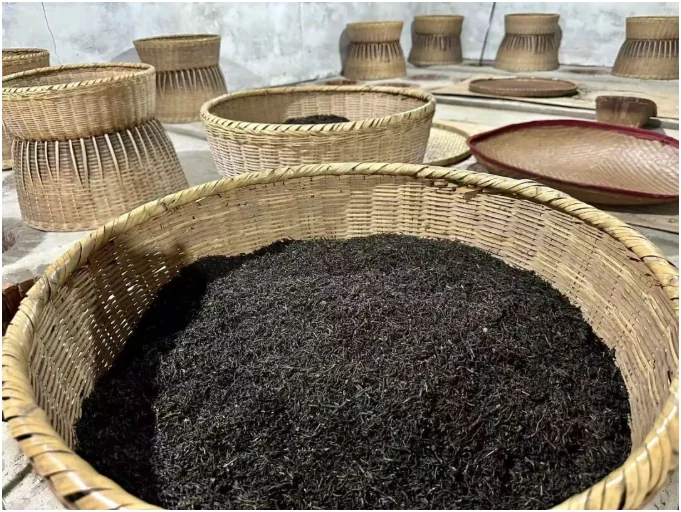
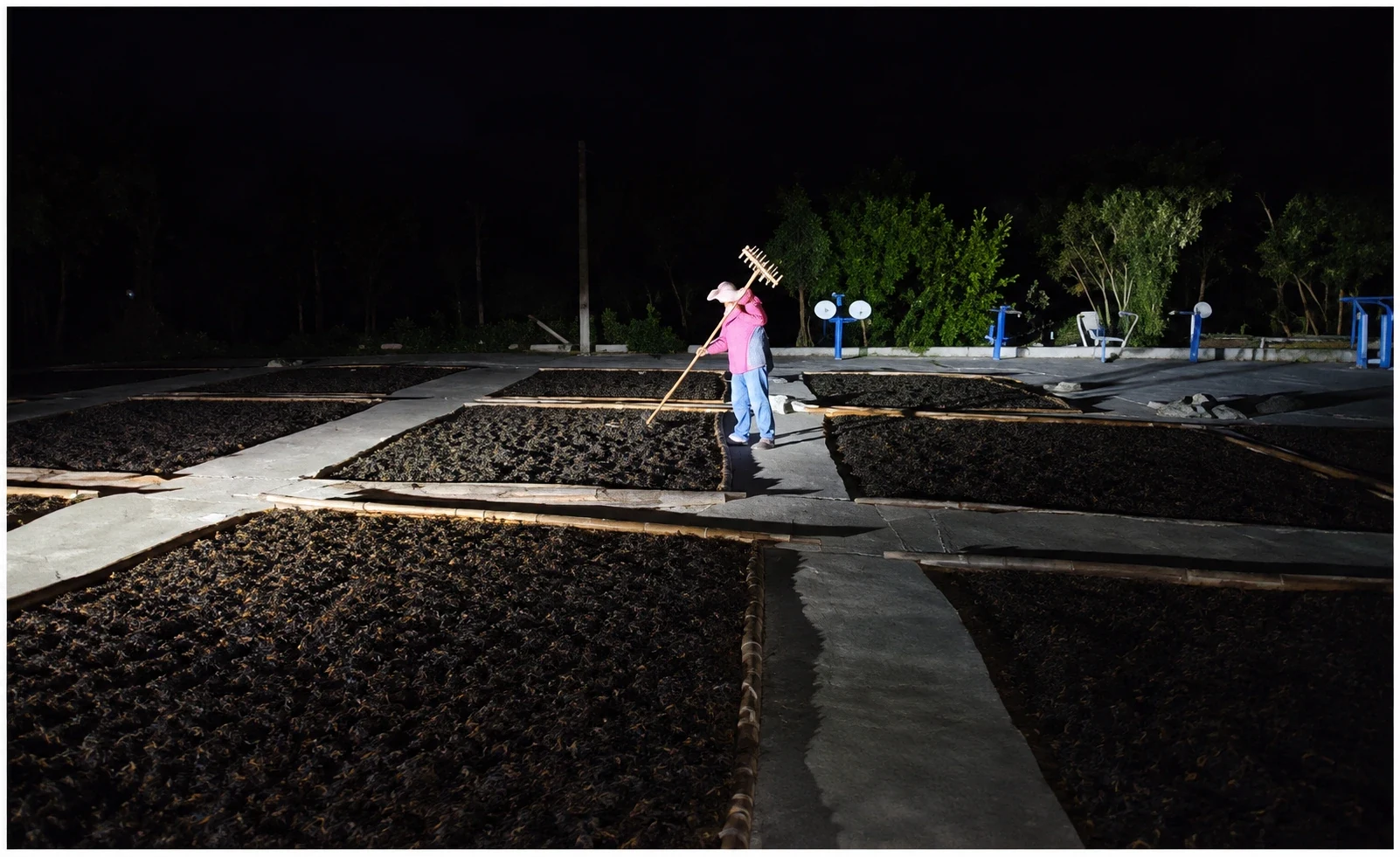
Around the autumn finishing season, producers traditionally spread re-fired tea outdoors for a controlled overnight dew-resting step, then continue finishing and drying. Later storage adds further transformation. This differs from the extended wet-piling route familiar in ripe Pu-erh or some Liubao products. Dark tea is a family of methods, and membership does not require every producer to follow an identical pile-fermentation schedule.
Taste the process in the cup
A young Ancha may combine a fresh impression with roasted, floral or leaf-like notes. A well-stored older example may be rounder and show a more integrated aged fragrance. Neither a three-year slogan nor the category name guarantees that development. Ask about raw material, production and storage, then let a clean, well-prepared sample show you its particular character.
