Tea & Teaware Guides
Shui Mi Tao Xiang Dancong: More Than a Peach Aroma
A peach-like impression, not peach-flavored tea
Shui Mi Tao Xiang describes a peach-like expression of Phoenix Dancong oolong from China. You may also see it shortened to Mi Tao Xiang. In this context, “peach” is a comparison made while smelling and tasting tea, rather than evidence that fruit or peach flavoring was added. For a specific product, always check the ingredient list.
The source essay makes an appealing point: the name is only the beginning. Floral fragrance, honeyed sweetness, a little roast and a woody finish can all sit around that fruit-like center.
How it differs from Mi Lan Xiang
Mi Lan Xiang is usually introduced through honey and orchid, sometimes with a cooked-sweet-potato association. The Shui Mi Tao Xiang sample in the source leans more toward ripe peach and soft fruit sweetness. Both can feel honeyed, so look at the whole sequence of the cup rather than trying to separate them with a single sniff.
Cultivar, growing conditions, leaf maturity and processing all influence expression. A rare-sounding name or a mountain claim cannot by itself establish that a tea is authentic or better.
What the source tasting noticed
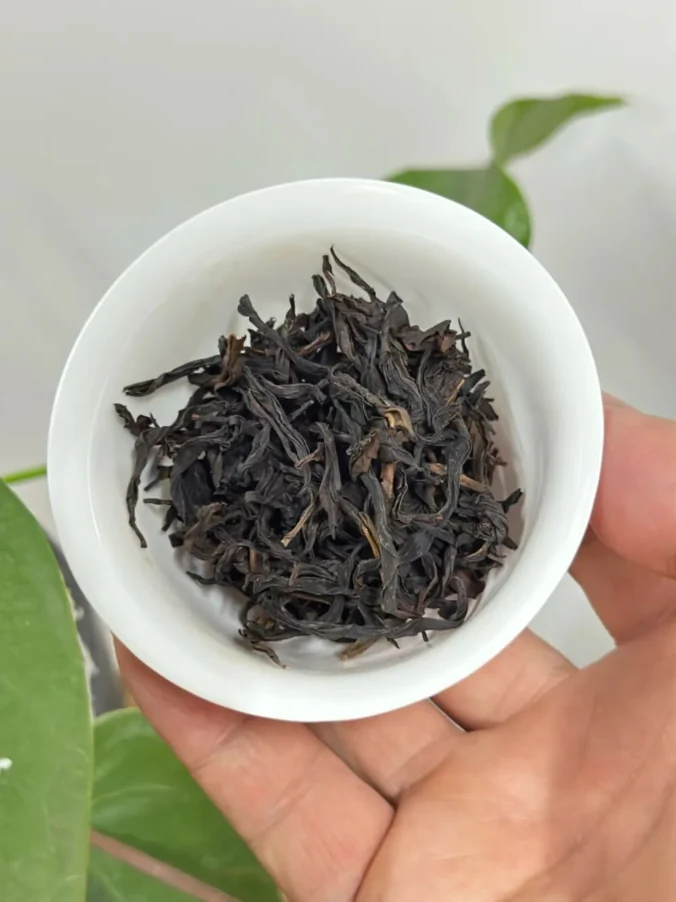
The source describes long, tightly twisted dark leaves and a bright golden-orange liquor. The first infusions suggested peach with floral and honey notes; later cups became softer, with a woody impression and a sweet finish. Treat that progression as a tasting reference, not a fixed recipe for every batch.
Taste the liquor after it has cooled slightly and smell the empty cup. If the aroma remains recognizable without a harsh, overly concentrated mouthfeel, the tea is easier to enjoy over a full session.
Brew to keep the fruit note clear
A porcelain gaiwan is useful for comparing aroma. Begin around 5–6 g per 100–120 ml, use near-boiling water and keep the early infusions short. The source used a higher leaf dose; reduce it if that strength is too much for you. Drain fully and extend later infusions only as needed.
Fruit-like aroma does not make this a caffeine-free fruit drink. Choose the amount and time of day as you would for other oolong tea.