Tea & Teaware Guides
Xiaoguan Tea: Innovation, Standardization and Supply Chains

Historical company-supplied case, edited and translated. Company accounts are attributed rather than treated as independently verified current facts or product-benefit claims.
Begin with the customer’s decision
What does ‘a good cup of tea’ mean to someone who is not a tea specialist? The company-supplied case uses that question to explain Xiaoguan Tea’s early research. Its team studied the market from 2012 to 2015 before introducing its gold-can range in July 2016.
The source divides development into investigation, market validation and growth validation. A proposed solution still had to answer practical questions: would customers understand a single-serving format, accept the price, return to the range and find it through the selected channels? Launching a product was the start of that test, not proof that every assumption was correct.
The account was published in December 2021. Factory plans, product positioning and descriptions of the company below belong to that period rather than representing its current operations.
Make a complicated purchase easier
The original format combined several decisions: a small sealed portion, a consistent pack style, standardized specifications and a unified pricing approach. The case describes a 4-gram portion across different teas and cooperation with eight craft inheritors. Its purpose was to give an unfamiliar shopper a recognizable starting point.
The essay distinguishes tea as an agricultural product, a packaged consumer product and a cultural pursuit. These overlap, but they do not require identical product design. Xiaoguan Tea described choosing a consumer-brand route rather than trying to satisfy every form of tea interest at once.
One important distinction is between a famous tea category and a company brand. A shopper may recognize Longjing or Huangshan Maofeng while knowing little about individual suppliers. The company’s packaging and range design attempted to put one recognizable brand across several categories.
Keep the complexity on the supply side
Simplifying a purchase does not eliminate the work behind the tea. Origin, plucking standard and processing all affect cost and flavor; aged products introduce time and storage as further variables. A consistent consumer proposition requires the supplier to manage those differences.
The case argues that engineers, tasters, designers and purchasing staff should share that responsibility. It describes separate research efforts for tea products and industrial equipment. The intended division was between understanding what customers experience and developing the tools needed to deliver it reliably.
The claim is a design principle, not evidence that all teas should taste alike. Standardizing a specification can make a product easier to repeat while preserving meaningful differences between tea types.
Coordinate factories with the retail promise
In the source’s account, Xiaoguan Tea approached the chain in reverse: start with customers and consumption occasions, then work back toward processing and gardens. It describes factory development after market testing, rather than assuming that production capacity would create its own demand.
By the period covered, the company described a ‘5+1’ arrangement: primary-processing facilities in Fengqing, Anxi, Wuyishan, Xiuning and Menghai, connected with a larger Huangshan facility. Research, processing, storage and logistics were intended to work as a coordinated system.
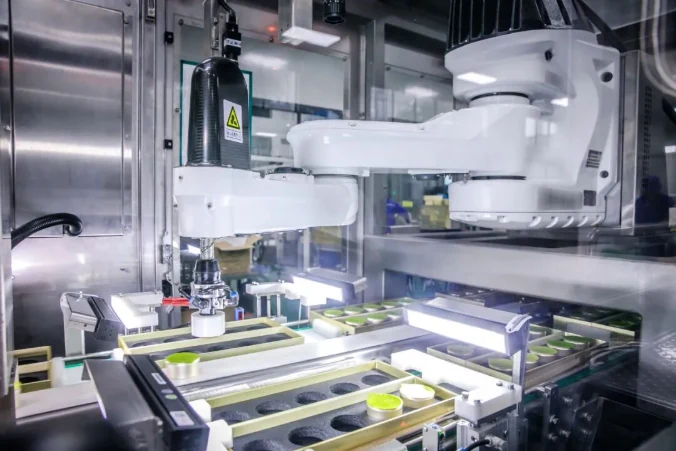
Examples included automated handling, sorting, packaging and storage. Their business relevance lay in reducing variation and improving delivery, rather than automation as a display in its own right. Completion dates and superlative claims in the original are not presented as independently verified current facts.

A coordinated model, with questions still to answer
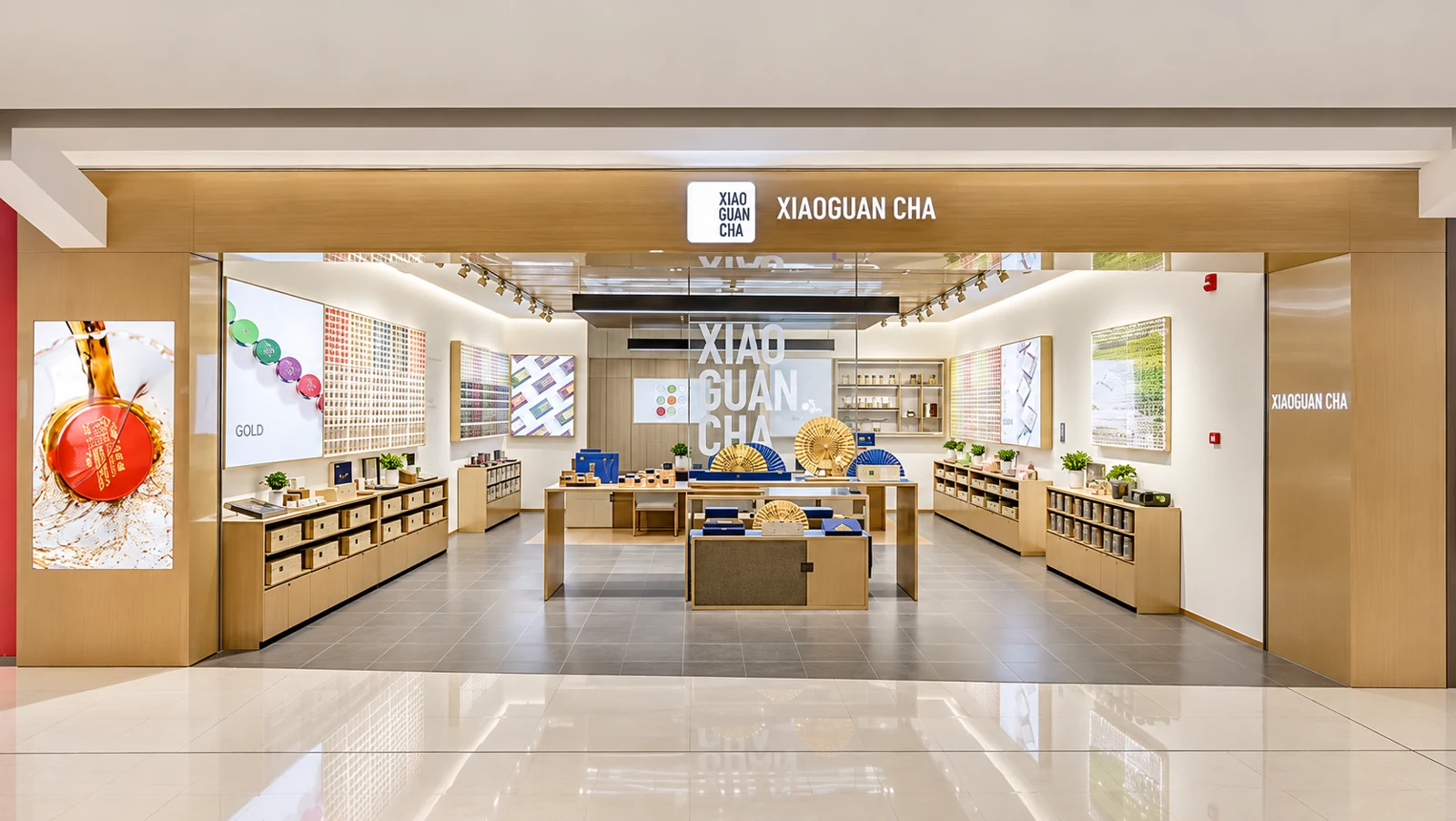
The case closes by placing agriculture, manufacturing and retail in the same model. Gardens need to supply suitable material, factories need repeatable processes, and shops need a proposition that makes sense to buyers. Weakness in one part can undermine the others.
The broader lesson is that packaging innovation only becomes a durable business advantage when the product, sourcing, equipment, channel and service support one another. Whether a particular configuration succeeds remains a market question. The historical case shows how the company framed that problem, rather than offering a universal formula for Chinese tea.

Related reading
- CHASLI: Tea Processing and the “24-Hour Tea Life” Idea
- Tea Company Management Innovation: Strategy, People and Digital Tools
Explore Tea Industry Research in Tea & Teaware Guides
Source attribution
Reprinted from Deng Zengyong’s self-media publication, Tea Industry Management Review. Edited and translated into English by Sandao. Original byline / case supplier: 案例由小罐茶提供 / Case supplied by Xiaoguan Tea。