Sandao · Chinese teaware & culture
Riantea: Jiangxi Tea Company, Products and Brand Story
← Chinese Tea Brands & Companies
Riantea is a Nanchang-based Chinese tea business whose activities connect tea gardens, processing, packaged tea, international trade and tea culture. Jiangxi Rian Tea Co., Ltd. (江西林恩茶业有限公司) combines its Riantea consumer ranges with the Chunlei jasmine-tea tradition, while developing convenient formats for homes, offices, travel and hospitality. Its official website presents a considerably broader business than a single regional green-tea label.
Company at a glance
| Company | Jiangxi Rian Tea Co., Ltd. (江西林恩茶业有限公司); consumer brand: Riantea. |
|---|---|
| Headquarters | Nanchang, Jiangxi, China. Its principal published business address is in Xinjian Economic Development Zone. |
| Established | The company timeline dates the formation of Jiangxi Rian Tea to 2005 and its earlier overseas-trading business to 2002. |
| Main tea categories | Green tea, black tea, jasmine-scented tea and selected white and oolong teas, alongside blended and flavored teas. |
| Business model | Branded retail and gift tea; tea processing and packing; domestic and international sales; hospitality and modern beverage supply; tea-culture experiences. |
| Associated businesses | The official site identifies Chunlei Old Tea House, the Tea Research Garden and Riantea City Hub. |
Main business: from tea gardens to the consumer
Riantea describes an integrated operating model covering ecological cultivation, clean processing, research and development, hygienic packing and brand marketing. Its Fuliang base in northeastern Jiangxi is a recurring reference in the product pages; the site also discusses sourcing from other Jiangxi tea districts and selected teas beyond the province. A company address in Nanchang should therefore not be read as the growing origin of every product.
For individual consumers, the portfolio covers everyday loose tea, small tins, boxed selections, formal gifts and individually portioned tea bags. For business customers, the site identifies hospitality, restaurant and hotel chains, meeting and travel tea, and modern tea-drink supply chains. It describes processing, packing and distribution as parts of this wider operation; specific custom-manufacturing terms or private-label services should be confirmed with the company rather than assumed.
International business is another longstanding strand. The company presents both Chinese tea for overseas markets and selected overseas teas for Chinese consumers. This two-way approach helps explain the mix of Jiangxi origin teas, British-style blends and contemporary serving formats in its catalogue.
Company history and the Chunlei heritage
| 2002 | An earlier business, Chunzhiming Industrial, was established for overseas tea trade. |
|---|---|
| 2005 | Jiangxi Rian Tea Co., Ltd. was established, extending the business into tea procurement, processing and industrial development. |
| 2007 | The company records the acquisition of Chunlei Tea House, strengthening its jasmine-tea craft and retail heritage. |
| 2008 | The timeline records a joint venture with Ahmad Tea to establish Nanchang Ahmad Tea. |
| 2013 | Investment in the Tea Research Garden connected tea with accommodation, brand experience and consumer interaction. |
| 2014 | An investment in Fuliang Changnan Tea supported a cultivation and primary-processing demonstration base. |
| 2021 | Construction began on Riantea City Hub, described as a new stage in its industrial, supply and value chains. |
The much older date 1729 belongs to the tea-house lineage that Riantea associates with Chunlei: Xinmao Nanhuo Tea House in Nanchang, founded by Hu Maoqing. Its Jiangxi Tea Card page describes the subsequent 1952 formation of the state-owned Nanchang Tea Factory through a public-private combination and the later cultivation of the Chunlei brand. This historical lineage is distinct from the 2005 establishment of the present company.
Jiangxi origins and the Riantea flavor approach
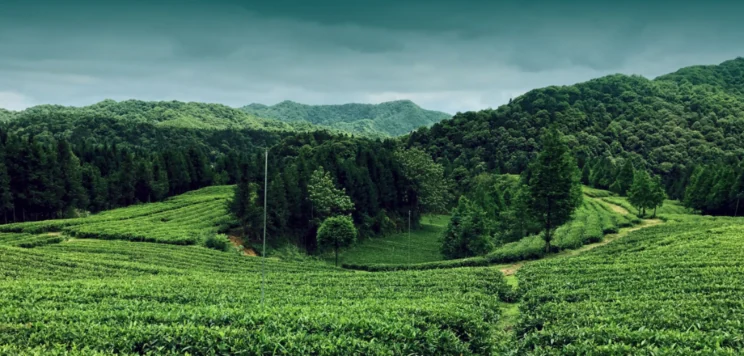
Fuliang, near Jingdezhen, links the company’s tea story with Jiangxi’s porcelain culture. The official site places a core tea-garden base at Chutian, Jinggongqiao, Fuliang, and highlights small-leaf tea resources, upland environments and regional flavor. Its wider Jiangxi presentation also includes Wuyuan green tea, Suichuan Gougunao, Lushan Yunwu, Ninghong and Fuliang black tea. These are part of its regional tea narrative and displays, rather than proof that every named tea is continuously available in every shop.
Riantea uses a “3M” flavor framework: Mellow, Mild and Malty, rendered in Chinese as 甘醇、柔和、甜香. It is the brand’s way of discussing approachable sweetness, smoothness and rounded taste, rather than a statutory grading system or a guarantee that every tea tastes identical. Individual catalogue descriptions range from floral and honeyed black tea to refreshing green tea, scented jasmine tea and roasted oolong.
Nine product ranges and what makes them different
The following map follows the official product navigation. Product examples explain the range; they are not a live inventory or a promise of fixed formulations.
| LogiCraft / 哲鉴 | A selection across tea types: Oriental Symphony small-leaf black tea, Rougui, Baihao Yinzhen (Silver Needle) and old-bush Shuixian. It emphasizes distinct origins and styles: the site describes cinnamon-like notes in Rougui, fresh bud character in Silver Needle and a rounded roasted profile in Shuixian. |
|---|---|
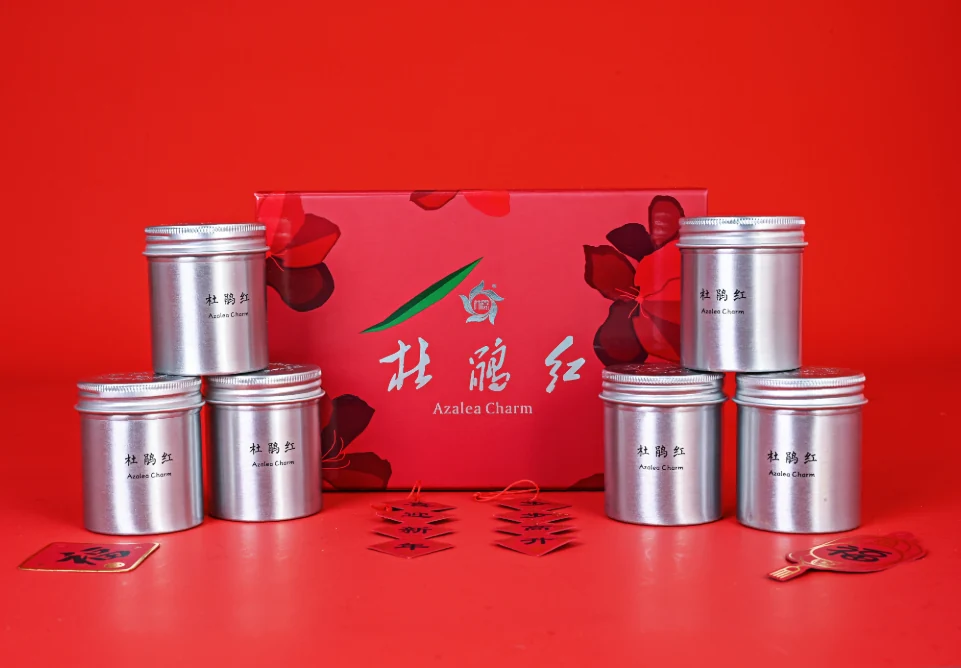
| Magic Jiangxi / 映象赣鄱 | Jiangxi-inspired gifts including Dujuan Hong black tea, Hewu Bai albino green tea, jasmine Yinhao and Qinghua Lanyun green tea. Small aluminum tins and book-style boxes connect regional imagery with portioned tea. |
| Heritage / 传承 | Riantea Hong black tea and Riantea Wu green tea foreground Fuliang origins. Banquet black tea and Nordic-inspired blends introduce a cross-cultural blending approach; the official description mentions Chinese and imported black teas with fruit ingredients. |
| Aromatic Range / 芳绿 | The listed products include Xuanzi black tea, jasmine Cuilv and Feicui green tea. This range sits alongside the more formal gifts as a distinct packaged-tea offering. Tea categories should follow the actual label, not the series name alone. |
| Family Tea / 福罐 | Gift-oriented tins, including green tea, black tea, jasmine tea and a product named honey-fragrant White Peony. The site describes a photo-frame detail that lets a tin carry a family or personal photograph. |
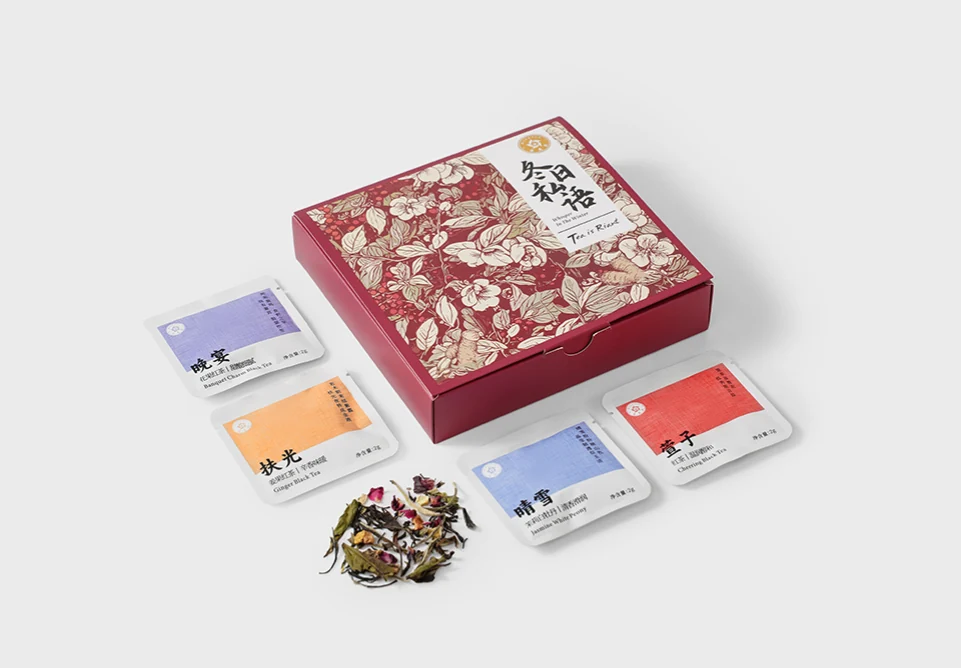
| Tea bags / 袋泡茶 | Selections include Winter Whispers, East–West tea sets, wedding and celebration tea, summer cold-brew tea and WestMt. Tea Edition. Single portions make the range practical for offices, travel and shared tastings. |
| Encounter / 遇见 | An approachable tea-bag collection. The official page highlights Qinghua Lanyun green tea and Dujuan Hong black tea, bringing recognizable Jiangxi flavors into a convenient brewing format. |
| Chunlei / 春蕾 | Rooted in the old Nanchang tea house, with jasmine products such as Nanchang Yinhao and Tengge Yinhao, alongside high-mountain green tea and Tengge Luoxia Hong black tea. The jasmine narrative centers on tea-base selection, fresh jasmine flowers and repeated scenting. |
| Cultural and creative products / 文创周边 | Tea utensils, tea-inspired foods and everyday objects such as notebooks and canvas bags extend the brand beyond dry tea. The official site gives ice cream and tea snacks as examples. |
Representative teas: useful distinctions for buyers
Dujuan Hong, also introduced on the site as Azalea Charm, takes its name from Jiangxi’s provincial flower. Riantea describes an amber liquor with floral and honey-like aromas. Qinghua Lanyun takes its name from blue-and-white porcelain and is presented as a green tea with fresh, sweet and orchid-like character. These are the company’s sensory descriptions; a particular harvest, batch and brewing method can change the cup.
Hewu Bai needs a careful distinction. Although its name uses “white,” the official catalogue explicitly calls it albino green tea (白化绿茶). The pale-leaf cultivar characteristic does not turn it into the white-tea processing category. By contrast, the catalogue separately lists genuine white-tea styles such as Baihao Yinzhen.
Chunlei jasmine teas are scented teas: jasmine flowers contribute aroma through scenting, rather than simply being a floral decoration added to the cup. For a blend or flavored tea, check the ingredient list to distinguish tea leaves, flowers, fruit and any added flavoring. Riantea’s catalogue contains multiple styles, so one ingredient description should not be applied to every range.
Convenient tea for modern routines
The tea-bag portfolio shows how Riantea adapts traditional tea to shorter, more varied routines. Winter Whispers combines four flavors, including black tea, jasmine White Peony and ginger-and-fruit black tea. WestMt. Tea Edition uses a six-tea selection and packaging inspired by Jingdezhen blue-and-white ice-plum decoration. The summer range is positioned for cold brewing.
The practical appeal is the format: portioning, easy carrying and the ability to compare several teas without buying a full tin of each. Follow the preparation directions on the pack, especially for cold brewing, and confirm ingredients and allergen information where relevant. The site’s range names explain a usage occasion; they do not establish a medical or nutritional benefit.
Riantea City Hub: production, storage and an open window on tea
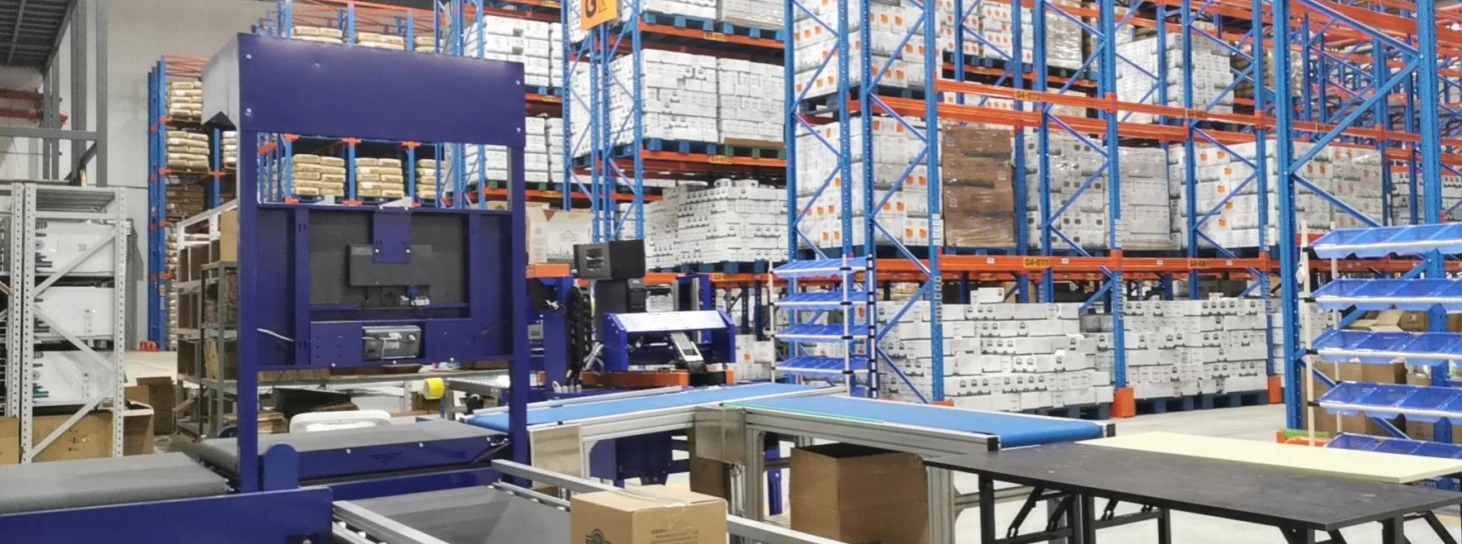
Riantea City Hub is the company’s modern urban tea factory concept. Its published presentation brings together clean and automated production, a central warehouse, distribution and visitor-facing tea culture. The company positions it as a link between its production resources and city consumers, rather than only a conventional factory closed to public view.
The official warehouse description gives an area of 5,700 square meters, 7,000 standard rack positions and static tea-product storage capacity of 3,000 tonnes. It also describes a system supporting an annual 8,000-tonne flow or production volume. These are company-published facility figures, not an independently audited current-year output or a promise of immediately available stock. Temperature and humidity management, intelligent sorting and data collection are described as parts of the operation.
The exhibition side includes “Baixian Baizhuang,” Chinese historical teas, world tea gardens, Silk Road tea language and the relationship between good tea, water and teaware. The visitor gallery adds maps of growing regions, global drinking customs, a sensory flavor wheel and information on tea-leaf composition. Together, these explain both manufacturing and the cultural context of the drink.
Quality management, certification and responsible sourcing
On its quality page, Riantea reports introducing equipment and management techniques from Japan, Germany and the United Kingdom, alongside clean processing and controlled packing. It lists quality, food-safety, environmental and other programs, including HACCP, ISO9001, ISO14001, Fairtrade, Rainforest Alliance, organic and Halal certification references, and participation in the Ethical Tea Partnership.
These website statements describe the company’s quality approach and certification history. They should not be treated as proof that every product, garden, processing site and current batch holds every listed certificate. Certification depends on its holder, scope and validity dates; a buyer requiring organic, Halal or a destination-market specification should request the relevant current documentation for the exact product. “European standard” is the company’s marketing language, not a single universal product certification.
Its responsibility statement emphasizes respect for customers, employees, suppliers and the environment, green and lower-carbon development, and fuller use of tea resources. These are published commitments. They explain the direction of the business without establishing independently measured environmental outcomes.
International trade and market reach
The global-marketing page says the company’s products reach more than 30 countries and regions and 15 Chinese provincial-level markets. These figures are presented here as the company’s published description, rather than verified sales totals for 2026. Its history of overseas trading and its recorded Ahmad Tea joint venture help explain the emphasis on both origin teas and blended tea styles.
A dated public record offers a separate trade-related reference: Nanchang Xinjian District’s Commerce Bureau reported on 17 January 2025 that Riantea had received Customs AEO advanced certification on 13 January. AEO concerns customs compliance and trade facilitation; it is not an organic certificate or a guarantee of a tea’s flavor, nutritional effect or retail availability.
Tea culture, Teavolution and the Tea Research Garden
The company’s Teavolution project, 茶遇西东, presents a city tea space near Tengwang Pavilion in Nanchang. The official description mixes Jiangxi teas, Chunlei jasmine tea, British-style black tea and contemporary products such as matcha ice cream, jasmine ice cream, black-tea craft beer and butter milk tea. The point is to make tea part of city visits and everyday social life, alongside the more traditional packaged-tea business. Menus and opening arrangements can change.
Riantea also lists a Tea Research Garden in Xichang Village, Meiling, described in its history as a tea-themed accommodation and brand-experience project. Its creative-product section extends this approach through teaware, tea snacks, notebooks and canvas bags. Offering teaware does not establish that the company itself manufactures every vessel; the official pages describe a wider tea-lifestyle assortment.
Official contact and visiting information
| Official website | http://www.riantea.com/ — Chinese site with an English entry. |
|---|---|
| Company address | No. 99 Chanye Road, Xinjian Economic Development Zone, Nanchang, Jiangxi, China. |
| Business telephone | +86 791 8367 0969 |
| info@riantea.com | |
| Published postal code | 330010 (as shown on the official contact page). |
| Tea Research Garden | Xichang Village, Meiling Town; the official contact page uses the Wanli District locality description. Telephone: +86 791 8378 0688. |
For retail purchases, institutional sourcing, visits or certification documents, use the official channels and confirm the relevant product, location and current arrangements. This Sandao profile is an independently edited introduction, not a company-operated storefront or a declaration of an authorized dealership.
Sources
- Riantea: brand story and company timeline
- Quality approach
- Global marketing
- Jiangxi Tea Card and regional identity
- Official product catalogue
- LogiCraft range
- Magic Jiangxi range
- Heritage range
- Aromatic Range
- Family Tea
- Tea-bag collections
- Chunlei range
- Encounter range
- Cultural and creative products
- Riantea City Hub and central warehouse
- Visitor gallery
- Teavolution tea space
- Sustainability and social responsibility
- Official contact details
- Xinjian District Commerce Bureau: AEO report, 17 January 2025
Reviewed 7 November 2026. Independently written by Sandao from the public sources above. Company information and product availability may change.