お茶と茶器のガイド
Chinese Green Tea Brewing: Glass Cup or Gaiwan?
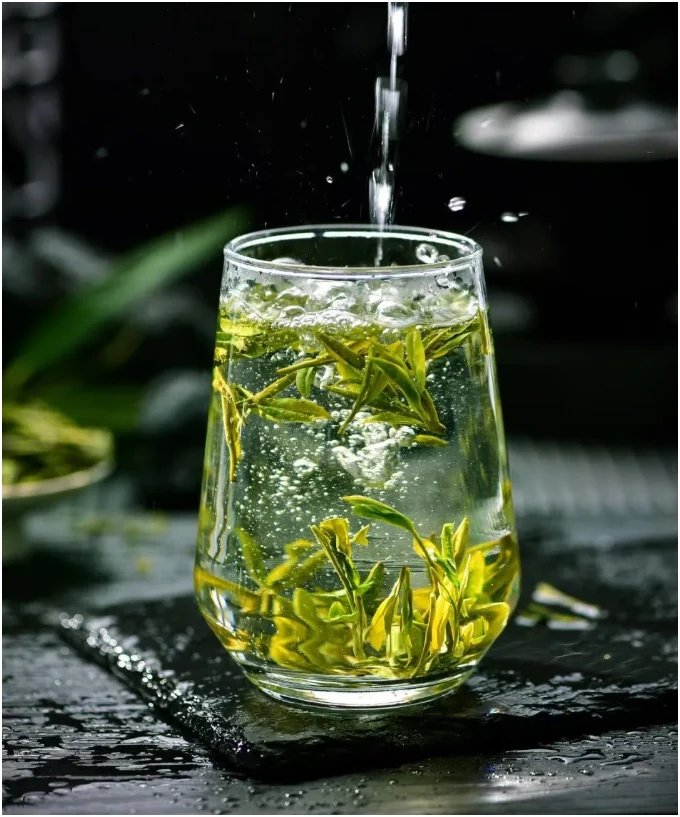
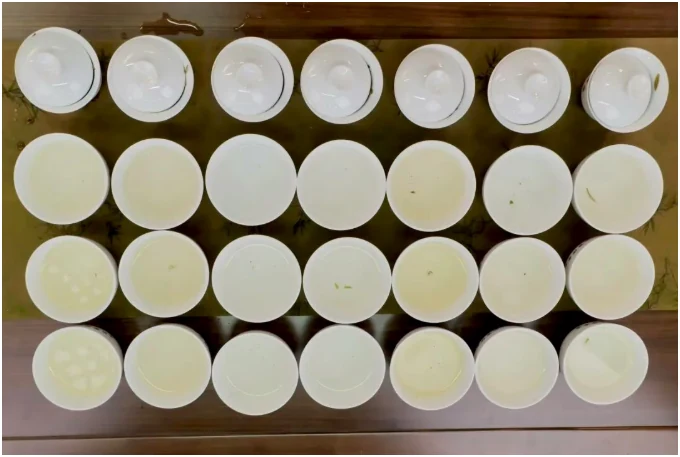
A glass cup lets you watch spring leaves unfold; a gaiwan lets you stop extraction by pouring the liquor away. Both can make an excellent Chinese green tea. The supplied tasting compared seven styles under several recipes. Its useful lesson is to control the recipe, rather than to assume that one temperature is best for every tea.
Start lighter when the leaves stay in the cup
For an open glass of about 250–300 mL, try 2–3 g as a first recipe. Use roughly 80–90°C / 176–194°F water for a delicate tea, taste after about two minutes and adjust. Keep drinking rather than leaving a large dose untouched for ten minutes. Adding water when some liquor remains softens the change in strength, but does not stop extraction.
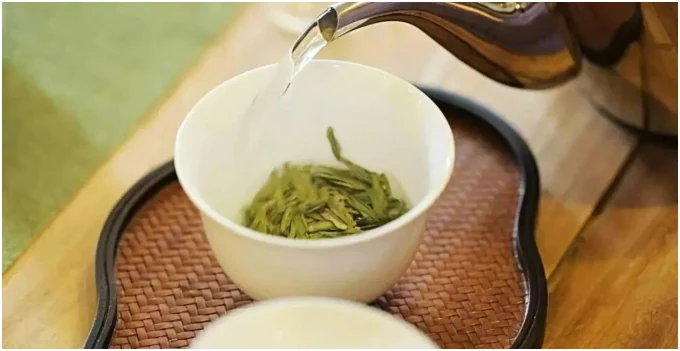
Use a different recipe for a gaiwan
A starting gongfu recipe is about 3 g per 100 mL, with a first infusion of roughly 15–25 seconds and a complete pour. Try a little hotter water or a longer contact time for leaves that are slow to open. Shorten the steep for broken or strongly rolled material. Account for the time spent pouring: it is part of the infusion, not time outside the recipe.

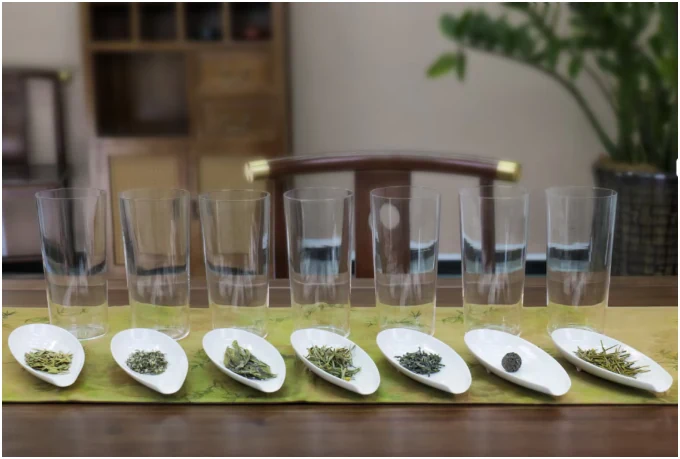
Seven styles, seven useful observations
Longjing’s flat leaves and Anji Bai Cha’s tender shoots are easy to assess in a glass. Fine, downy Biluochun benefits from a gentle pour; top-infusion, adding leaves after water, is an option. Huangshan Maofeng needs room to unfold. Long Taiping Houkui leaves need a tall glass or a suitably broad vessel. Lu’an Guapian consists mainly of leaf blades, so do not judge it by bud count. A tightly formed Leigongshan ball tea needs time to loosen before later infusions are shortened.

Why the source’s boiling-water result is not a rule
The source preferred hotter water in its selected samples. That is a sample-specific tasting result. Pan temperature during manufacturing does not prove that prolonged boiling-water infusion cannot affect flavor: dry heating and extraction in water are different processes. Vessel temperature, dose, leaf grade and contact time change the result. Compare one variable at a time and keep the recipe that gives you freshness without an unpleasant edge.
