Tea & Teaware Guides
Vintage Yixing Teapot: How to Assess Its Age
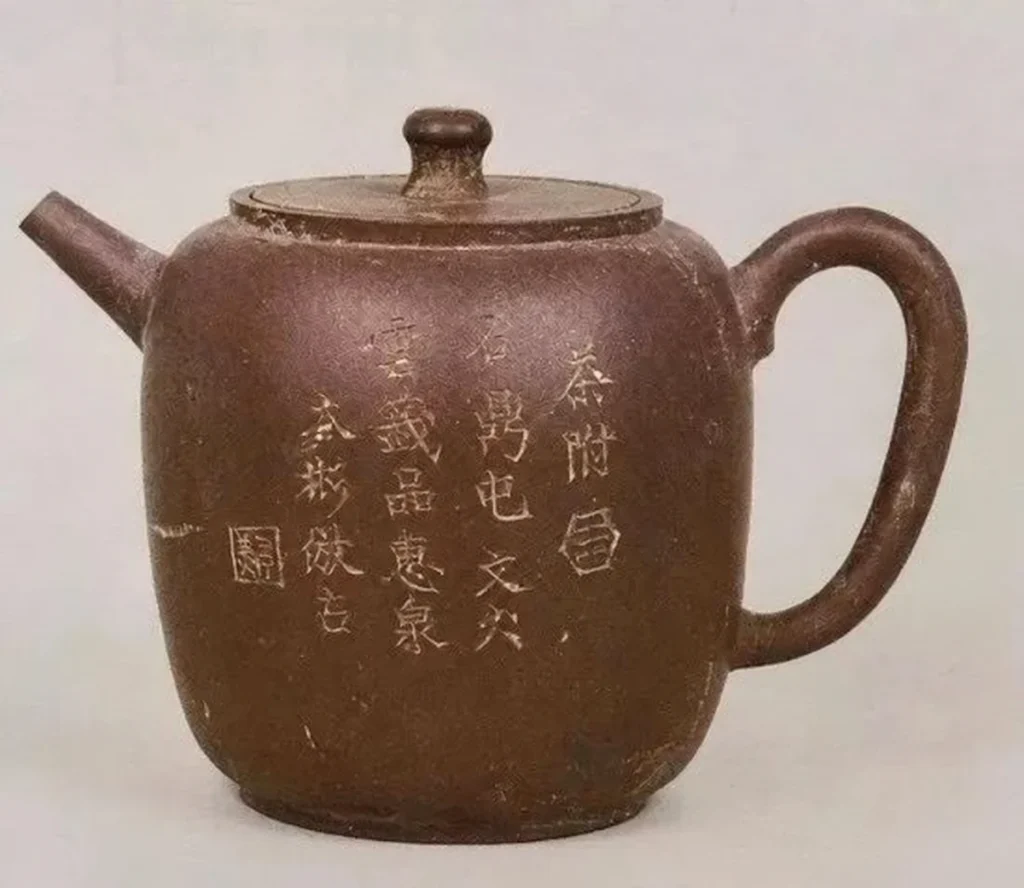
A vintage Yixing teapot may come with an intriguing story: an old family collection, a historic factory, or a famous name stamped beneath the lid. The harder question is whether the evidence supports that story. A dark surface and a familiar seal can be interesting, but neither tells you when the pot was made.
To assess a Yixing teapot’s age, compare its documented history, marks, form, clay body, and construction. Look for agreement between those clues. If they do not agree—or the records are missing—a broad, qualified date is more useful than a confident guess. This guide explains how to approach that comparison before buying or researching an older pot from China.
What does “vintage Yixing teapot” mean?
“Vintage” is used for older pieces, but the word alone does not specify a manufacturing year. Ask whether a listing means a particular decade, an earlier historical period, or simply an old-looking design. A used pot may be recent, while an older pot may have spent years unused in storage. “Vintage-style” describes an appearance, not evidence of age.
Also keep age and origin separate. Yixing refers to a place in Jiangsu Province, China, associated with zisha pottery. An object can be old without being a genuine Chinese Yixing teapot. Conversely, a well-made modern pot can be genuine Yixing ware without being vintage.
1. Start with the pot’s documented history
Before studying the surface, ask what is actually known about the piece. Useful records may include an identifiable purchase receipt, an earlier collection inventory, a dated photograph, or a published catalogue entry. The record needs to match the pot: compare its shape, inscriptions, dimensions, and distinctive features.
A documented purchase in 1985, for example, may establish that a particular pot already existed by that date. It does not, on its own, establish that the pot was made in 1985 or decades earlier. A family recollection can be a starting point, but a written or photographic trail gives you something to check.
Notice how published object records combine different details. A Christie’s entry for an early Qing teapot records its dimensions, inscriptions, and collection provenance alongside the period attribution. That is a useful model for organising your own research, rather than treating a sales description as proof.
2. Read the period style and seal marks together
The original maker’s name, a studio name, a workshop stamp, and a later attribution are different claims. Photograph the base, inside the lid, beneath the handle, and any inscription on the body. A reading of the characters tells you what a mark says; establishing whether that mark belongs to the claimed maker and period takes further comparison.
Consider the lettering, its placement, and how it relates to the pot’s form and decoration. A seal resembling one on a published example is a lead to investigate. It is not enough to assign the same date or maker to another pot. Nor does an elaborate motif prove an early period: traditional themes can be used in later work.
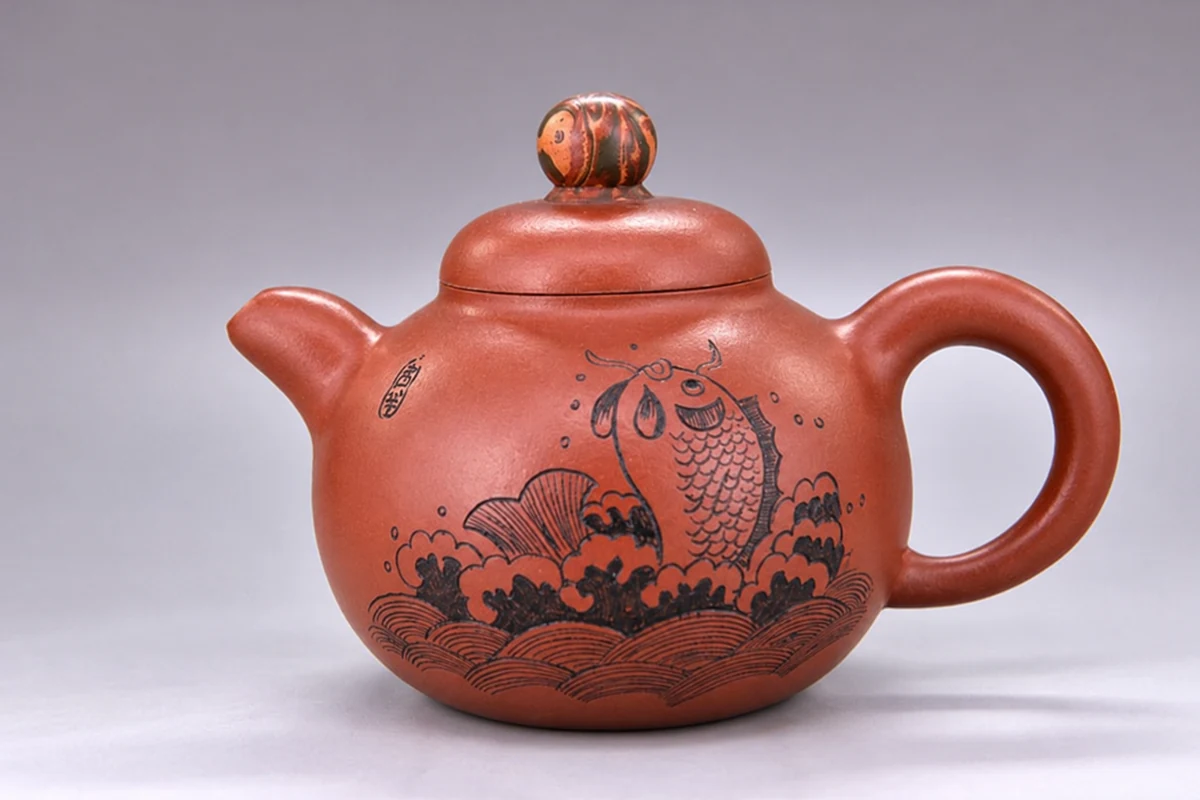
A famous name should prompt better documentation, not a faster decision. Our Yixing teapot masters and title guide explains artist credentials; those credentials are a separate question from the age and authorship of an individual object.
3. Compare the form with securely documented examples
Study the whole silhouette: the body, shoulder, opening, lid, knob, spout, handle, and foot. Then look at how those parts relate to one another. Compare examples with useful catalogue descriptions and recorded dimensions, rather than a collection of unidentified internet photos.
Mansheng teapots offer a helpful case. The Hong Kong Museum of Art’s collection includes a low cylindrical example dated 1815, with recorded seals associated with Yang Pengnian and Chen Hongshou, and an inscription by Guo Lin. That combination of a date, marks, inscription, and documented object is more informative than the general label “Mansheng.”
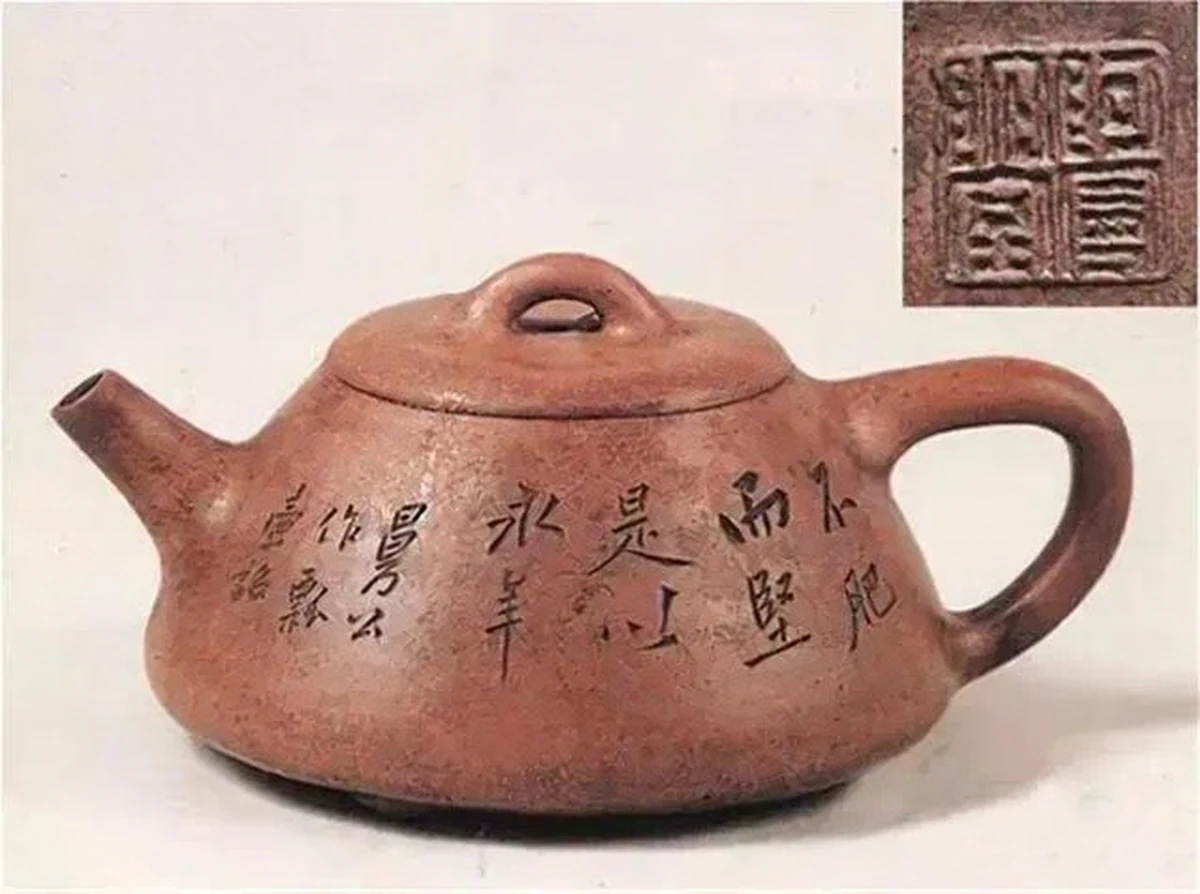
Do not assume that Yixing design followed a simple progression from rough and plain to fine and elaborate. Different forms and levels of finish can coexist, and later makers can revisit earlier designs. A close match in outline deserves investigation; it does not settle the date.
4. Examine the clay body without turning texture into a date
Clay colour, visible grains, surface finish, and firing appearance are worth recording. Compare them under consistent lighting, and include close views of the exterior, base, and interior. Photographs taken in warm or cool light can make the same clay look quite different.
What you should avoid is a universal table that assigns every coarse clay to the Ming dynasty, every medium-grained clay to the Qing dynasty, and every fine clay to modern production. Particle size is a material characteristic, not a calendar. Without a well-defined set of dated reference objects and supporting research, precise mesh ranges do not reliably date an unknown teapot.
A tapping sound is not a dating test either. Shape, wall thickness, firing, and condition can affect what you hear. Clay observations are most useful when considered alongside provenance, form, marks, and making details.
5. Look at construction and finishing
Record visible joins, interior finishing, the formation of the spout and handle, the lid flange, and the treatment of the base. These observations may help a specialist compare the object with a workshop or group of documented examples. They are not a shortcut from “handmade” to “old.”
A hand-built pot can be recent, and mold-assisted work can also involve considerable hand finishing. An inner seam does not establish a century. For the production-method question, see our separate fully handmade vs half-handmade Yixing teapot guide. Here, the aim is to determine whether the making details fit the proposed period.
6. Check factory claims against the correct history
When a seller describes a pot as vintage factory production, ask which factory, which period, and what supports that identification. A generic place-name stamp does not supply the complete history of a particular piece. Keep different factories and workshops separate when comparing marks and records.
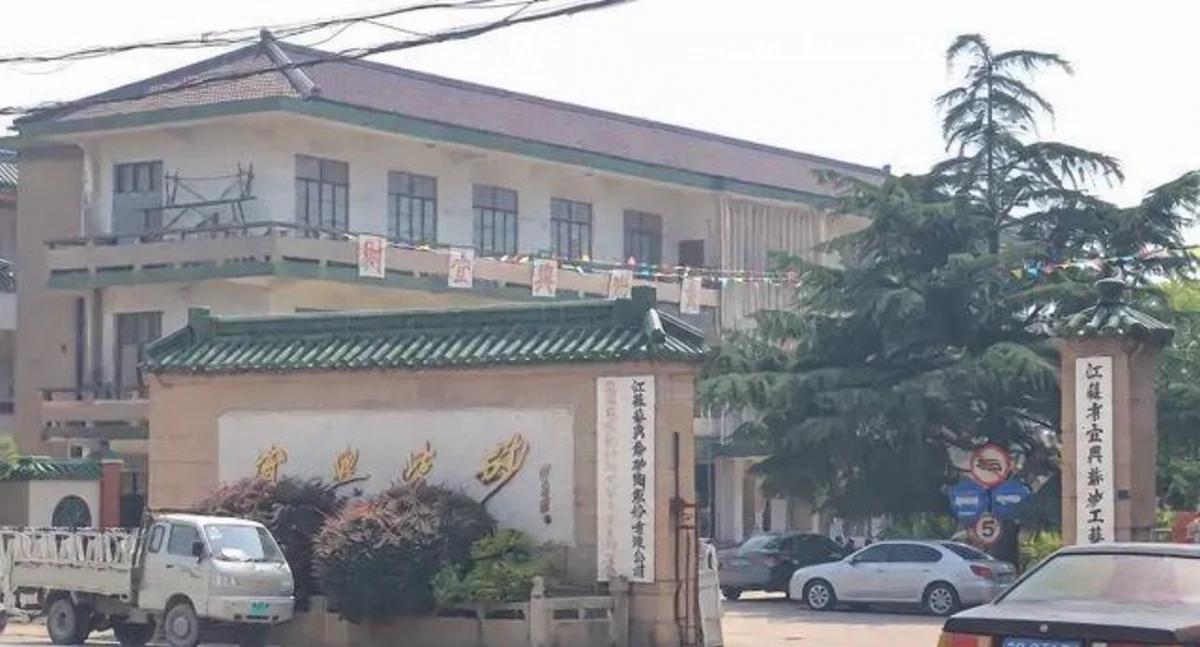
The Yixing Ceramics Industry Association’s account of local industrial heritage discusses the former Zisha Factory No. 2 and its surviving buildings. Historical context like this can guide research, but linking a pot to a factory still requires evidence about the object itself.
7. Separate wear, repairs, and use from manufacturing age
Tea staining, a polished surface, and wear around the foot tell you something about use or treatment. They do not give a reliable manufacturing year. A heavily used recent pot may look older than a long-stored example, and a clean surface does not automatically rule out age.
Inspect the lid and body as a pair. Do their clay appearance, finish, wear, and fit seem consistent? Ask about replacement lids, chips, cracks, filled damage, and other repairs. A replacement component may have a different date from the body, so the whole object should not automatically receive one neat label.
If you want to use the pot as a daily Chinese tea pot, condition and previous treatment matter as well as age. Ask about repairs, coatings, persistent odours, and storage history. The word “vintage” alone does not establish suitability for brewing.
A practical checklist before buying a vintage Yixing teapot
| Ask for | What it helps you assess |
|---|---|
| A stated date range and its basis | Whether the date is documented, attributed, or simply a seller’s estimate |
| Clear photographs of all marks and the interior | What the pot actually shows, beyond the listing’s description |
| Dimensions and measured capacity | Whether records match the object and whether it suits your use |
| Collection or purchase records | The traceable history of this specific piece |
| A condition and repair description | Damage, replacements, and changes that can complicate dating |
| Return terms and independent assessment where needed | How uncertainty will be handled before committing to a purchase |
A useful conclusion might be “consistent with a late-20th-century attribution, with no documented manufacturing year.” Another might be “traditional-style pot; date unverified.” Those descriptions are less dramatic than an exact year, but they tell you where the evidence ends. For a significant purchase or a claimed early antique, seek an independent assessment from a specialist familiar with Yixing ceramics.
Frequently asked questions
Can you date a vintage Yixing teapot from photographs?
Photographs can support an initial comparison and help identify questions. They often cannot resolve clay characteristics, hidden repairs, or provenance. Ask for unedited close-ups of the actual piece and treat a photographic opinion as preliminary.
Does a Chinese seal prove that the pot is old?
No. Reading a seal and authenticating its use are separate tasks. The mark needs to be considered with the object’s construction, form, condition, and recorded history.
Does a dark patina prove age?
No. Surface appearance reflects use, storage, cleaning, and other treatment. It is one observation to record, not a dependable date.
Is an unused old-stock teapot necessarily vintage?
It may be, but the claim needs evidence. An unused condition says little about when the pot was made; dated stock or purchase records are more informative.
Is an older Yixing teapot always worth more?
No. Condition, documented authorship, provenance, design, and demand also matter. Age alone is not a valuation, and a seller’s asking price is not a verified sale result.
Can these methods guarantee authentication?
No checklist can guarantee it. The goal is to organise the evidence, recognise uncertainty, and know when specialist examination is needed.
Sources and image notes
Historical examples: Hong Kong Museum of Art tea ware collection; Christie’s early Qing teapot record; and Yixing Ceramics Industry Association industrial heritage account. These records concern their own documented objects and sites; they do not authenticate the illustrative photographs supplied for this article.
The supplied photographs have been digitally retouched to remove overlay watermarks and are used as illustrations. Original Chinese inscriptions and seal motifs remain part of the objects’ appearance, with English explanations in the captions. For seal reading or authentication, obtain untouched photographs of the actual pot.
For help distinguishing a seal from a decorative inscription, see our Yixing teapot mark and calligraphy guide. It explains script styles and how to photograph writing before attempting an attribution.