Tea & Teaware Guides
Fu Brick Tea: Why Stems and Hidden Golden Flowers Matter
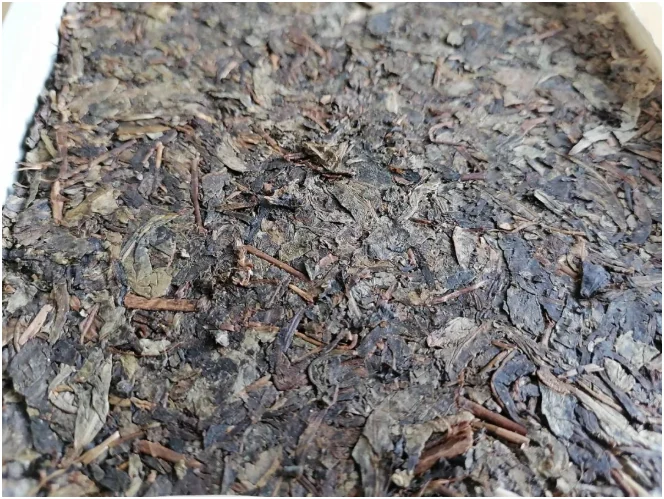
Two details often surprise someone opening a Fu brick for the first time: visible stems, and fewer golden specks on the surface than expected. Neither observation should be judged by the standards of a tender spring green tea. Fuzhuan is a compressed Chinese dark tea with a distinctive flowering stage, and its structure is part of how it is made.
Stems are not automatically a defect
Mature leaves and stems are used intentionally in many Fu brick recipes. They can influence texture, sweetness and the physical spacing within the compressed brick. A certain amount of stem therefore need not mean careless sorting. At the same time, an excessive proportion of tough woody material can make a poor cup. Ask about the product’s stated grade and specification rather than applying one old percentage quoted online to every contemporary Fu brick.

Internal structure matters during flowering
The flowering stage depends on a managed combination of moisture, temperature, air access and material condition. Stems can help prevent the brick becoming uniformly dense. Fermentation and later drying then create a product intended for brewing, not a home culture to keep growing. The desired final condition is a properly made and dried tea, not a wet brick with ever more visible growth.
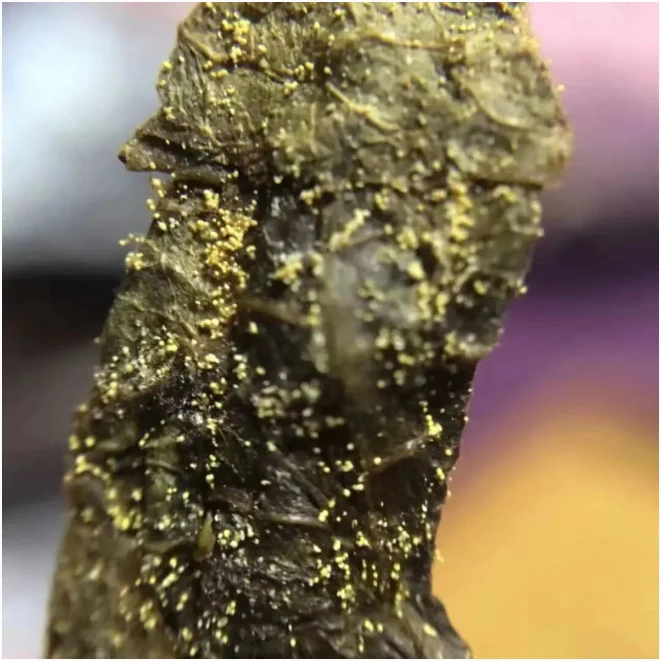
Why the outer face may show fewer specks
Conditions differ between the exposed surface and the interior, so golden structures may be more obvious after a brick is carefully opened. Their visibility also varies with manufacturing, age and the place sampled. An absence on one surface does not settle quality, and visible yellow particles alone cannot confirm a fungal species. A product specification, manufacturing record and appropriate testing are stronger evidence than a close-up photograph.

Evaluate the complete tea
Check that the packaging and tea are sound, then taste a representative sample prepared with a consistent recipe. Look for a clean aroma, a comfortable cup and a balance you enjoy. Do not taste tea with suspected mold or damp damage to decide whether its growth is safe. And remember that fibers present in dry stems do not make an infusion a fiber supplement or a treatment for blood sugar.