Tea & Teaware Guides
Red or Golden Black Tea? What Liquor Color Tells You

Good black tea does not have just one color
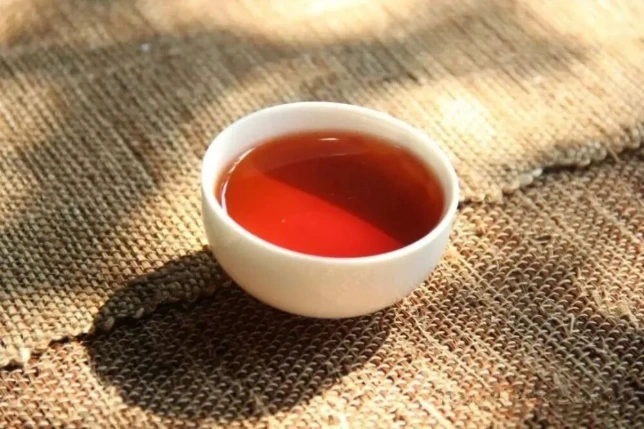
Set two Chinese black teas side by side and one may look golden while the other is distinctly red. That difference need not indicate a problem. Leaf material and processing create different pigment balances, while brewing strength and the way a cup catches the light change what you see.
Color is a useful part of tasting. It becomes misleading when ‘redder is better’ replaces a proper comparison of aroma, clarity, texture and flavor.
Theaflavins: brightness and a golden-orange tone
Theaflavins form during oxidation and contribute yellow-orange color, brightness and part of black tea’s brisk, astringent character. They are also associated with the golden-looking rim that can appear near a cup’s edge.
The visible rim is affected by concentration, vessel and lighting too. You cannot calculate a tea’s theaflavin content simply by looking at a photograph, nor does a golden infusion authenticate a named tea.

Thearubigins: red-brown color and body
Thearubigins are a complex group of oxidation products contributing much of black tea’s red-brown color and body. Their relationship with theaflavins helps shape the overall cup, but a single ideal ratio cannot be applied to every origin and style.
A tea with more red color may be pleasantly full and rounded; it may also be over-extracted. Keep brewing conditions consistent before attributing a visual difference entirely to the leaf.

Brown compounds and the limits of a color test
Further reactions can produce complex brown-colored material, often discussed collectively as theabrownins. In some black teas, a dark, dull infusion accompanies weak aroma or an unbalanced taste. But concentration, age, water quality and cup depth can also darken the appearance.
Pigment names are therefore a way to understand a process, not a simple three-color quality meter. Test how the tea smells and tastes before deciding what its color means.
| Pigment group | Typical contribution |
|---|---|
| Theaflavins | Yellow-orange tone; brightness and briskness |
| Thearubigins | Red-brown tone; body and depth |
| Complex brown compounds | Darker appearance; interpretation depends on the whole cup |
What if the tea turns cloudy as it cools?
Some black teas develop a pale haze as they cool, often called tea cream or cooling-induced cloudiness. Interactions involving caffeine and polyphenols can contribute. This is different from assuming every cloudy cup has spoiled.
It is also not an automatic certificate of superior quality. Storage hygiene, odor, the tea’s previous handling and its behavior when warmed matter. Taste freshly prepared tea, and compare red and golden styles in a plain white cup under the same light.

Related black tea guides
- Black Tea’s Golden Ring: A Clue, Not a Quality Guarantee
- Black Tea Oxidation: How Time and Temperature Change Taste
Source attribution
Reprinted from Dong Cha Di (懂茶帝), an independent tea media publication. Edited and translated into English by Sandao; promotional material has been removed and research findings are presented within their limits.