Sandao · Chinese teaware & culture
Jingzhuan Tea: Jingyang Fu Brick Tea and Maosheng Heritage
← Chinese Tea Brands & Companies
Jingzhuan Tea is a Chinese Fu-tea business based in Jingyang, Shaanxi. Public heritage and trade-fair records identify the company as Shaanxi Jingyang Jingzhuan Tea Co., Ltd. (陕西泾阳泾砖茶业有限公司). Its story brings together the Jingzhuan brand, the older Maosheng Dian tea-house lineage and the revival of traditional brick-tea making. Its core product is Jingyang Fu tea, a post-fermented dark tea; cultural exhibitions and craft transmission are also prominent parts of its identity.
Company and brand overview
| Company name | Shaanxi Jingyang Jingzhuan Tea Co., Ltd. (陕西泾阳泾砖茶业有限公司), as named in public institutional records. |
|---|---|
| Location | Jingyang County, Xianyang, Shaanxi, China. |
| Modern company | A 2024 trade-fair exhibitor profile dates its establishment to September 2008. |
| Principal product | Jingyang Fu tea, especially Fu brick tea associated with the Jingzhuan brand. |
| Heritage brand | Maosheng Dian (茂盛店), recorded in the Ministry of Commerce’s digital museum as a Shaanxi time-honored brand. |
| Business character | Tea production and sales, traditional craft, cultural display and skills transmission. |
Main business and products
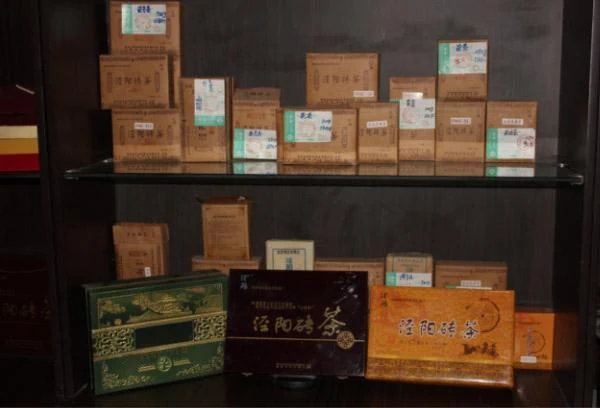
The available company and heritage records support the following product and service picture. Product photographs below are archival examples, rather than a current stock list.
| Jingzhuan-brand Jingyang Fu tea | The clearest documented branded product. It belongs to China’s dark-tea category and is associated with brick shaping and the characteristic flowering stage of Fu tea. |
|---|---|
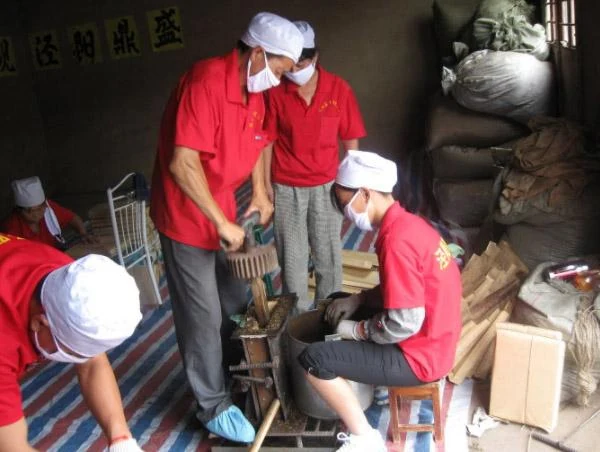
| Traditional Fu brick tea | The craft centers on preparing tea material, moistening and working it, packing it into a mold, compacting the brick and managing subsequent fermentation and drying. |
| Gift and presentation formats | The heritage project’s photographs show wrapped bricks and boxed tea presentations. They establish the presence of several packaging formats, not verified present-day weights, prices or grades. |
| Tea-culture exhibitions | The company is associated with a Fu-tea transmission hall and collections of tea-making tools and historical objects. |
| Craft training and learning | The transmission hall hosts demonstrations and hands-on teaching, as described in a 2025 interview with company manager Jia Zhen. |
The company should not be confused with Jingwei Fu Tea, Jingchangsheng or other Jingyang producers. They share a regional tea tradition but are separate businesses. Likewise, a general Jingyang tea catalogue is not automatically Jingzhuan’s own product catalogue.
The modern company and the older Maosheng story
| 1897 | The Maosheng Dian brand entry traces its foundation to Jia Maocheng and the Jia family’s tea-house tradition. |
|---|---|
| 2003–2005 | The digital museum describes Jia Genshe recovering family tea-making materials and organizing trials that produced Fu tea again in 2005. |
| September 2008 | The modern company’s establishment date in the 2024 exhibitor profile. |
| November 2009 | The Jingzhuan-brand tea received a Houji Award at the 16th Yangling agricultural fair, according to the company’s institutional profiles. |
| 2017 | A 2025 interview dates the establishment of its craft transmission hall to this year. |
| 31 December 2020 | The Maosheng entry records Shaanxi time-honored-brand recognition by the provincial commerce department. |
These dates describe different things: a family tea-house lineage, a revival of craft and the establishment of a modern company. The 1897 brand origin should therefore not be presented as the company’s legal incorporation date.
Why Jingyang matters to this tea
Jingyang lies in the Guanzhong region of Shaanxi. The national heritage description associates local Fu-tea making with its environment, water, climate and brick-making tools. The growing origin of the leaf and the place where a tea is processed are not necessarily the same. The regional craft record refers to dark primary tea from Hunan and southern Shaanxi being worked into Fu tea in the Xianyang area.
This distinction helps overseas readers understand the product: Jingyang is an important processing and cultural identity, rather than a claim that every leaf was grown beside the factory. Raw-material origin should be checked on the individual tea’s label or supporting specification.
Traditional brick making and flowering
The national heritage record groups the traditional process into seven stages: blending and piling; preparing a concentrated tea liquor known as chayou; working the tea with that liquor; making and filling the wrapper; compacting tea in a mold; binding and piercing the package; and natural flowering. The tea brick’s shape is therefore part of a sequence of preparation and fermentation, rather than simply compressed loose tea.
The Shaanxi provincial project account also highlights local water, the use of fruitwood tools and the environment in which wrapped bricks are stacked. These describe a documented traditional method. They should not be read as a complete factory specification or a home-fermentation recipe.
Product character: dark tea, golden flowers and the cup
Fu tea is a post-fermented dark tea, distinct from the fully oxidized tea called black tea in English. The national craft description identifies the small golden structures known as jinhua with Eurotium cristatum, traditionally called 冠突散囊菌. They develop during a managed production stage. “Golden flower” does not mean that chrysanthemum blossoms have been blended into the tea.
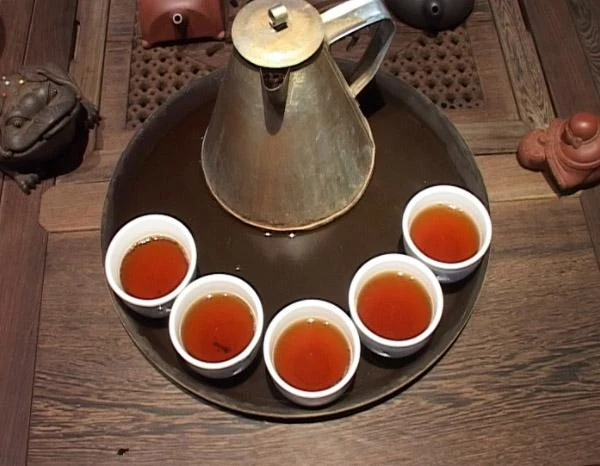
The same account describes a finished regional style with an orange-red liquor, a characteristic fermentation aroma and a full, mellow taste. These are reference characteristics of the craft, not tasting scores for every Jingzhuan batch. Production year, leaf material, storage and preparation can all affect an individual brick. Neither a heritage designation nor visible golden flowers alone establishes a medical benefit or complete food-safety assessment.
Heritage recognition and the role of the company
The national register lists Dark Tea Making Techniques (Xianyang Fu Tea Making Techniques) as a 2021 fifth-batch extension project, number Ⅷ-152, with Xianyang’s Mass Art Center as the protection unit. It also lists Jia Genshe among the associated inheritors. The designation concerns a shared craft and its transmission, rather than an exclusive commercial endorsement of one brand.
A provincial list for 2023–2025 separately names Shaanxi Jingyang Jingzhuan Tea as a productive-protection demonstration base associated with the Xianyang Fu-tea craft. A further provincial workshop list names a Fu-tea heritage transmission workshop established by the company. These records help explain why exhibitions, training and continued making appear alongside tea sales in the business profile. The 2023–2025 listing is a dated recognition; it is not presented here as a newly verified 2026 renewal.
Geographical-indication records
The China National Intellectual Property Administration’s Announcement No. 680, dated 29 May 2026, authorizes named producers to use the special geographical-indication mark on specified products. Entry 475 of the annex lists 陕西泾阳泾砖茶业有限公司 for Jingyang Fu tea, with unified social credit code 916111026847636494.
This is a useful identity and provenance reference. The authorization applies to the named producer and relevant GI product; it should not be extended to unrelated tea, every gift item or a reseller’s general assortment. Buyers should still match the product label, producer and traceability information to the tea being supplied.
The transmission hall and tea-culture learning
A March 2025 Tide News interview with company manager Jia Zhen describes a transmission hall created in 2017. It brings together historical tea objects, traditional tools, bricks of different sizes and ages, demonstrations and hands-on teaching. This makes the cultural activity more specific than a general claim to “tea heritage”: visitors can learn how the craft was practiced and passed on.
The 2024 tea-fair profile also identifies a Fu-tea transmission hall, a heritage museum, a cultural research center and a training base associated with Jia Genshe. For a group visit or training enquiry, confirm the venue, availability and arrangements directly; public reports are descriptions of those activities, not a booking timetable.
Website, address and practical enquiries
| Website supplied for this company | http://jingzhuanchaye.com/ |
|---|---|
| Published business location | Eastern section of Jinggan Avenue, Jingyang County, Shaanxi. This location appears in the 2024 exhibitor profile and provincial heritage records. |
| Product enquiries | Confirm the named tea, producer, production date, net weight, ingredients, storage condition and current availability for the exact item. |
| Visit or training enquiries | Confirm the transmission-hall location, booking arrangements and teaching content with the company. |
This is an independently edited Sandao company profile. It is not operated by Jingzhuan Tea and does not establish a dealership or supply relationship. Current retail series, specifications and contact numbers are not inferred from older exhibition photographs.
Sources
- Ministry of Commerce digital museum: Maosheng Dian
- Tea-fair organizer: 2024 Xianyang Fu-tea exhibitors
- Shaanxi heritage project: Jingyang brick-tea craft
- National heritage register: Xianyang Fu-tea craft
- National heritage museum: Shaanxi tea techniques
- Provincial productive-protection bases, 2023–2025
- Third provincial heritage-workshop list
- CNIPA Announcement No. 680 and annex, 29 May 2026
- Tide News: company-manager interview, 14 March 2025
Reviewed 7 November 2026. Independently written by Sandao from the public sources above. Company information and product availability may change.