Tea & Teaware Guides
Guanyang Spring Shoumei: How to Compare White Tea Cakes
Start with cakes that have something in common
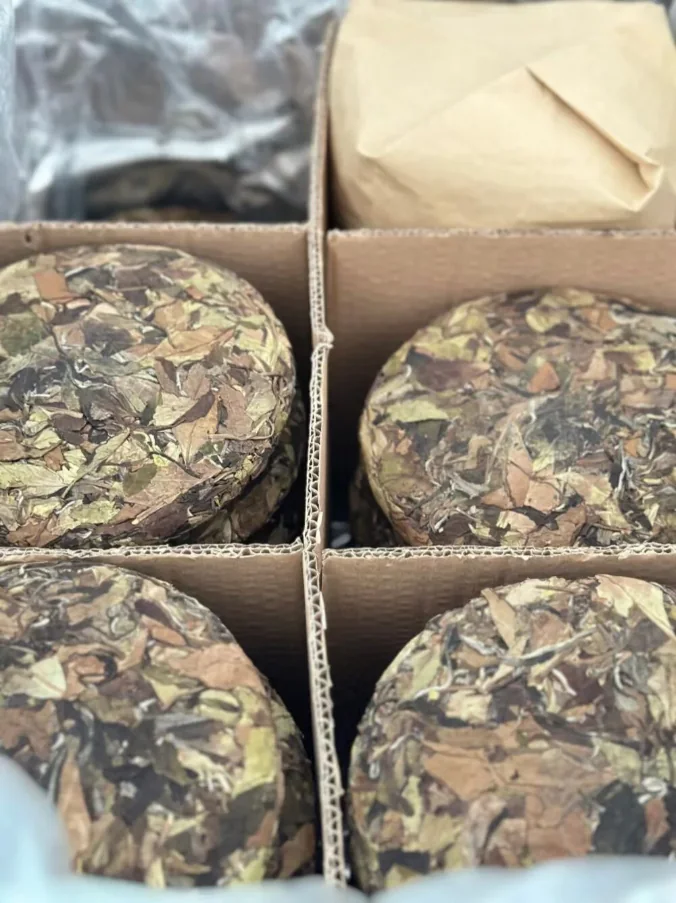
If you want to taste what time might have changed in a white tea cake, start with two spring Shoumei cakes from Guanyang, Fuding, with similar leaf grades and production methods. The samples behind this guide were described as coming from the same growing area and made with Fuding Da Bai and Da Hao material. That makes them a more useful comparison than two unrelated cakes with the same year on the label.
Separate the harvest year from the pressing date
White tea is typically made by withering and drying. A cake also has a compression history: leaves can be pressed shortly after drying or held loose and pressed later. Ask for both dates and for a plain description of storage. Compression and the amount of broken leaf in your sample can change how quickly the tea opens. Take a mix of intact flakes and loose pieces rather than scooping only the dust from the wrapper.
Taste through the second and third pours
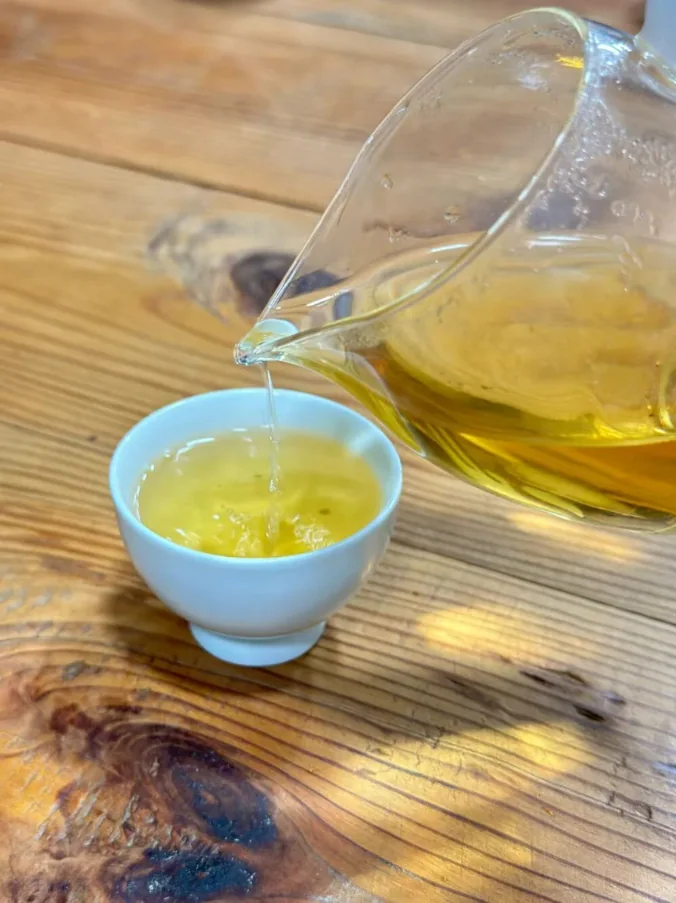
Use identical vessels, equal leaf weights and the same water and timing. Smell the warm wet leaves and the empty cup, then check whether the difference survives the next two infusions. One cake may lean toward dry hay or light floral notes, while another may suggest dried fruit or a soft jujube sweetness. These are tasting descriptions, not a reliable way to date a cake. If a sample smells musty or feels damp, set it aside instead of treating that as a sign of age.