Tea & Teaware Guides
Liubao Tea and Metabolic Syndrome: A Trial in Context
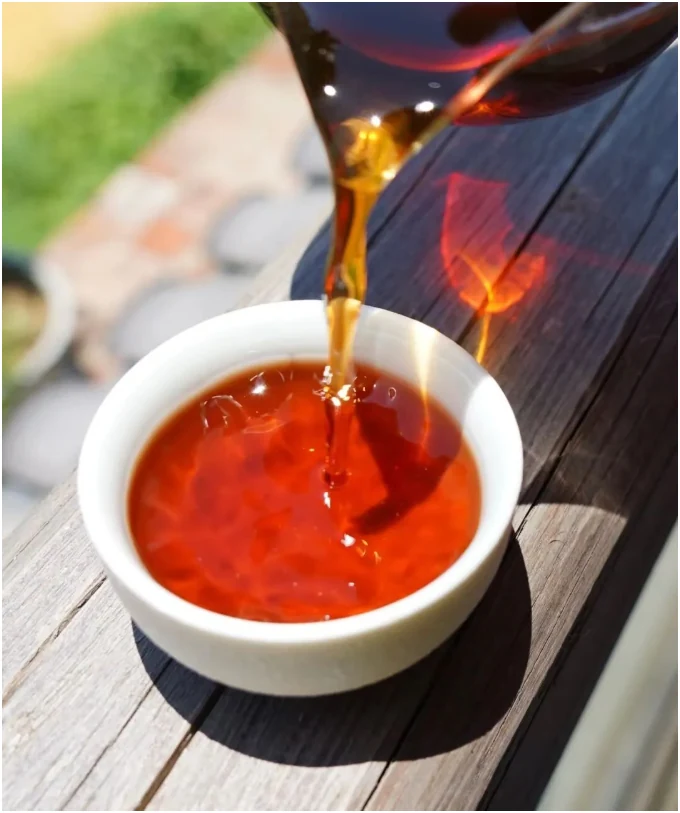
Can a daily cup of Liubao tea improve metabolic health? A 2025 paper in Nutrients, involving researchers from Peking University, investigated adults with metabolic syndrome. The results attracted attention, but the most important detail is easy to miss: every study group received tea. That changes how confidently we can explain any improvement.
The study compared four ages of tea
Seventy-one participants completed the 90-day randomized, double-blind trial. They were assigned Liubao tea aged one, four, seven or ten years. The protocol used 6 g of tea daily, prepared with 250 mL of boiling water for a short first infusion. Those quantities describe the experiment; they are not an established medical dose. Randomization was between tea-age groups, with no dedicated placebo or no-tea control.

What the authors reported
The paper reported changes in blood pressure, blood lipids and body-composition measurements during the intervention. Some within-group results were statistically significant, including lower LDL cholesterol across the tea groups. The ten-year group attracted attention for blood-pressure changes, but differences between tea-age groups were not statistically significant. That does not establish ten-year tea as a superior treatment.
Why a no-tea control matters
Without that comparison, a before-and-after change cannot be attributed confidently to tea alone. Changes in routine, diet, activity, expectations or ordinary measurement variation may also contribute. The authors noted that diet and physical activity were not quantitatively tracked. The trial is useful exploratory work, but it does not settle whether adding Liubao independently improves outcomes compared with otherwise similar people who do not drink it.
Body composition and gut microbes need careful interpretation
Body composition was estimated using bioelectrical impedance, so a change in an instrument’s visceral-fat estimate is not the same as direct imaging proof. Gut microbial results describe relative community composition. Ratios between broad bacterial groups are exploratory markers, not a universal score of a healthy intestine. These outcomes can generate hypotheses without demonstrating that tea prevents cardiovascular events or treats obesity.

What this means at the tea table
If you enjoy Liubao, choose a traceable tea and a comfortable brewing strength. A small, short trial supports further research rather than a promise of weight loss or blood-pressure control. It is not a reason to stop prescribed treatment or to buy an expensive vintage for its supposed therapeutic power. Flavor, sound storage and reliable product information remain better grounds for choosing your tea.