Tea & Teaware Guides
Longjing Tea FAQ: How to Brew, Buy and Store Dragon Well

Use this guide to recognize Longjing’s flavor, brew it in a glass or gaiwan, compare origins and harvests, and store the tea after opening.
Explore the Longjing tea guide
On this page
- What does Longjing tea taste like?
- How do you brew Longjing tea?
- Why does my Longjing taste bitter or flat?
- Is Dragon Well the same as West Lake Longjing?
- Should you rinse Longjing leaves?
- Can a photo tell you whether Longjing is good or authentic?
- Is Mingqian Longjing worth the higher price?
- How should overseas buyers choose their first Longjing?
- Is last year’s Longjing still good, and should you refrigerate it?
- Can you cold-brew Longjing?
1. What does Longjing tea taste like?
Longjing often tastes fresh and sweet, with notes of young greens, toasted beans or chestnuts.
Read more · Flavor and tasting examples
Three aromas offer a useful starting point. Bean notes can suggest fresh edamame or tender soybeans. Chestnut notes are warmer and closer to cooked chestnuts. Floral notes can be faint, sometimes described as orchid-like. Qiantang and Shifeng teas are examples you can compare side by side, but these aromas overlap across regions and are no proof of origin.
Look beyond aroma. Some cups feel rounded and savory, a sensation some drinkers compare to a mild broth. A gentle sweetness can linger after swallowing. Mild green notes can be normal. Persistent burnt, musty or rancid notes are reasons to check the tea or storage. Heavy bitterness can also come from brewing.
2. How do you brew Longjing tea?
Start with 2 g of tea in a 300 mL glass and water at 80–85°C (176–185°F).
Read more · Glass and gaiwan brewing steps
A glass is practical at home or work. Start with about 2 g in a 300 mL glass and water at 80–85°C (176–185°F). Use a thermometer when comparing batches, since cooling time depends on the vessel. Sip when cool enough and refill with about one-third left. If you tend to leave the glass on your desk, use a strainer to stop the infusion instead.
For a 120 mL gaiwan, use roughly 2–3 g and water near 85°C (185°F). Pour along the wall if you prefer a gentler pour. Start around 5–10 seconds, drain fully, and add a few seconds to later infusions as needed. A fuller Yuqian tea may suit somewhat hotter water. Compare in small steps before trying a very hot infusion.
3. Why does my Longjing taste bitter or flat?
Try cooler water and a shorter steep, then check your water and tea storage.
Read more · Troubleshooting steps
Take water temperature, leaf amount and time one at a time. For example, repeat the same glass recipe at 80°C instead of 95°C, then try straining earlier. If it is still harsh, reduce the leaf amount slightly instead of changing everything at once.
A cup can be bitter and still feel thin if bitterness dominates while aroma and body are weak. Compare fresh drinking water and a second batch brewed the same way. A tea that has lost aroma in storage, or a batch with an unpleasant raw or scorched character, can stay disappointing even after the recipe improves.
4. Is Dragon Well the same as West Lake Longjing?
Dragon Well is the English name for Longjing, and West Lake Longjing names a specific origin.
Read more · Origins and labels
Dragon Well is a literal translation of Longjing. It describes the same tea name on an English menu or label, rather than giving you a harvest grade or precise origin.
Longjing’s recognized regions include Xihu (West Lake), Qiantang and Yuezhou. West Lake is a specific origin designation tied to a protected production area in Hangzhou. Two flat teas may look and taste similar while coming from different regions. The place stated on the label is the first thing to compare. For West Lake claims, check the applicable official origin label and whether the producer or batch details match.
Compare Longjing origins · Hangzhou’s official origin-label rules
5. Should you rinse Longjing leaves?
You can brew Longjing straight away and drink the first infusion.
Read more · How to rinse
The first infusion is a chance to taste the tea’s early fragrance and sweetness. Skipping the rinse is the simplest approach, especially for tender early spring tea.
If you prefer to rinse, pour a small amount of water near your brewing temperature, roughly 80–85°C (176–185°F), and drain it in a few seconds. A brief rinse is a preference. It cannot correct poor storage, visible mold or an uncertain source.
6. Can a photo tell you whether Longjing is good or authentic?
A photo shows leaf shape and uniformity, while origin requires a check of the packaging and traceability label.
Read more · Photos, labels and tasting
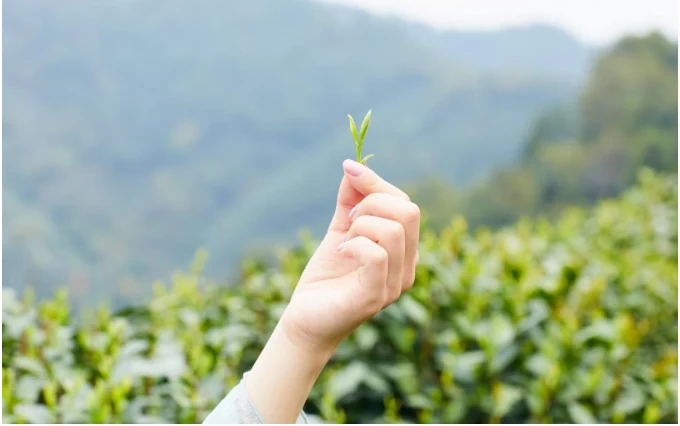
Use photos for visible clues: the flat shape, the proportion of broken pieces, and differences in leaf size. A warmer light can make the same batch look yellow, while a cooler light can make it look greener. Even an attractive photo cannot verify a protected origin.
At home, smell the dry leaves, brew under consistent conditions and taste for clarity, sweetness, body and the way any bitterness fades. A slightly yellow-green hue can occur naturally. For origin, compare the package, producer and batch documentation and check any applicable traceability mark. Photo, cup and documentation answer different questions.
7. Is Mingqian Longjing worth the higher price?
Mingqian often costs more because early harvests are small, and its value depends on the flavor you prefer.
Read more · Compare the harvests
The shorter early harvest window limits how much leaf can be picked, and smaller shoots can take more labor per finished batch. Origin, picking standard, processing and lot size also affect price.
Mingqian is picked before Qingming and can appeal to drinkers who like a soft, fresh cup. Yuqian usually refers to tea picked after Qingming and before Guyu and may offer more body or a stronger toasted character. These are useful expectations, not guarantees. Buy two small packs and brew them with the same water and vessel before deciding which is worth paying more for.
8. How should overseas buyers choose their first Longjing?
Start with a 50 g pack with a stated origin and harvest year, then compare delivered prices.
Read more · Buying channels and delivered prices
An Asian grocery platform can be convenient for local delivery. A specialist tea shop is useful when it gives more detail on origin and harvest. Direct international orders can offer more choice, but compare the shipping terms, final cost and what information is available about the lot.
Start with 50–100 g rather than a large bag that may lose aroma before you finish it. Compare the full delivered cost per 50 g. A clearly labeled Qiantang or Yuezhou tea is a practical everyday baseline. A small pack of traceable West Lake tea or an earlier harvest can be your second purchase once you know what you like.
9. Is last year’s Longjing still good, and should you refrigerate it?
Check the date and storage history, and let refrigerated tea warm to room temperature before opening.
Read more · Storage and portioning
For an unopened bag, read the date and storage instructions and check the seal. Harvest year alone does not tell you whether the tea is suitable to drink. A well-stored older lot may lose some aroma and freshness. Discard tea with mold, damp damage or an unusual odor.
For a small open pack you can finish in a few weeks, seal it well and store it in a cool, dry, dark place away from strong scents. If you refrigerate, divide it into small airtight portions and let the unopened portion warm to room temperature before breaking the seal. This reduces condensation and saves you from repeatedly warming and cooling the whole bag.
Longjing storage guide · Storage guidance from the market regulator
10. Can you cold-brew Longjing?
Yes, start with 3 g in 500 mL and steep in the refrigerator for 4–6 hours.
Read more · Cold-brew steps
Start with 3 g per 500 mL of drinking water, using a clean bottle. Refrigerate for 4–6 hours, then strain. Try a little more leaf or a longer steep in the fridge if the first batch is too light.
Cold brewing can make bitterness less prominent and bring out a softer, sweeter impression. If you like, compare one glass plain with another with mint or a slice of lemon. Keep the finished tea cold and drink it promptly. Use only properly stored tea for cold brewing.


