Description
The 2020 Bawang release
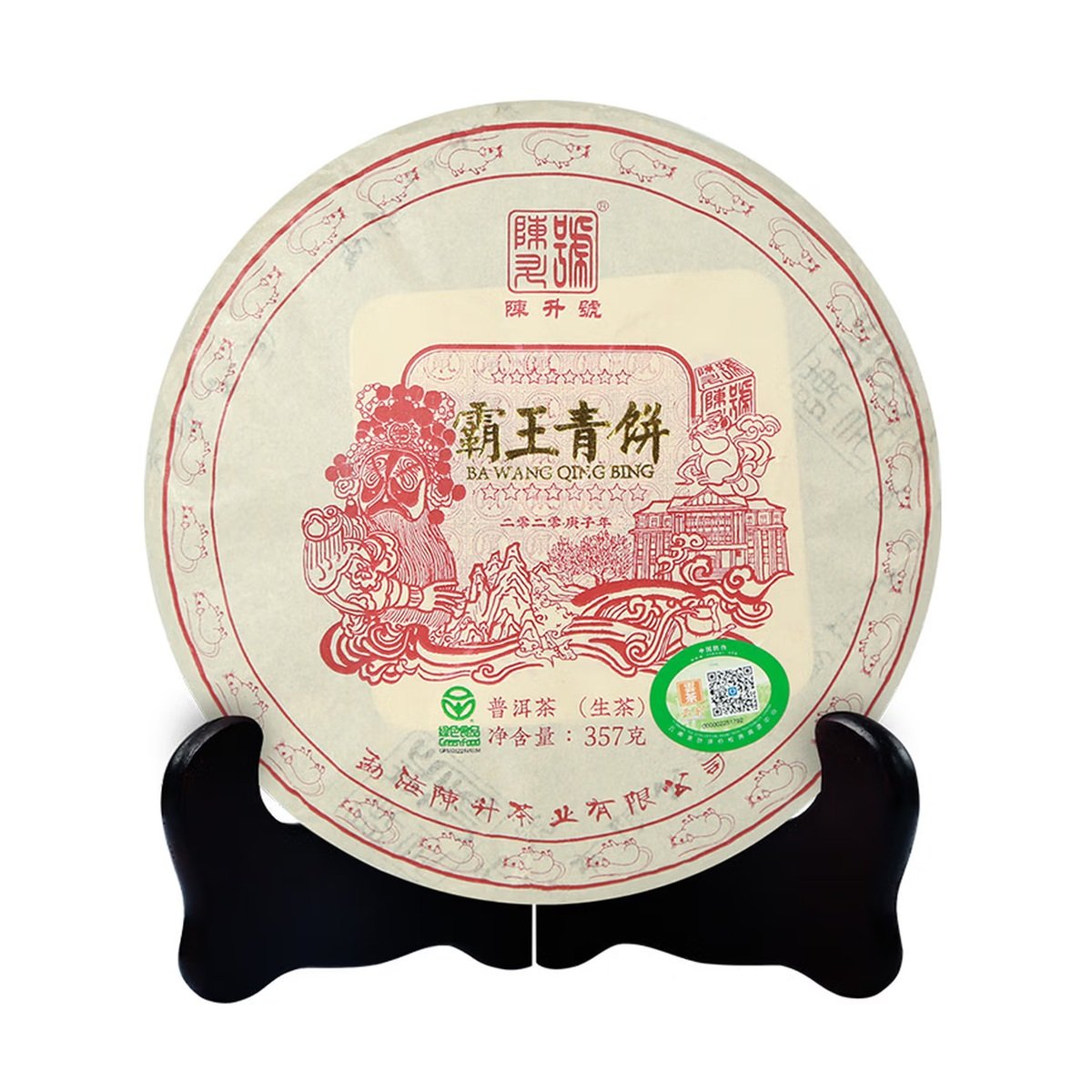
Chen Sheng Hao 2020 Bawang Qing Bing raw Pu-erh in one 357g paper-wrapped cake. Made with blended Menghai tea material, this release offers a robust, full-bodied style with returning sweetness.
Product details
| Brand | Chen Sheng Hao |
|---|---|
| Tea type | Raw (sheng) Pu-erh tea |
| Origin | Menghai, Yunnan, China |
| Tea year | 2020 |
| Material | Blended Menghai tea material |
| Net weight | 357g |
| Packaging | One paper-wrapped cake |
| Storage life | Suitable for long-term storage under the stated conditions |
A dated release, one cake
This is the 2020 Bawang Qing Bing raw Pu-erh from Chen Sheng Hao, supplied as one 357g cake. The wrapper is the illustrated design introduced for that year, with the Bawang name clearly printed on the front. The selected product is distinct from the green Chen Sheng No. 1 wrapper that appears in a comparison elsewhere in the source material.

Material and drinking style
The product parameter panel identifies Menghai tea-area material and a blended recipe. The source describes a robust, weighty raw Pu-erh style, with dark, glossy dry leaf and a substantial foundation. Its positioning within the producer’s range is more forceful than the comparison No. 1 tea. Those are producer descriptions rather than a promise of a fixed flavor: water, storage and infusion strength all matter.
Raw Pu-erh is the sheng style, rather than the fermented shou style sold as ripe Pu-erh. Keeping the year, weight and tea style together makes comparison easier. No specific tea grade or exact picking date is assigned where the source does not substantiate it. The product photographs below show the cake or leaf, infusion and spent leaf where those views are available.


How to read the tasting photographs
Leaf and liquor photographs help you compare appearance, but they cannot establish a cake’s complete storage history. Golden liquor can appear lighter or deeper with a different dose, water or steeping time. Returning sweetness and bitterness are useful points to observe over several infusions rather than judging the tea from one heavily steeped cup.
Brewing suggestions
- Start with approximately 5–7g in a 100–120mL gaiwan or small teapot. Adjust to your taste and the vessel.
- Warm the teaware and use freshly boiled water. A brief rinse can help a compressed piece begin to open.
- Use short early infusions, pour promptly and drain fully between rounds. Increase the time gradually as the tea softens.
- If bitterness dominates, shorten the steep or reduce the leaf quantity. Change one variable at a time to learn the tea.
Separate a small piece carefully from the edge with a tea pick, keeping the point away from your hand. A little loose leaf and small fragments are normal when breaking a compressed cake. Do not force the entire cake apart just to prepare one session.
Storage
The source states suitability for long-term storage when the required conditions are met. Store in a clean, dry, ventilated place at normal room temperature, away from sunlight, moisture, strong odors and contamination. Retain the paper wrapper and protect the tea after taking a portion. The physical package remains the reference for batch details and any more specific instructions. A production year alone does not document the conditions in which an individual cake has been stored.
About Chen Sheng Hao
Chen Sheng Hao’s brand material dates the business to 2007. Its range includes continuing blended series as well as origin-focused products. The facility photograph below provides general brand context, rather than proof of the manufacturing date or storage history of this particular cake. Sandao is an independent retailer and presents the verified product information in English and Simplified Chinese.

Explore more Pu-erh tea
Browse Pu-erh Tea · 2019 No. 1 Raw Pu-erh 50g Tin · 2026 No. 1 Ripe Pu-erh 357g