Sandao · Chinese teaware & culture
Xiaoya Jingdezhen Porcelain by Ruan Dingrong
Chinese Tea Brands & Companies · Jingdezhen Teaware
Xiaoya Ceramic Studio · Ruan Dingrong · Jingdezhen, Jiangxi, China
Ruan Dingrong and Xiaoya
Xiaoya is a Jingdezhen porcelain studio founded by Ruan Dingrong in 1994, according to China Guardian’s catalogue. Its name echoes a section of the Classic of Poetry and suits a workshop known for small cups, teapots and scholar’s objects. In an interview, Ruan explained how traditional forms and painting give him material to work with when designing objects for contemporary use.
Cobalt washes and the insect-and-flower cups
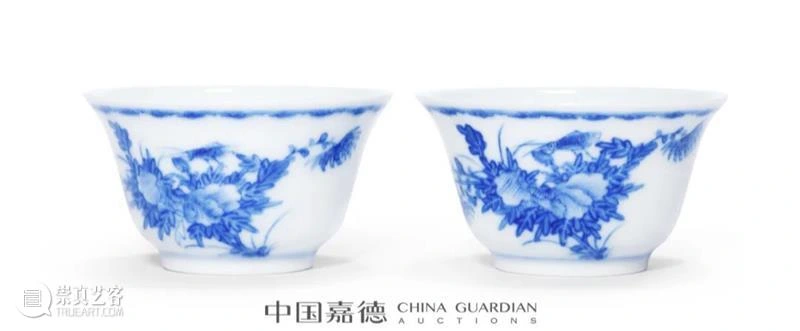
Xiaoya takes cues from porcelain painter Wang Bu. Graded cobalt washes give the leaves, petals, insects and birds different depths of blue. China Guardian lot 10990 groups two 6.5 cm insect-and-flower cups marked Xiaoya. The pair makes it easy to compare how related designs unfold on a curved wall.
The Children at Spring Festivities teapot
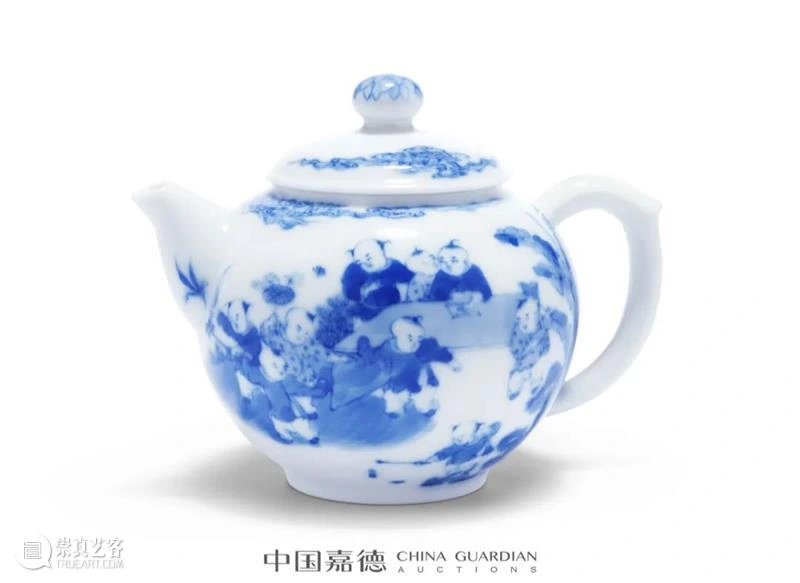
China Guardian lot 10986 is an 11.5 cm blue-and-white teapot depicting children celebrating spring. Small painted details carry the design onto the lid knob and the top of the handle. Look at the pot in profile to see the balance of the body, spout and handle, then from above to see how the painting extends to the lid.
Landscape, poetry and underglaze red
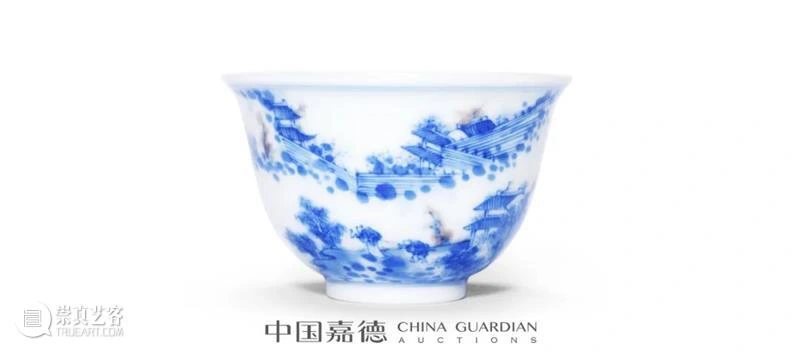
Lot 10988 is a 7 cm cup with a landscape and pavilions in cobalt and copper red. China Guardian catalogues the Biyutang Zhi mark on this example as an early Xiaoya mark. Painting and inscription occupy opposite sides of the cup, so turning it reveals both the color contrast and the connection between image and verse.
Scholar’s objects and The Western Chamber
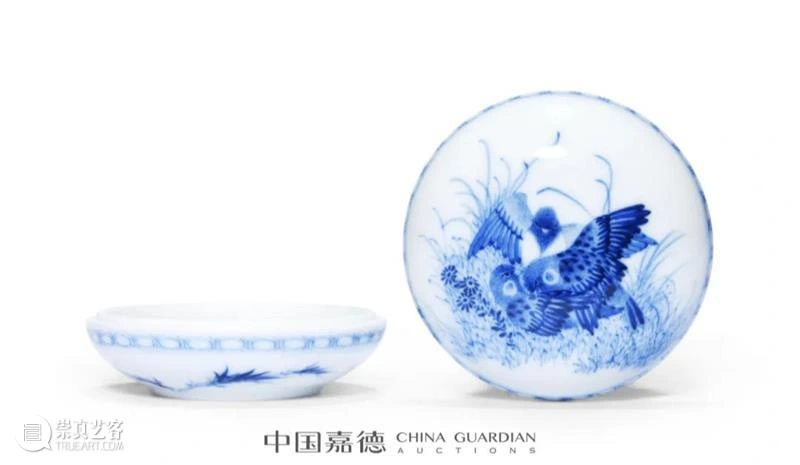
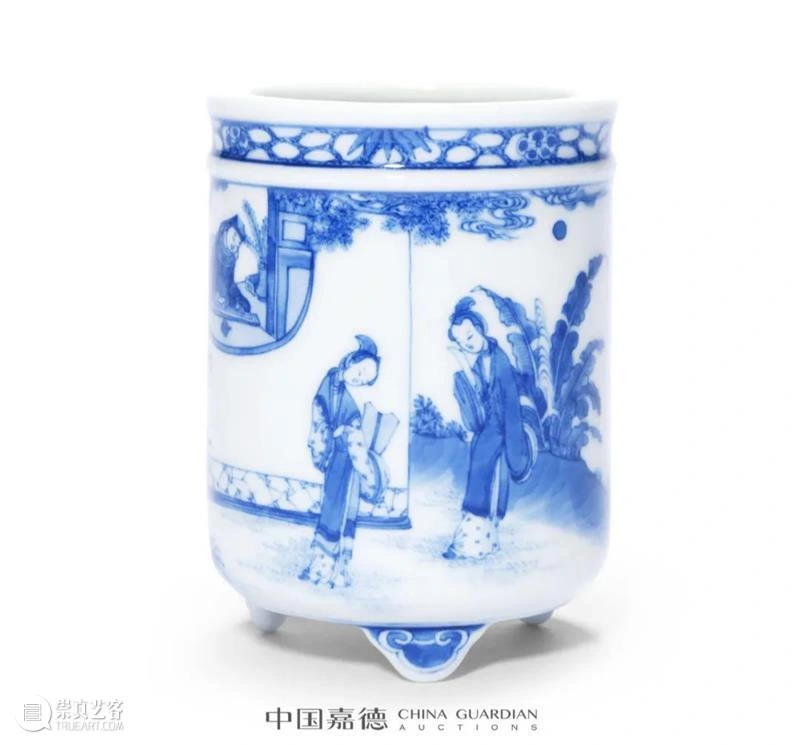
Lot 10984 is an 8.6 cm three-footed brush pot depicting Yingying listening to the zither in The Western Chamber, with a Xiaoya Zhenwan mark. The same catalogue includes a seal-paste box whose quail and falling leaves form a visual pun for a settled and prosperous life. Across brush pots, boxes and teaware, the studio works within the constraints of a small surface.
Reading the motif, mark and provenance
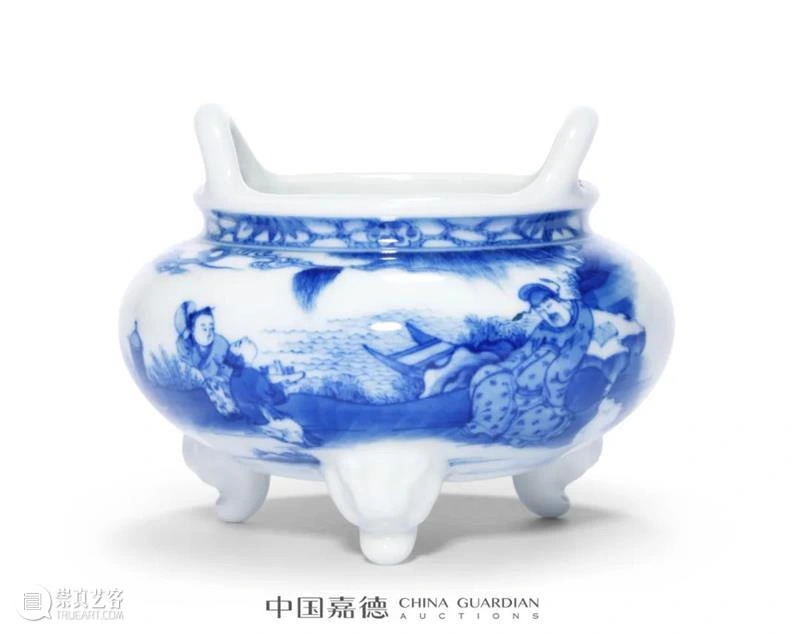
China Guardian records recurring motifs such as butterflies among flowers, geese descending to a sandbank and a solitary kingfisher. It associates the Ruan Dingrong Zao base mark with his Ming-inspired series. Read a mark alongside the shape, brushwork, glaze, a clear image of the foot and provenance. Public references include interviews and auction catalogues. An independent studio website and registration details could not be verified.
A Mid-Autumn motif behind Xiaoya’s approach
In one interview, Ruan recalled putting Chang’e, the figure from Chinese moon mythology, and a human-made satellite into the same Mid-Autumn design. The moon ties the two together and shows how the studio can develop a contemporary subject while still drawing on historical porcelain and Wang Bu. Ruan also emphasized how many hands and stages go into a finished piece.
Using and viewing small Xiaoya pieces
For a small cup, useful details include usable capacity, the feel of the lip and how stable it is in the hand. With a teapot, ask about capacity, the pour and lid fit. For scholar’s objects, view the foot, rim and wraparound decoration from several angles. A full side view and a photograph of the base often show what a front-facing catalogue photo cannot.