Tea & Teaware Guides
Running a Tea Shop: Lessons in Products, Service and Trust

Edited and translated from the original. Historical industry views and case studies; company accounts and period data do not describe current operations.
A difficult year, and a useful question
What helps a small tea shop keep going when its plans are disrupted? In this year-end essay, a shop owner who started with little tea-industry experience looks back on 2020. Her answer is a combination of dependable products, deliberate practice and steady communication with customers.
The original introduction describes a business begun in 2014 and reports strong growth over the following years. Those are the account’s own historical claims, rather than independently audited results or a promise that another shop will achieve the same outcome. Different locations, customer groups and resources produce different businesses. The value of the story is in examining the decisions behind it.
Choose the part of the supply chain you can do well
A new owner can buy loose tea, source directly from mountains, package an own-label range, or work with an established supplier. The largest apparent margin does not automatically make the strongest business. Quality consistency, repeat availability, development work and the cost of explaining each product all affect the real result.
The author chose to cooperate with Beijing Tianxia Mingshan. In her account, a dependable product system and access to experienced people helped her concentrate on retail service. This is a description of her choice, not an endorsement of a particular partnership or a claim that independent sourcing cannot work.
Her broader point is about comparative advantage. A small retailer does not need to perform every task from growing to packaging. It needs to understand which tasks it can perform reliably, which require specialist support, and how the arrangement serves its customers. Good raw material and a well-developed finished product are related, but they are not interchangeable.
Build a reputation through repeated, useful work
The essay records the author’s 1,281st day of sharing her tea practice. The number matters less than the habit: regular tasting notes and demonstrations give customers repeated evidence of how a seller approaches tea. A professional identity needs practical knowledge behind it, rather than an attractive label alone.
After a purchase, the author provided brewing instructions and discussed how the tea tasted. That makes service continue beyond the transaction. Different customers may need different explanations, quantities or brewing adjustments.
Photography was another skill she developed. Clear images of tea and teaware helped explain products, while personal strengths gave the shop a recognizable voice. Satisfied customers could then introduce it to others. Reputation accumulated through a series of small, consistent encounters rather than a single promotional campaign.

Teach, share and learn from customers
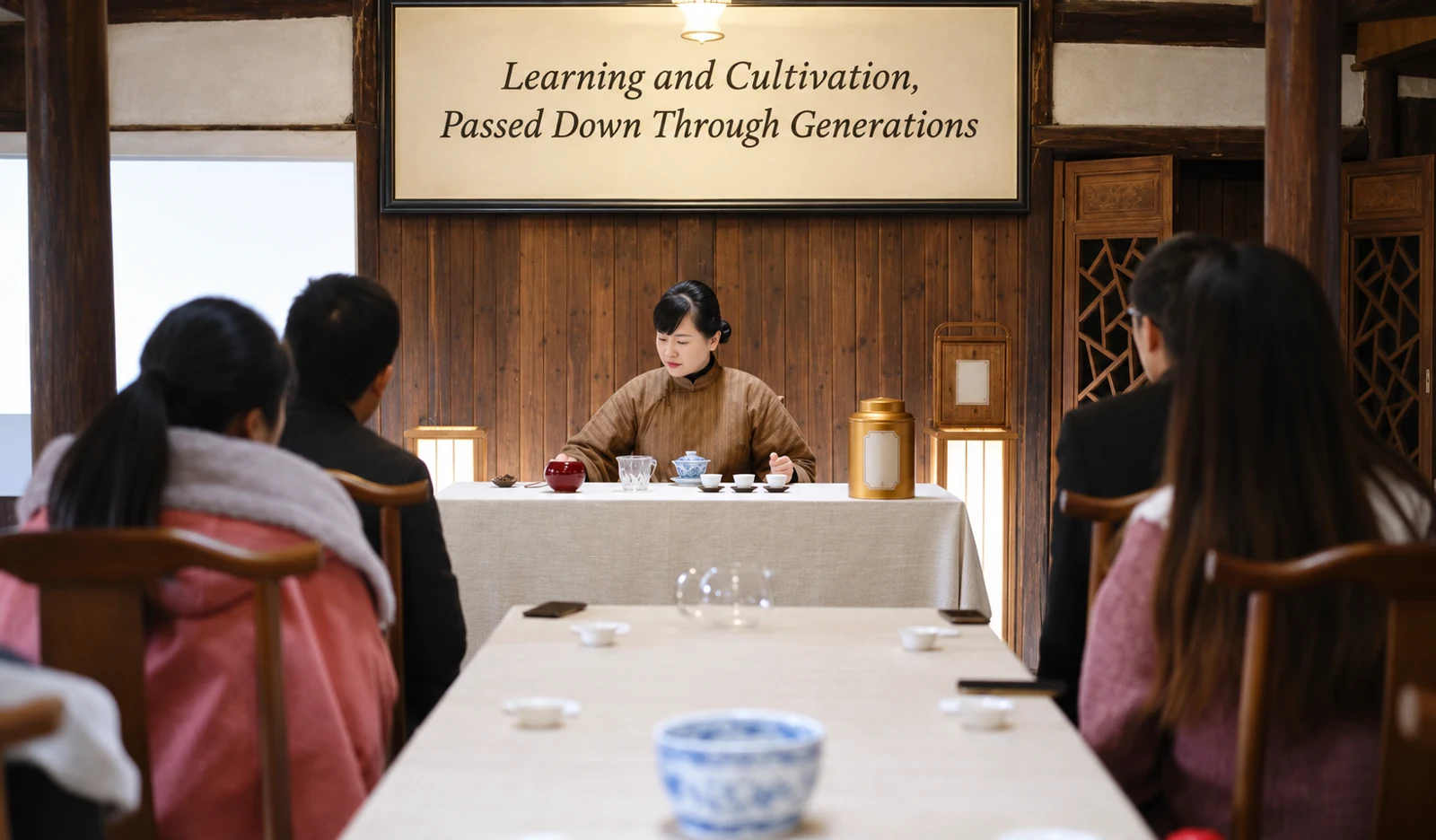
During 2020, the author shared photography, shop-operation and tea-practice courses with industry peers and local businesses. Preparing a lesson made her organize knowledge more carefully. Sharing a useful skill also created connections beyond her immediate shop.
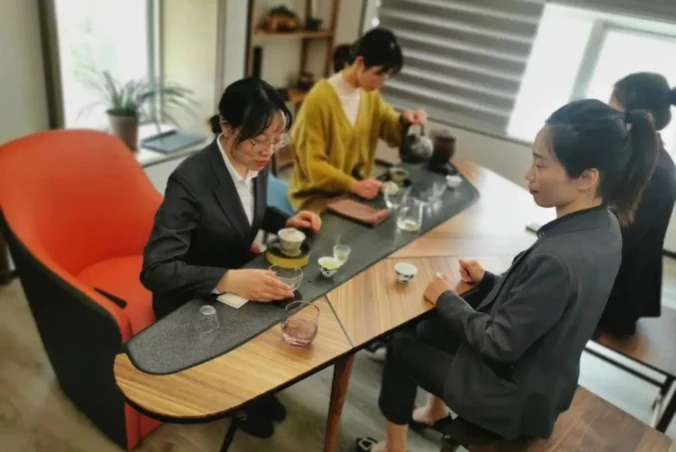
Corporate tea sessions were described as a way to introduce tea practice into working life. Their commercial value depended on the client’s needs and the quality of the experience. The essay’s language about personal cultivation should be understood as a cultural perspective, not a clinical claim.
The author also used social platforms to publish specialist content. Her account describes a relatively modest audience alongside improving sales. The practical lesson is to consider the usefulness of the content and its connection to actual service, rather than judging an account by follower totals alone.

Stay practical when conditions change
The closing reflection is deliberately practical: choose carefully, accept that progress can be uncomfortable, and keep doing the work within your control. The author credits teachers, peers and customers as well as her own persistence.
For a reader considering a tea shop, this case leaves several useful questions. Can the supplier deliver consistently? Can the shop explain what it sells? Does customer service continue after payment? Is its digital content something people want to return to? These questions are more transferable than the sales figures of any one business.
Related reading
- Yunnan Tea Oversupply: Why Some Summer and Autumn Tea Goes Unpicked
- Tea Company Management Innovation: Strategy, People and Digital Tools
Explore Tea Industry Research in Tea & Teaware Guides
Source attribution
Reprinted from Deng Zengyong’s self-media publication, Tea Industry Management Review. Edited and translated into English by Sandao. Original byline / case supplier: 谢秀美 / Xie Xiumei。