Teaware
Handmade Da Hong Pao Clay Yixing Fanggu Teapot – 340 mL
US$158

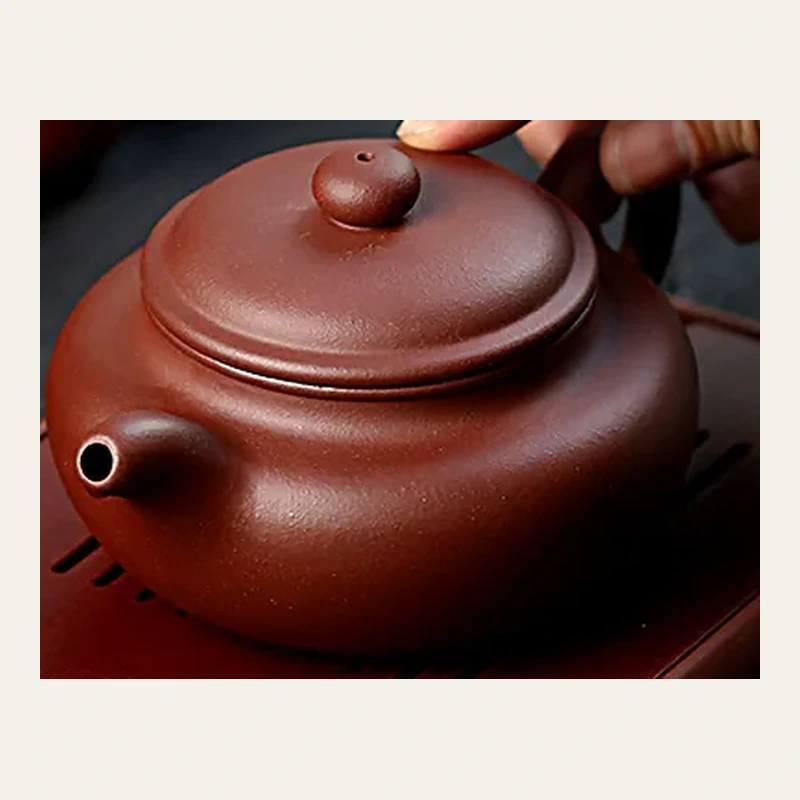

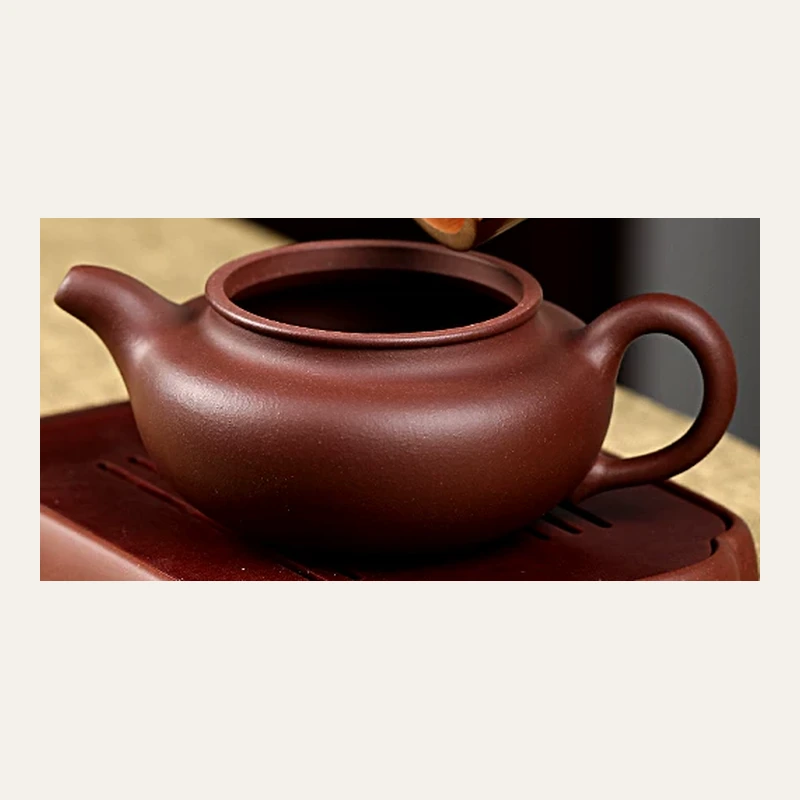
Front view of the Da Hong Pao Fanggu Yixing teapot
Product specifications
| Clay / material | Da Hong Pao clay |
| Teapot form | Fanggu |
| Capacity (mL) | 340 mL |
| Dimensions | Approx. 16.5 cm long × 8.0 cm high; opening diameter 7.1 cm |
| Craftsmanship | Handmade |
| Origin | Yixing, Jiangsu, China |
| Retail price (USD) | US$158 |
| Source documentation | Contemporary Fanggu teapot. Gu Jingzhou is referenced for design history; the individual maker and firing kiln are unspecified. No base-seal photograph was supplied. |
| Stock quantity | 1 |
| Availability (confirmation date) | In stock |
A handmade Da Hong Pao clay Yixing teapot in the classic Fanggu form, with a broad rounded body, low domed lid and curved handle. Its stated 340 mL capacity suits everyday loose-leaf tea brewing at home.
US$158 · One teapot with matching lid. Tea cups, tea trays, pitchers and other styling accessories are not included.
The Fanggu shape
Fanggu means an antique-inspired form. This contemporary teapot has a flattened round body, a wide opening, a short upward-curving spout and a rounded lid knob. The plain surface keeps attention on its balanced silhouette and clay texture.
Da Hong Pao clay: colour, texture and everyday use
Da Hong Pao clay is the material name confirmed for this Fanggu Yixing teapot. Here, Da Hong Pao identifies the clay, rather than a tea included with the product. The finished pot has a warm reddish-brown colour and a finely granular surface, shown in the close-up photographs.
Look closely at the surface
Fine particles are visible around the lid rim and across the rounded body. The plain, undecorated form makes this texture easy to examine. The dry photographs show a soft sheen, while the hot-water rinse photograph shows brighter reflections on the wet surface. Lighting, moisture and screen settings can change how the colour appears.
A surface to use and care for
The source material describes changes in the surface appearance with continued tea use. Treat that as a care and appearance note, rather than a promised finish or a fixed timeline. Empty the leaves after brewing, rinse gently and allow the teapot and lid to dry completely. Use water heated separately; this vessel is not intended for direct heating.
Making process and clay information
The stated making process is handmade. A more specific fully handmade or half-handmade classification has not been supplied. The clay name and photographs do not establish the precise mineral composition, mine location or firing temperature; those details are not specified for this piece.
Lid and surface details
The removable lid has a central vent hole. Close photographs show the broad opening, the lid rim and the fine texture of the body. The wide opening gives access when adding tea leaves and removing them after brewing.


Shape and brewing details
These photographs show the single teapot in a studio setting and during brewing. The teapot and lid are included; tea, cups, trays and other photographic props are not included.


Design heritage
The supplied design material presents this Fanggu model as a contemporary tribute to a historical Fanggu teapot associated with Gu Jingzhou (1915–1996), a noted Yixing teapot artist. Its accompanying historical photograph provides context for the design. This product is a contemporary reproduction of the form, not an original work made by Gu Jingzhou.
The maker of this individual teapot and its specific firing kiln have not been identified in the supplied information.

Specifications
| Material | Da Hong Pao clay |
|---|---|
| Making process | Handmade |
| Shape | Fanggu |
| Capacity | 340 mL nominal; the supplied specification gives 340 ± 20 mL |
| Dimensions | Approx. 16.5 cm long × 8.0 cm high; opening diameter 7.1 cm |
| Origin | Yixing, Jiangsu, China |
| Retail price | US$158 |
| Included | One teapot with matching lid; no cups or tea tray |
| Direct heating | Not suitable for direct heating on a stove or hob |
The capacity measurement method is not stated. Allow room for tea leaves when estimating usable brewing volume. Dimensions are approximate; photographs and screen settings can affect colour appearance.
Use and care
Use the teapot to brew tea with water heated separately. After brewing, empty the leaves, rinse gently and let the body and lid dry fully before storage. The source material notes that tea deposits can develop with use. For persistent deposits, ask for care instructions appropriate to this piece before using a cleaning product.
Explore and inquire
Read our Fanggu shape guide and teapot capacity guide, or contact Sandao to confirm availability, dispatch time and shipping to your country.
Inquire about this piece
Ask about availability, specifications, shipping or a quotation.