Teaware
Doucai Five Blessings Scrollwork Gaiwan – 150 mL
US$850

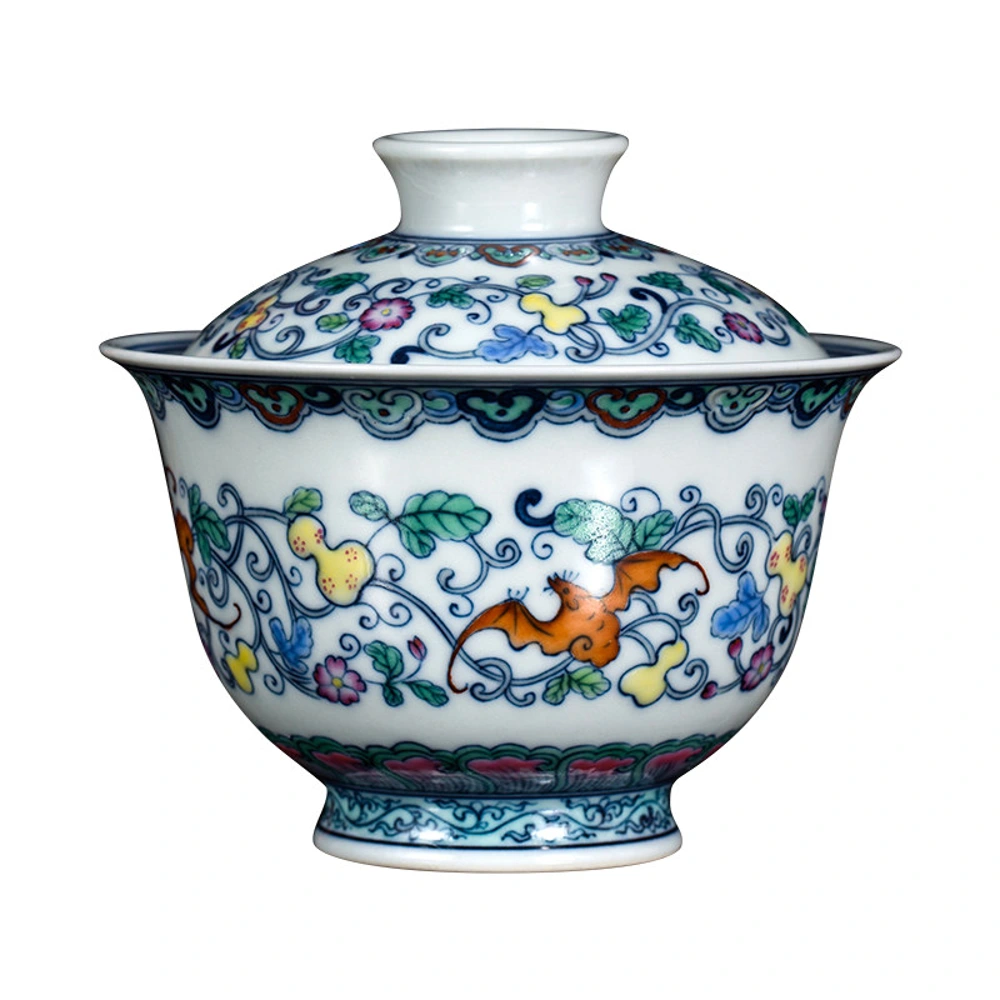


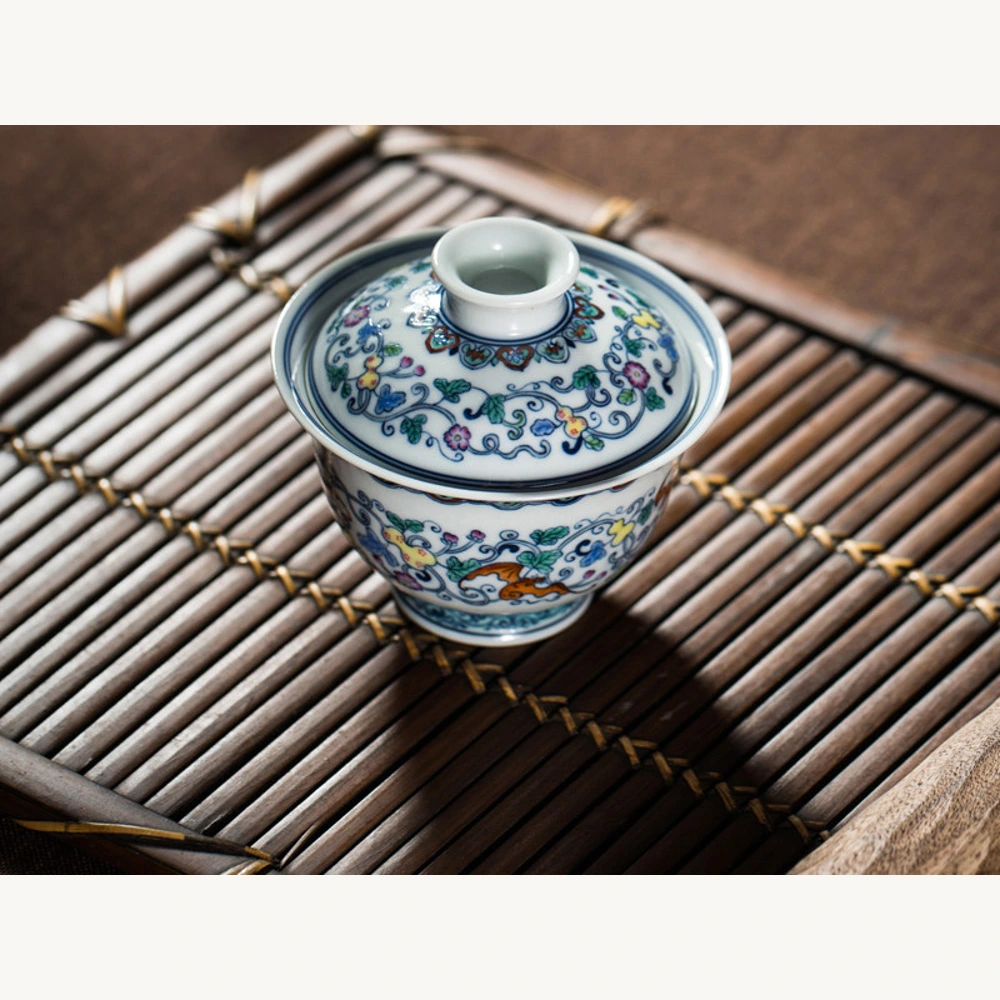
Doucai Five Blessings Scrollwork Gaiwan: front
Product specifications
| Clay / material | Porcelain (ceramic) |
| Teapot form | Two-piece gaiwan (bowl and lid) |
| Capacity (mL) | 150 |
| Dimensions | Rim diameter 9.3 cm; overall height 8.5 cm; bowl height 5.8 cm; base diameter 4.3 cm (approx.) |
| Craftsmanship | Handmade; hand-painted doucai; wood-fired porcelain |
| Origin | Jingdezhen, Jiangxi, China |
| Available variants | Doucai Five Blessings with scrolling vines |
| Retail price (USD) | US$850 |
| Capacity measurement | Approximately 150 mL full capacity, as stated in the supplied specification |
| Source documentation | Specifications and workshop photographs are based on the supplied product materials. |
| Stock quantity | 1 |
| Availability (confirmation date) | In stock |
Doucai Five Blessings Scrollwork Gaiwan
Orange bats, yellow gourds and flowering vines wind around this hand-painted Jingdezhen porcelain gaiwan. Blue outlines connect green leaves, blue blossoms and pink accents across the pale body. A shaped border follows the rim, while a pink-and-green petal band frames the raised foot. The lid carries the same scrolling decoration, bringing the bowl and cover together as one composition.
Made in Jingdezhen, Jiangxi, China, this handmade tea-brewing bowl combines blue and white decoration with doucai colours. The supplied materials describe traditional wood firing. Its approximate full capacity is 150 mL, and the retail price is US$850. This listing includes one bowl and one lid. Tea trays, pitchers, tasting cups and other tea-table accessories in the photographs are styling props.

Five Blessings among Scrolling Vines
The design name Chan Zhi Wu Fu refers to the Five Blessings among intertwined stems. In the supplied design explanation, the bat is an auspicious motif because the Chinese word for bat echoes the word for good fortune. Here, the orange bats appear between curling gourd vines, leaves and flowers. The continuous pattern encourages a closer look around the whole vessel rather than from a single angle.


Bowl, Lid and Foot
This is a two-piece gaiwan, sometimes called an er cai gaiwan: the bowl and lid form the complete brewing vessel. The flared rim leaves room to position the lid for pouring, while the raised foot gives the bowl a defined base. The original underside photograph shows the painted mark and the decorative petal border around it. This is a contemporary piece with traditional decoration, rather than an antique.


Brewing and Pouring
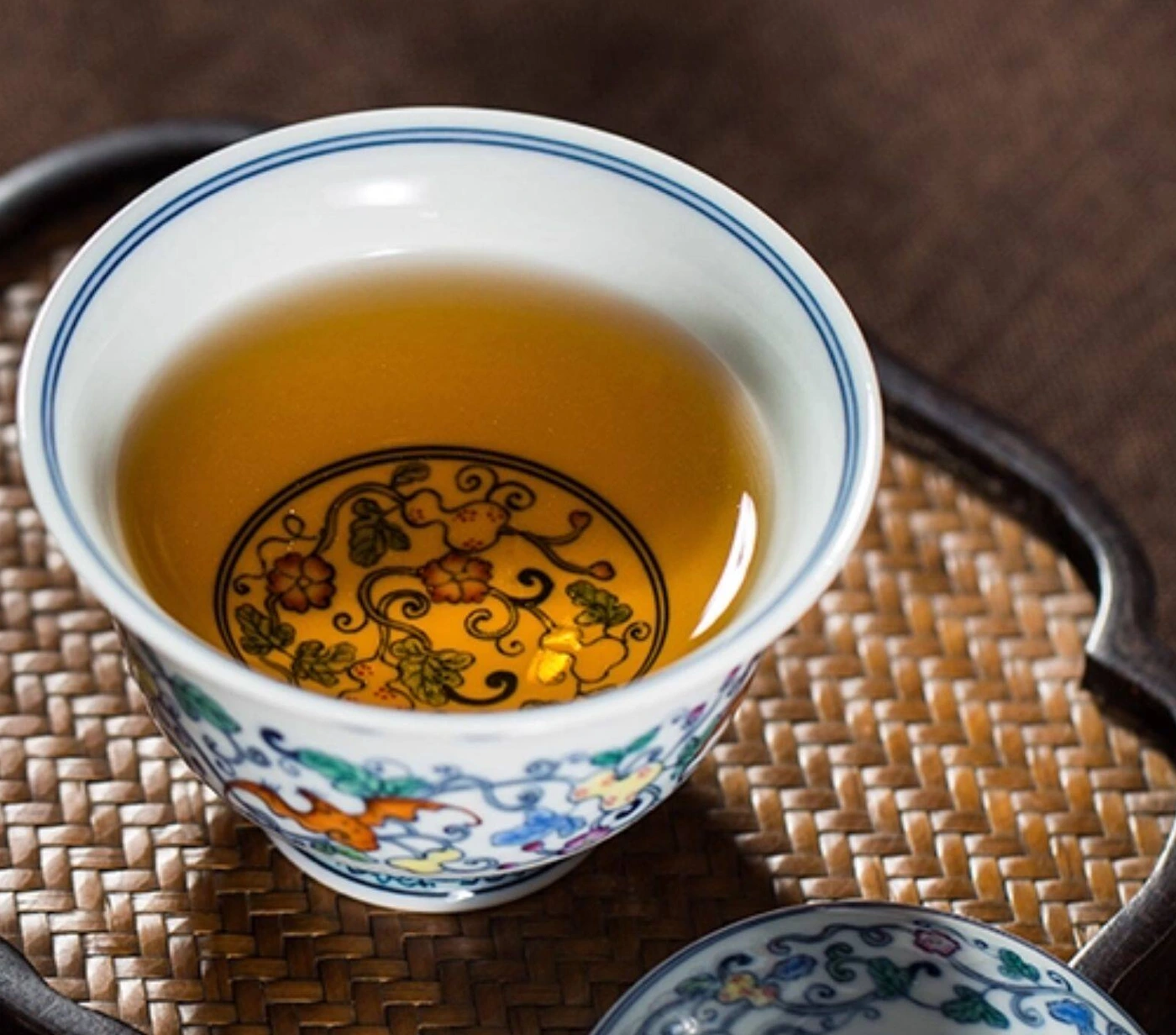
The pale interior offers a clear view of the tea liquor and its central painted medallion. The still photographs and selected video sequence show the gaiwan in use, including lifting the lid and pouring into a separate serving vessel. These views also give a sense of its scale in the hand. Leave space below the rim when preparing hot tea; the quoted full capacity is a measurement reference rather than a recommended serving fill.


Product Video
A selected sequence from the supplied video shows this gaiwan pouring tea.
Dimensions and Specifications
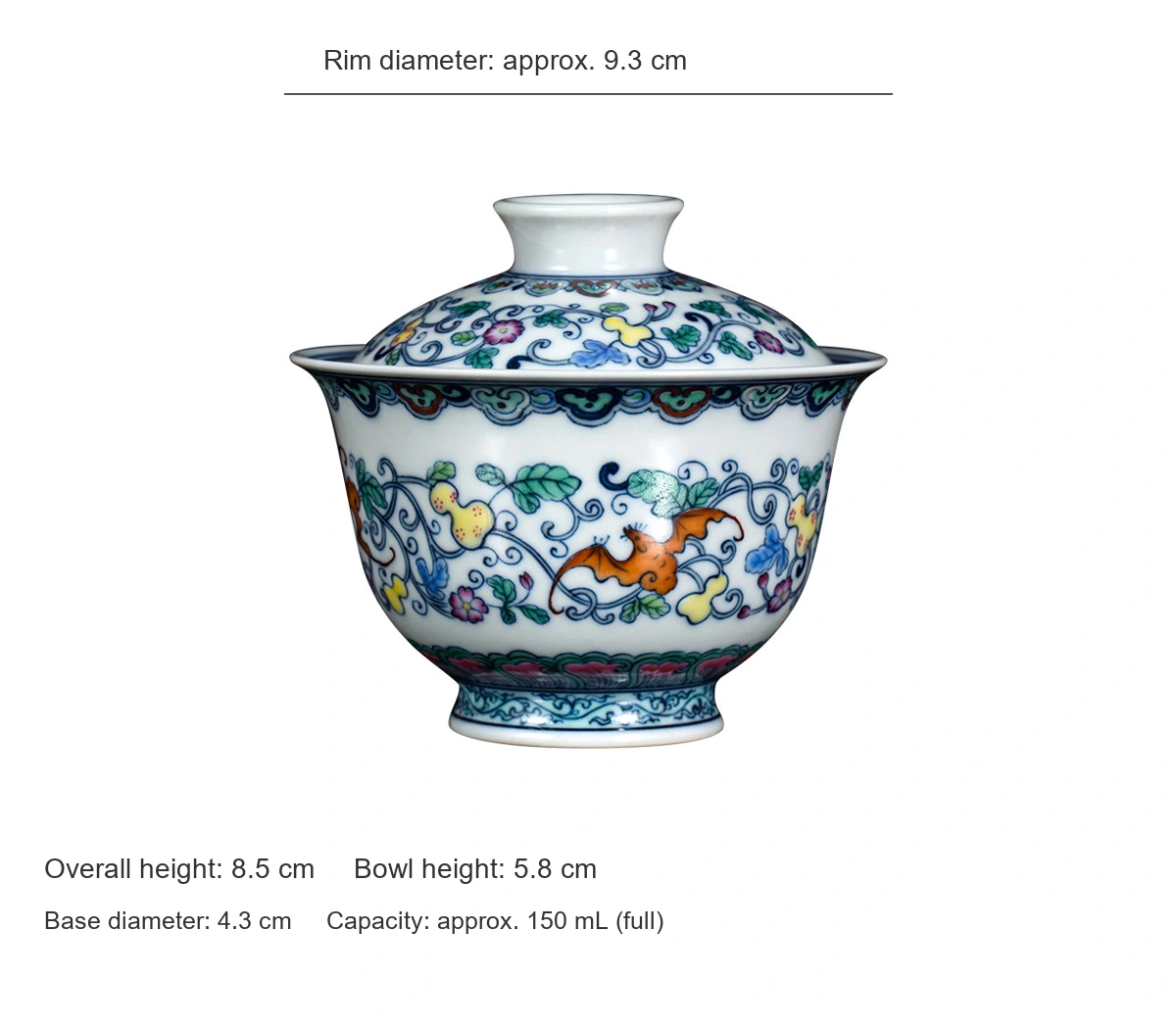
| Material | Porcelain (ceramic) |
|---|---|
| Craft | Handmade; hand-painted doucai; wood-fired porcelain |
| Origin | Jingdezhen, Jiangxi, China |
| Form | Two-piece gaiwan: bowl and lid |
| Capacity | Approximately 150 mL, full capacity |
| Rim diameter | Approximately 9.3 cm |
| Overall height | Approximately 8.5 cm |
| Bowl height | Approximately 5.8 cm |
| Base diameter | Approximately 4.3 cm |
| Included | One bowl and one lid |
| Retail price | US$850 |
Hand Painting and the Wood Kiln
Doucai combines blue decoration beneath the glaze with colours applied above it. The supplied workshop explanation describes first painting blue outlines and firing the glazed porcelain, then adding coloured details for a further firing. This layered method gives the vines their blue structure while allowing the leaves, flowers, gourds and bats to stand out in contrasting colours.

The kiln photographs show the people and firing process behind the collection. One worker tends the fire in the brick kiln, while another photograph records the kiln being lit. These are workshop process images. They provide context for the craft without assigning the finished piece to an unidentified individual maker.


Hand forming, brushwork and firing can produce small differences in outline, colour and glaze texture between individual pieces. Measurements are approximate, and lighting and screen settings can affect the appearance of the colours. Refer to the photographs for the design and decorative details.
Use and Care
Rinse before first use. Handle the rim and lid carefully when brewing with hot water, and allow the porcelain to cool before cleaning. Wash gently with a soft sponge and mild detergent, rinse thoroughly and dry before storing. Avoid abrasive cleaners, sudden temperature changes and impacts against the rim, lid or foot.
Inquire about this piece
Ask about availability, specifications, shipping or a quotation.