Teaware
Fully Handmade Qinquan Yixing Teapot – Zi Ni, 195 mL
US$380


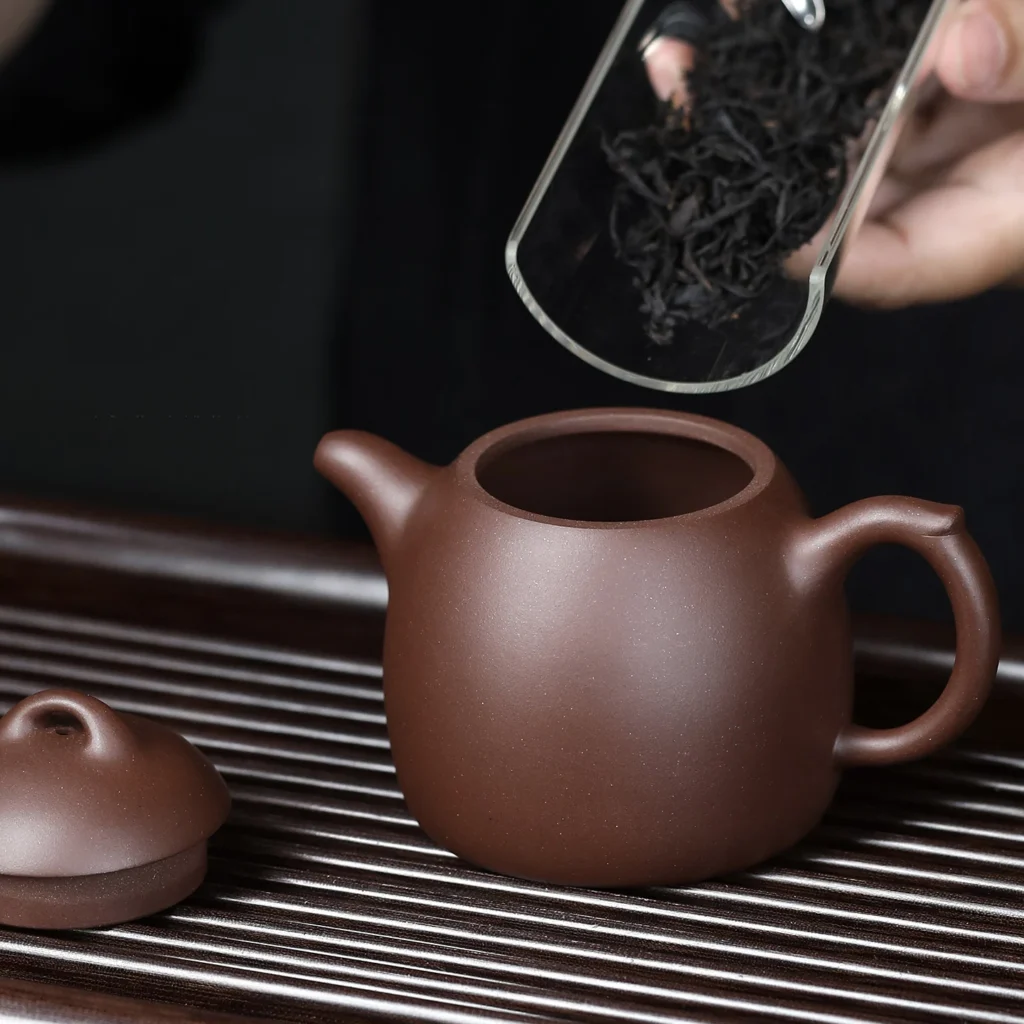


Front view of a handmade 195 mL Qinquan Yixing teapot in Zi Ni purple clay
Product specifications
| Clay / material | Natural Zi Ni purple clay |
| Teapot form | Qinquan (Qin weight form) |
| Capacity (mL) | 195 |
| Dimensions | Approx. 11.8 cm long; 4.5 cm opening; 7.8 cm high. |
| Craftsmanship | Fully handmade |
| Origin | Yixing, Jiangsu, China |
| Retail price (USD) | US$380 |
| Stock quantity | 1 |
| Availability (confirmation date) | In stock |
A classic Qinquan form for everyday tea
This Qinquan Yixing teapot is fully handmade from natural Zi Ni purple clay in Yixing, China. Its 195 mL capacity makes it a compact choice for gongfu tea sessions, with enough room for several small tasting cups from each infusion.
The shape is easy to recognize: an upright, gently rounded body, a domed lid with a bridge-shaped knob, a short curved spout and a generous loop handle. There is no painted decoration to distract from the clay. Fine mineral speckles and a warm purple-brown surface give the pot its character.
The meaning behind Qinquan
The name Qinquan refers to the weights associated with China’s Qin dynasty. The teapot’s solid silhouette and arched lid knob echo that weight form, giving it a calm, grounded presence on the tea table. It is one of the traditional forms in Chinese Yixing teapot design.
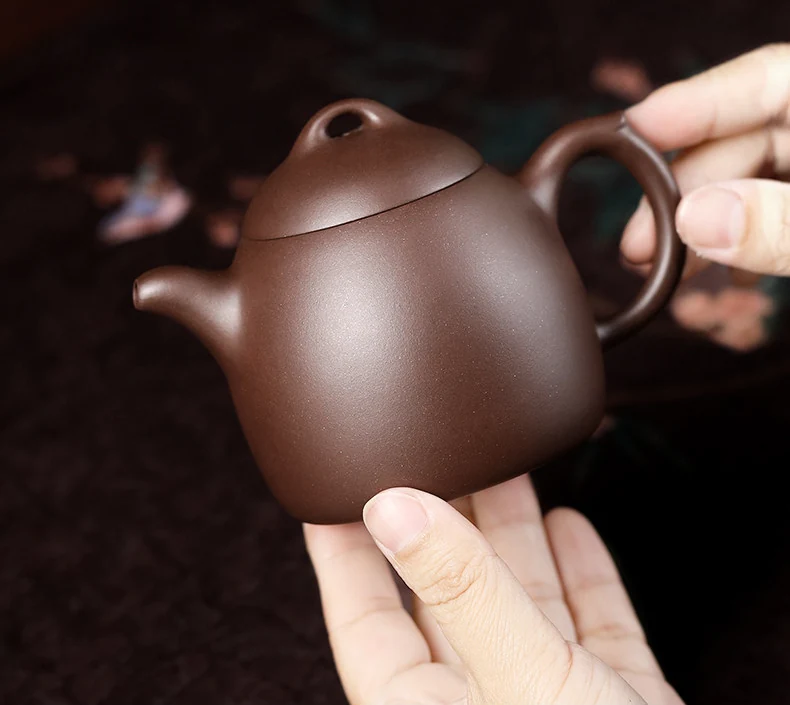
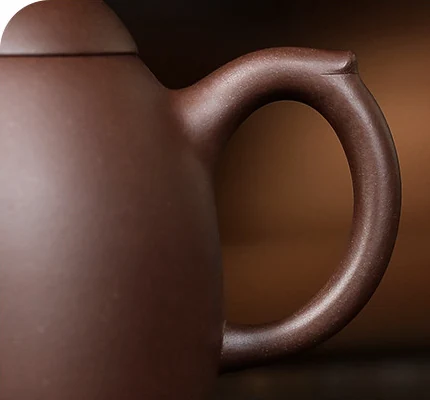
Spout, handle and lid
The curved spout sits close to the body, while the loop handle offers space for the fingers. The bridge knob is shaped for lifting the lid. Together, these details continue the simple lines of the body rather than adding ornament.


The pouring demonstration shows the teapot in use. The internal filter helps hold back larger tea leaves; the exact filter-hole configuration may vary between individual pots.
Product video
Watch the pot from several angles, followed by filling and pouring demonstrations.
Zi Ni purple clay
Zi Ni is a traditional Yixing clay, also known as purple clay. This pot has an unglazed surface, with the natural clay grain visible in the close-up photographs. Its purple-brown tone can look warmer or cooler as the light changes.
The open-pot view shows the rim, interior and lid opening. For brewing, leave room for the leaves to expand and adjust the amount of tea, water temperature and infusion time to the tea you use.

Handmade in Yixing, China
Hand building is central to the Yixing pottery tradition. A maker shapes the clay body and works on the spout, handle and lid as individual parts before joining and refining them. The workshop photographs below show clay being worked by hand and a teapot body taking shape.
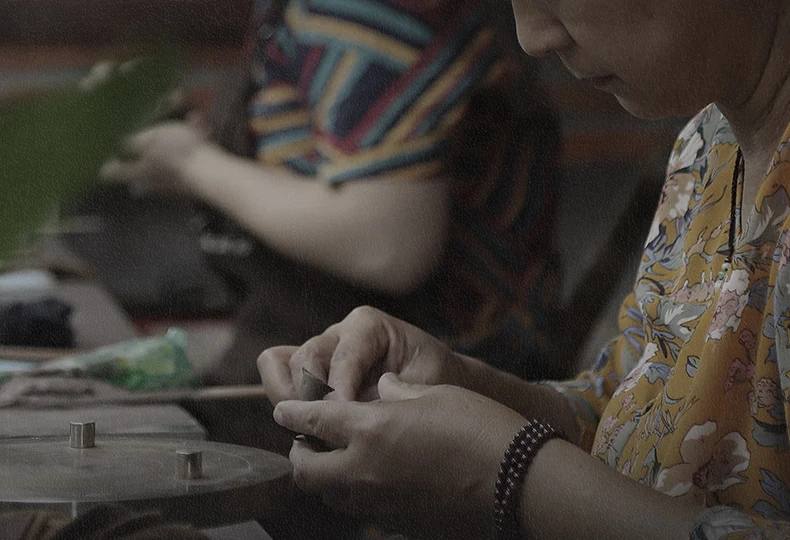


Clay preparation and kiln tradition
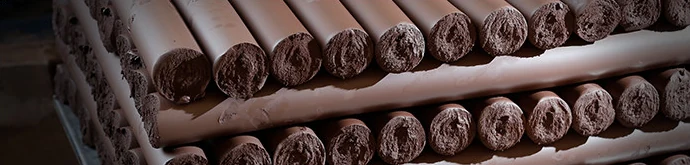
Preparing the material is part of the craft. Clay is selected, processed and mixed with water before it is aged and worked into a usable consistency. The workshop images show raw clay fragments, mixing and prepared clay rods. Kiln firing completes the transformation from workable clay into a ceramic vessel.


Specifications
| Material | Natural Zi Ni purple clay |
|---|---|
| Craft | Fully handmade |
| Shape | Qinquan (Qin weight form) |
| Origin | Yixing, Jiangsu, China |
| Capacity | Approx. 195 mL / 6.6 US fl oz |
| Overall length | Approx. 11.8 cm / 4.65 in |
| Height including lid | Approx. 7.8 cm / 3.07 in |
| Opening diameter | Approx. 4.5 cm / 1.77 in |
Dimensions and capacity are approximate. Small differences are normal in handmade pottery.
At the tea table
At 195 mL, this Chinese tea pot fits a quiet solo session or a small gathering using tasting cups. The photographs show one way to arrange it with cups on a tea tray. Cups, pitcher and tray are shown for styling and are not included.

Care
Rinse with warm water after use, empty the leaves and let the pot and lid dry completely. Avoid detergent, sudden temperature changes and abrasive scrubbing. Many tea drinkers keep an unglazed Yixing clay teapot for one tea family as it develops its own character through use.
Inquire about this piece
Ask about availability, specifications, shipping or a quotation.