Tea & Teaware Guides
Jin Jun Mei, Ninghong, Keemun and Dianhong Compared

Four cups, four useful starting points
A tasting of Jin Jun Mei, Ninghong Jin Hao, Keemun Gongfu and Dianhong Gongfu takes you from Fujian to Jiangxi, Anhui and Yunnan. The source article favors all four, but calling them a top four would hide the real differences. One name emphasizes a bud-focused style, another a regional tradition, and a label on a particular packet may name a producer’s selection.
Use this comparison to decide which small sample to try next. Origin records, leaf material and how the tea was made tell you more than an impressive gift box.
Jin Jun Mei: look beyond the golden color
Jin Jun Mei is closely associated with Tongmu in the Wuyi Mountains of Fujian. The source’s example uses fine buds and favors a smooth liquor with floral and honey-like fragrance. A mixed dark-and-golden appearance can be part of the style; a packet full of bright gold is not, by itself, proof of origin or quality.
If this is the kind of cup you want, look for a clear sourcing account and try it plain. Notice whether the sweetness stays after swallowing rather than judging only the first warm smell.
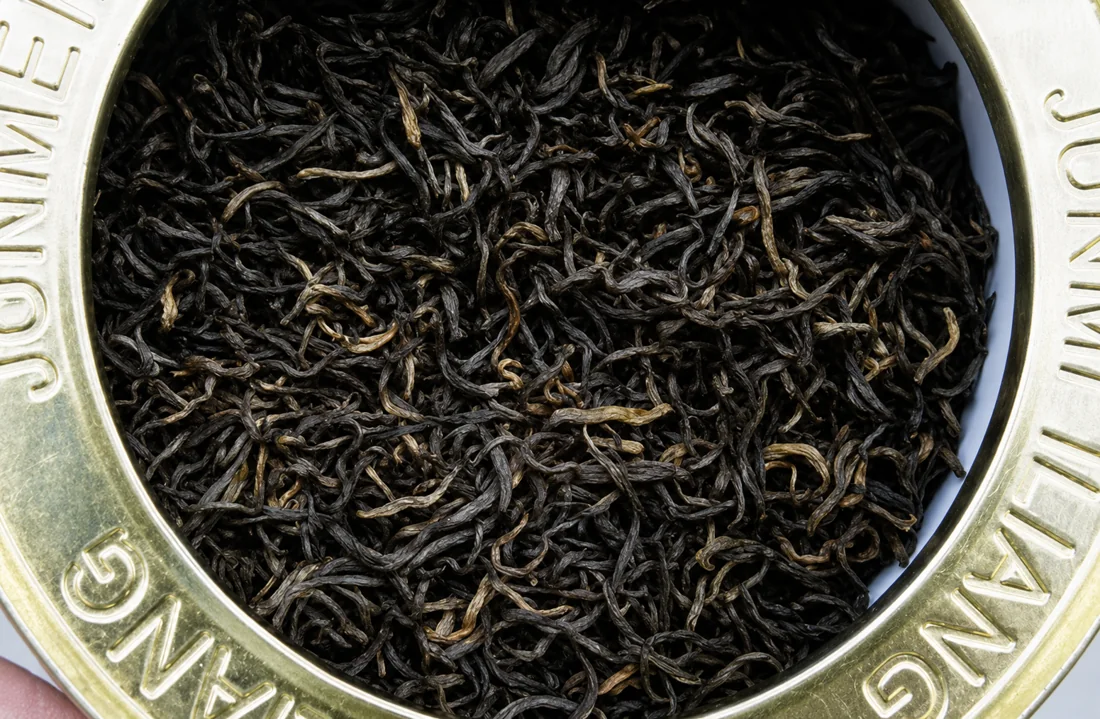
Ninghong Jin Hao: Jiangxi’s golden-tipped style
Ninghong is associated with Jiangxi, especially the Xiushui area. Jin Hao refers to golden down visible on the processed tips. In the source tasting, the impression is sweet and rounded, with a floral-fruity aroma and a substantial texture.
These descriptions can help you choose a sample, but do not require every Ninghong to be thicker than every Jin Jun Mei. Cultivar, picking, oxidation, drying and brewing can move the balance considerably. Compare at similar strength before deciding which one feels fuller.

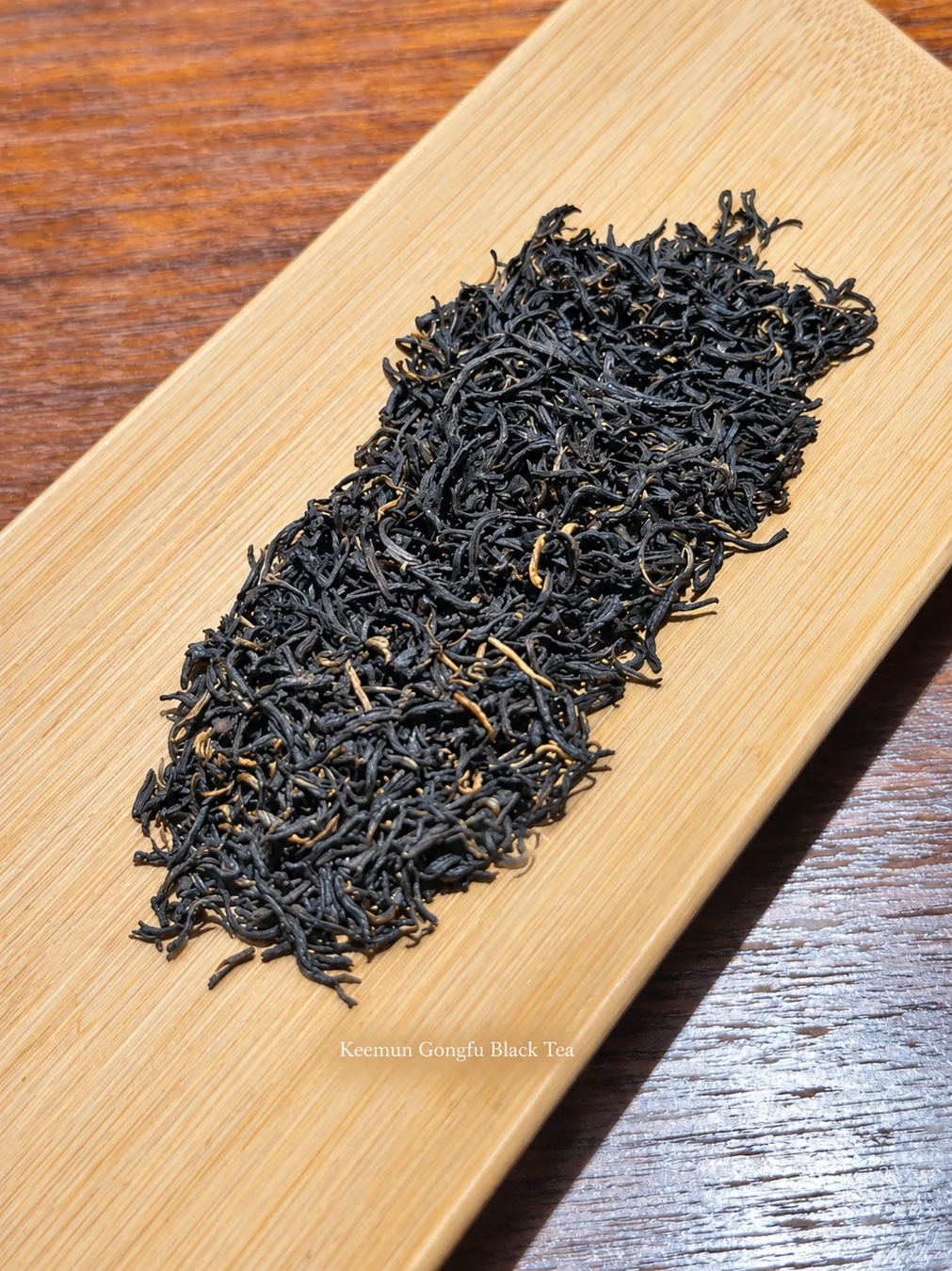
Keemun Gongfu: fragrance with a tidy leaf
Keemun Gongfu from Anhui is known for careful manufacture and refining. The sample here shows fine, dark leaves, while the source describes a floral, fruity, honey-like fragrance and a lingering finish. Taste warm and again as it cools; a delicate scent can be lost when the cup is very hot.
The original calls the sample “state-gift grade.” That wording is a seller’s designation in this context, not evidence of a universal grading system or an official endorsement. Ask what the actual grade on the product label means.
Dianhong Gongfu: a fuller Yunnan option
Dianhong is Yunnan black tea. The source discusses a gongfu selection called “China Red,” with a stronger aromatic impression and a full cup. Honey, malt or ripe fruit can be useful tasting associations, depending on the particular lot. The designation alone does not establish a recipe, a cultivar blend or a grade.
For a fair first round, brew each tea with 2 grams per 150 mL (about 5 fl oz), water around 90°C (194°F), and a two-minute steep. Record aroma, body, sweetness and finish separately. Then adjust each tea to its best cup. You may enjoy a lighter Jin Jun Mei one day and a fuller Dianhong on another.
