Tea & Teaware Guides
Spring vs Autumn Jin Jun Mei: Check the Harvest Claim
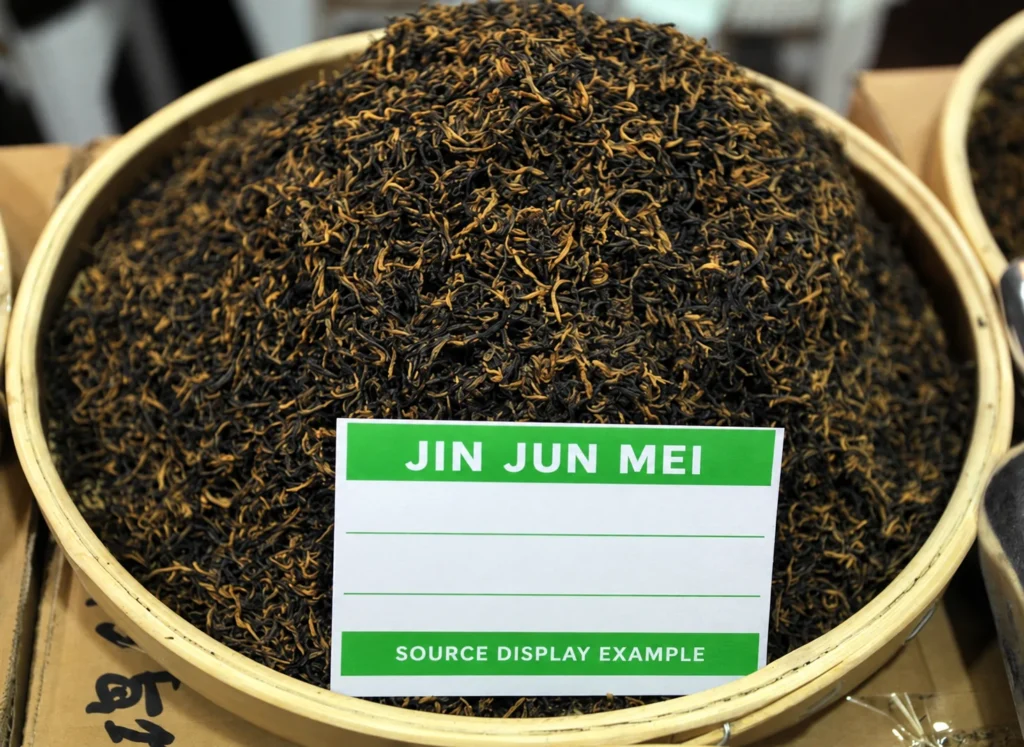
Before asking whether spring or autumn Jin Jun Mei is better, check what the seasonal label means for that particular product. A harvest claim should be tied to an origin, picking period and batch—not borrowed from a general description of Chinese black tea.
Spring is an important context, not a universal calendar
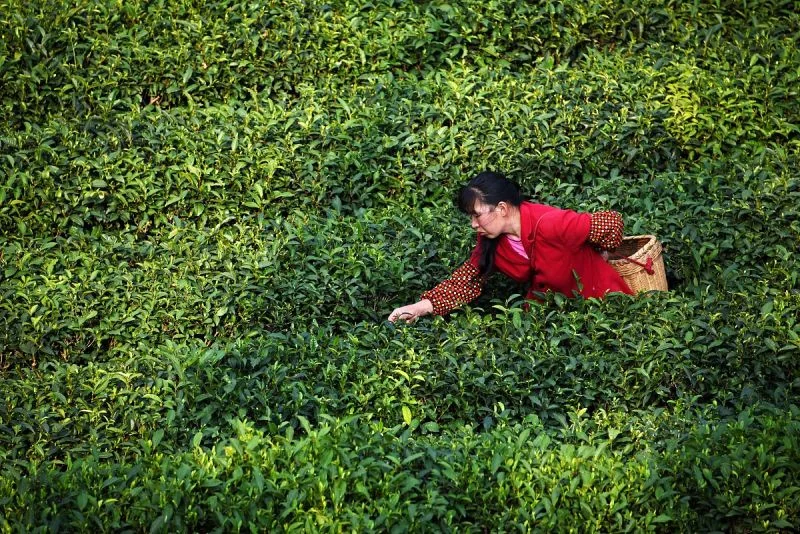
Spring bud material is central to the familiar Tongmu Jin Jun Mei description. Picking depends on the garden and weather. A fixed February-to-April rule cannot accurately describe every mountain garden and every year.
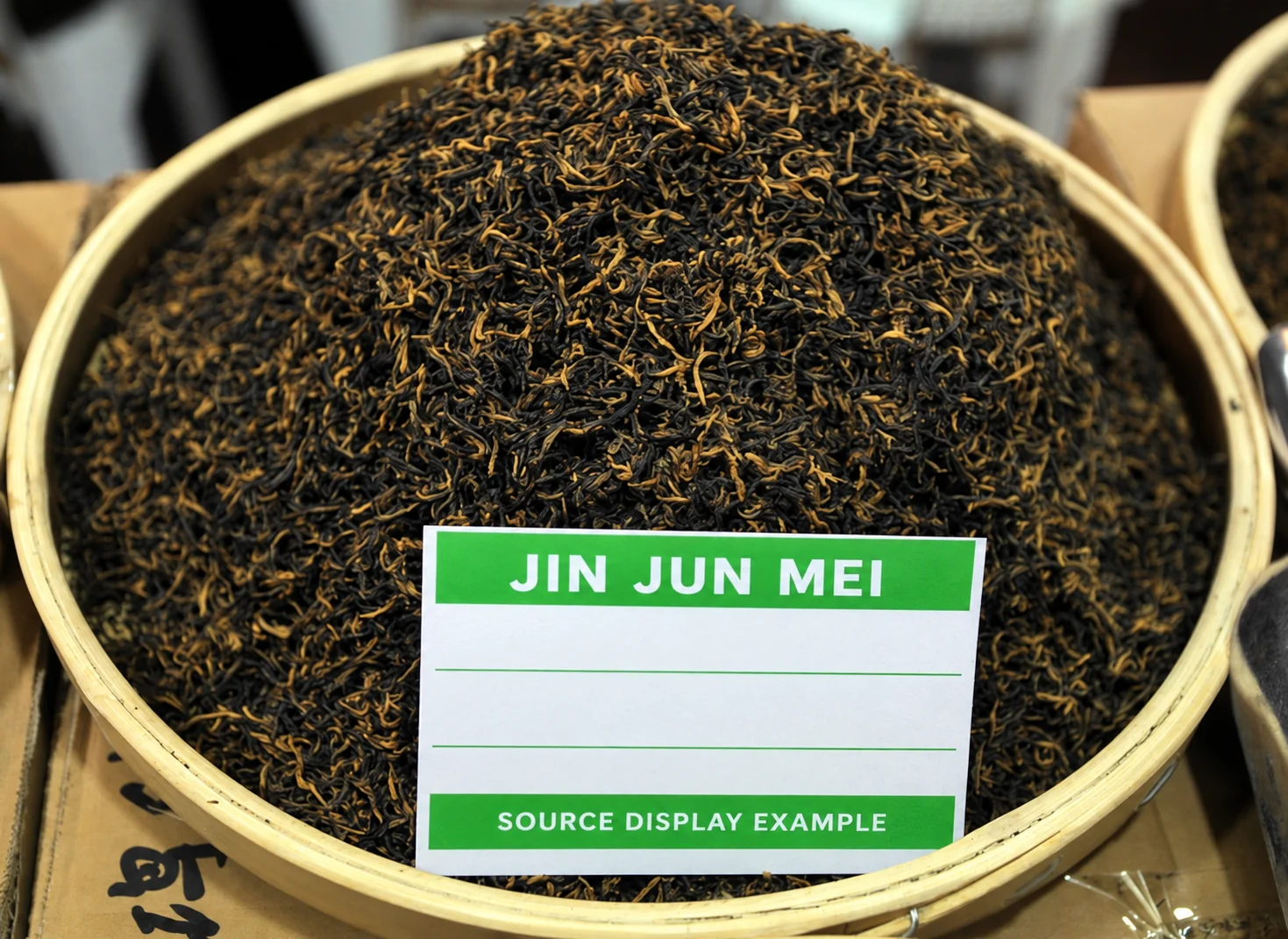
The source photograph includes a shop-style display. It illustrates how tea is presented; a photographed sign or price is not current market evidence and does not establish a harvest date.
What should you ask about an autumn listing?
Ask where the fresh leaves came from and when they were picked. Do not assume that a product called “autumn Jin Jun Mei” has the same origin and specification as another seller's Tongmu spring tea. Conversely, a tea from a different region should be judged on its actual description and cup, rather than dismissed solely because it was picked later.
Harvest, production and packing dates are different
A packet filled in October can contain tea picked earlier in the year. Check which date the label gives before interpreting it as the picking season. Ask for the harvest year and batch if that distinction explains a price premium.
Compare like with like
Keep producer, origin, picking standard, processing and storage as similar as possible. Brew at matching strength. Seasonal effects cannot be separated neatly when the two teas also differ in all those other ways.
Avoid formulas such as “spring always has more amino acids” or “autumn always has more caffeine.” Without measurements of the actual samples, those claims say little about your purchase. Tea seasons should not be used to assign disease-prevention or treatment benefits.
A practical choice
Buy the smaller, clearly labeled sample first. Prefer information you can check over a romantic harvest story, and choose the cup you enjoy. If a seller cannot explain the seasonal claim, that uncertainty is a good reason to delay paying extra for it.